Amazon’s 2026 Kindle lineup marks a significant evolution in design and user experience, yet it comes at a steep price. The new models reflect a broader trend in consumer electronics: rising costs driven by inflation, supply chain disruptions, and increased production demands. While the core functionality of e-readers remains consistent, the price points have surged dramatically. The base 2026 Kindle starts at $150, a notable increase from the $140 plastic-backed Paperwhite from 2024.
These price hikes are not isolated. In the past five years, even basic tech gadgets have seen substantial increases. The cheapest Amazon Kindle in 2026 costs more than the midrange version from a few years prior. This shift undermines the long-standing consumer promise of 'new thing, better features, same price.' Instead, users now face a reality where 'more' features come only with 'more' money.
Price Hikes Outpace Hardware Improvements
The 2026 models do not offer significant upgrades in screen quality, lighting, or performance compared to earlier generations. The 7-inch screen on the Paperwhite Signature Edition maintains a 300 PPI resolution, identical to previous models. There is no improvement in pixel density or display clarity. The front light remains warm, a feature that has been consistent since the 2021 Paperwhite, and it adjusts both brightness and color temperature based on ambient light. This makes reading more comfortable, especially in low-light environments, compared to the harsher, bluer front light found on older Kindles.
Waterproofing remains at IPX8 for all models, a standard that has been maintained since the 2021 Paperwhite. This means the devices can withstand splashes and submersion in shallow water, which is useful for readers who use their e-readers outdoors or during travel. However, the basic Kindle lacks waterproofing entirely—a critical omission given that many users rely on their devices in wet conditions. This regression diminishes the value proposition for those who prioritize durability.
Battery life has improved slightly, with the 2026 models offering up to 12 weeks of use on a single charge. This is a modest increase over the 10-week battery life of the 2024 Paperwhite and the 6-week life of earlier models. While this may seem like a small gain, it represents a meaningful improvement in real-world usability, especially for readers who travel frequently or use their devices without daily charging.
Hardware Updates: What’s New?
One of the most notable hardware changes is the transition from micro-USB to USB-C ports on both the basic Kindle and the Paperwhite. This update improves compatibility with modern devices and charging ecosystems. USB-C is now the standard for most consumer electronics, and its adoption ensures that users can connect to a wider range of chargers, cables, and power banks. The change also aligns the Kindles with current industry standards, making them more convenient for users who already own USB-C peripherals.
Another significant update is the inclusion of user-replaceable batteries. This feature is not just a convenience—it is a response to growing global right-to-repair regulations. In several countries, including the European Union, laws now require manufacturers to make components accessible for repair and replacement. By offering user-replaceable batteries, Amazon is complying with these regulations and enabling consumers to extend the lifespan of their devices. This is a positive step toward sustainability and reduces electronic waste.
Design-wise, the power button has been relocated from the bottom edge to the top-right corner of the device. This change may seem minor, but it addresses a common user frustration: accidentally pressing the power button when placing the device on a table or surface. The new location reduces the likelihood of unintended shutdowns and makes it easier to place the device on a surface without disrupting its operation.
Page-Turn Buttons Return — With a Price Tag
The most distinctive feature of the 2026 Paperwhite Signature Edition is the return of physical page-turn buttons. These buttons are not built into the device itself. Instead, they are added through a separate accessory—a page-turn cover with copper contacts on the back. The cover connects to the device via pogo pins, which are small, spring-loaded pins that make a secure electrical connection when pressed into the device’s back panel.
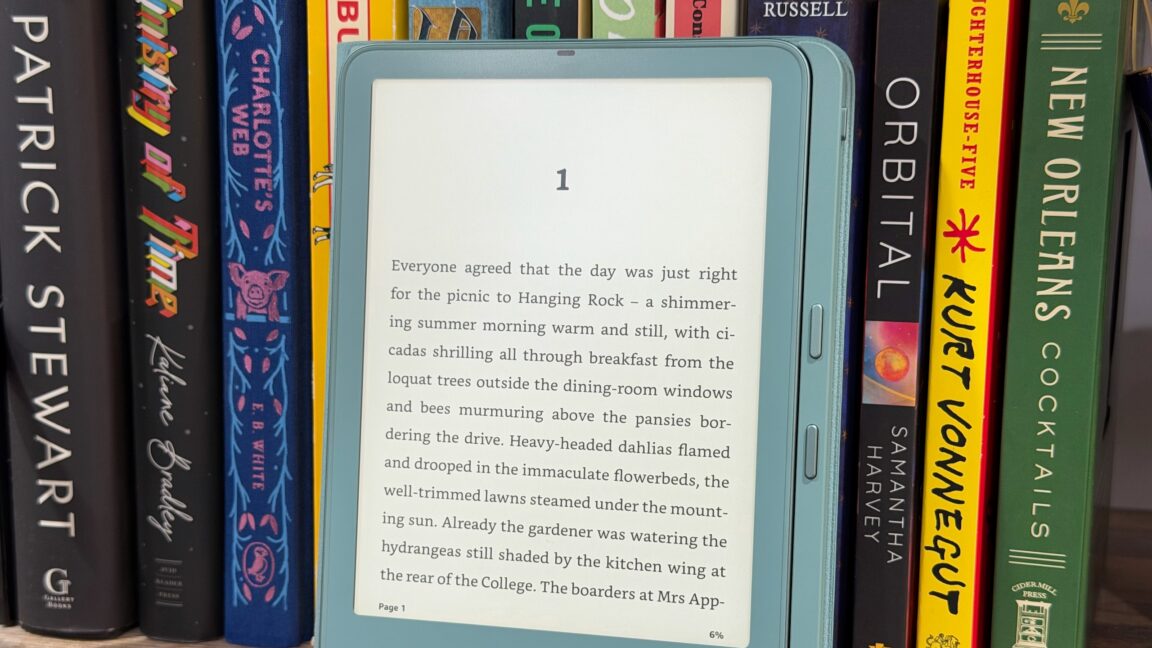
Amazon offers a $60 charging stand that uses the same pogo-pin system. This is the closest equivalent to the wireless charging feature that was present in the 2024 Signature Edition but has been removed in the 2026 model. While the stand provides a convenient way to charge the device, it does not restore the full functionality of wireless charging. The absence of this feature is a notable loss for users who value the convenience of charging without cables.
How the Button Cover Works
Pressing the buttons on the cover triggers a near-instantaneous page turn. The tactile feedback from the buttons is satisfying and responsive, offering a physical interaction that many readers find more intuitive than touch-based navigation. For single-page turns, the system performs exceptionally well. However, when multiple pages are turned quickly, the device can experience a slight lag. This is due to the limitations of E-Ink technology, which cannot respond to rapid input changes as quickly as traditional screens.
The cover adds both weight and size to the device. The overall dimensions increase, making the device less portable than before. The power button on the cover is also less effective—many users report that it does not consistently engage the device’s built-in power button. In some cases, the cover’s button must be pressed with more force or at a specific angle to trigger a response. This inconsistency undermines the reliability of the feature, especially for users who rely on the cover for daily reading.
Alternative Solutions: The Kindle Click
For users who do not want to purchase the expensive cover, Amazon offers a $35 Kindle Click remote. This device functions as a handheld remote that allows users to press buttons to turn pages. The device must be held or rested on a surface to operate, which makes it impractical for use during travel or while reading in a relaxed position. Additionally, it only works on Kindles running version 5.20.1.0.2 or later of the Kindle operating system.
Currently, this software version is only available on the 2024 and 2026 Kindles, as well as the 2022 Kindle Scribe. This lack of backward compatibility suggests that Amazon is prioritizing newer devices over legacy support, which may alienate long-time users.
Comparison to Older Models
The 2024 Paperwhite featured a 6.8-inch screen and 16GB of storage. The 2021 Paperwhite introduced warm light and IPX8 waterproofing at a price point of $140. In contrast, the 2026 basic Kindle costs $150 and lacks both warm light and waterproofing. This represents a clear loss of value for users who prioritize these features.
The 2026 basic Kindle has a 6-inch screen, which is the same size as earlier Paperwhites. However, the screen is now flush with the bezel, giving it a more modern, streamlined appearance. The device is also significantly smaller and lighter than previous models—measuring 4.9 oz (140g) for the plastic version and 5.7 oz (162g) for the aluminum version. This improvement in form factor makes it more comfortable to hold and easier to carry in a bag or pocket.
Storage capacity has increased for the aluminum version of the basic Kindle, which now offers 32GB. This is a notable upgrade over the 16GB standard, allowing users to store more books and media. However, the basic model still lacks waterproofing, which is a major limitation for users who read in outdoor or humid environments. This omission is particularly frustrating given that waterproofing was once a standard feature on the Paperwhite line.
Performance and Responsiveness
Performance on the 2026 Kindles is fast and fluid. The E-Ink screen, while inherently limited in responsiveness, still delivers a smooth reading experience. Touch inputs are processed quickly, and navigation feels natural. However, the device does not offer the same level of responsiveness as modern smartphones or tablets. Testing with older benchmarks, such as the Google Octane 2.0, failed to complete due to technical limitations. This suggests that performance metrics are not easily measurable on these devices, and any claims about speed or responsiveness must be interpreted with caution.
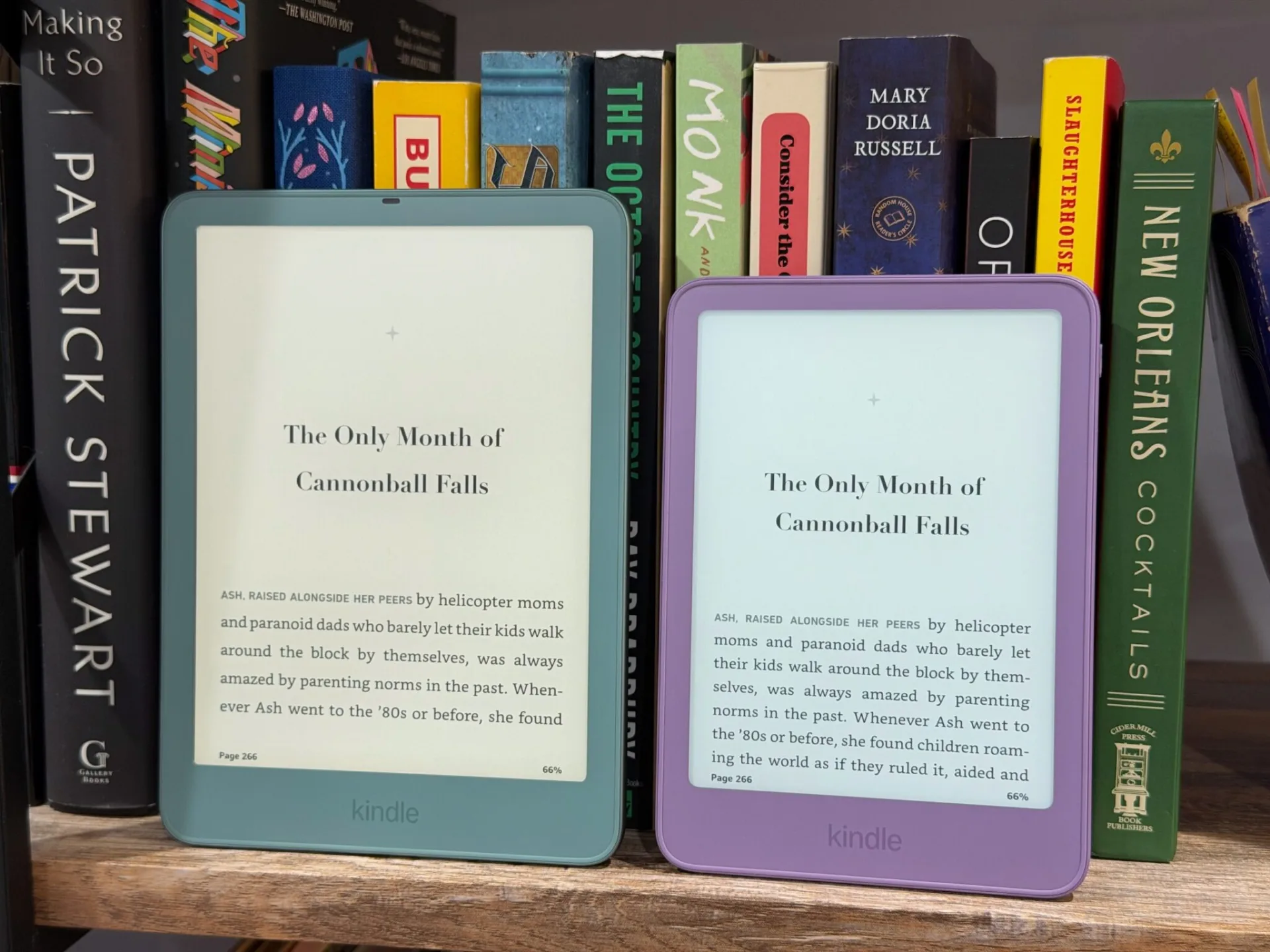
Despite the lack of measurable benchmarks, the user experience remains positive. The device feels responsive during normal reading tasks, and page turns are smooth and intuitive. The absence of lag during typical use makes it suitable for long reading sessions. However, the device does not offer any significant improvements in processing power or software efficiency, indicating that Amazon has focused on user experience rather than technological advancement.
Limitations and Open Questions
Several limitations remain. The most significant is the absence of wireless charging on the Signature Edition. This feature, once a highlight of the 2024 model, has been removed, which may disappoint users who value convenience. The basic Kindle lacks waterproofing entirely, which limits its usability in wet environments. Third-party accessory makers have not yet developed pogo-pin-compatible products, which could reduce costs and expand functionality.
Another concern is the pricing structure. Users must pay more to access features that were once standard. The price hikes outpace hardware improvements, making the new models feel less like progress and more like a cost increase.
What to Watch Next
Third-party accessory makers may develop compatible pogo-pin accessories in the coming months. These products could reduce the cost of the page-turn cover and expand functionality, making the feature more accessible. If such products emerge, they may help bridge the gap between the premium price and the actual value delivered.
Amazon may introduce future models with better performance, improved software features, or broader compatibility. These could address current limitations and offer more compelling value to users. However, given the current trend of rising prices and limited hardware upgrades, it is unlikely that significant improvements will occur in the near term.
For users seeking a reliable e-reader, the 2024 Paperwhite remains a strong option. It costs $130 and offers warm light and IPX8 waterproofing. It is available at a discount on secondhand markets. Those who want page-turn buttons may still find value in the 2026 Paperwhite Signature Edition. But they must pay an extra $80 for the cover.
Overall, the 2026 Kindles are solid devices. They offer improved design, better usability, and a return of a long-missed feature. However, they do not deliver on the promise of ‘more for the same price.’ Instead, they reflect a market where price increases outpace innovation, and users must pay more to access features that were once standard.
For the full review, visit Ars Technica’s original article.
For more on the Kindle Click and its requirements, see the comments section.
Sources & further reading
Featured image: original publisher image. Via original publisher. Image source