A new study shows at least 300,000 people in the Himalayan region now live in areas vulnerable to disasters, including glacial lake outbursts, river flooding, and landslides. Source: bbc.co.uk.
What the Study Found
Between 2016 and 2023, built-up land in high-risk zones of northern Nepal, parts of south-eastern Tibet, and Uttarakhand, India, grew by about 45%.
In river valleys near the Annapurna and Mahabharat ranges, development increased by nearly 78%. This rapid growth happens in areas already prone to sudden floods and slope failures.
These zones face high risks from glacial lake outburst floods (GLOFs), which can destroy entire communities in minutes.
Key Development Areas
- Pokhara: As a major tourism hub, Pokhara has grown rapidly over the past 30 years. The city now has many new hotels and homes built just five meters from the Seti Gandaki River, which flows through the city and originates in the Annapurna range.
- Annapurna Trekking Region: This popular trekking area has seen unregulated growth in riverbank settlements. Homestay owner Phurpa Chhiring Lama says only five of his 20 rooms are occupied during peak season—down from full occupancy—showing growing concern.
- Hydropower Development: The Bhotekoshi and Trishuli river valleys have seen many new hydropower projects. These projects often build in high-risk zones, altering natural drainage and increasing downstream flood risks.
Local Perspectives
Mayor Dhana Raj Acharya says new rules require buildings to be farther from riverbanks. 'Where we move them, and how we do that, is the real challenge,' he says.
Khristna Gauchan, whose hotel is near the glacier-fed Modi River, says the river could flood if a glacier collapses or a glacial lake bursts. ‘We live in constant fear,’ he says. ‘No one has given us a clear escape plan.’
Geographer Khagendra Poudel says tourism investors promote these areas as safe and scenic—without revealing the real risks. This creates a dangerous gap between marketing and reality.
Why This Matters: Climate Change and Himalayan Instability
The Himalayan region is warming at about twice the global rate. This has caused glaciers, icefields, and snowpacks to melt rapidly.
As temperatures rise, rain now falls at higher altitudes where it used to snow. This shift increases rock and ice falls, slope failures, and debris flows—especially in steep, vegetated-poor mountain areas.
Nepal has recorded around 30 glacial lake bursts since 1940. Each has caused loss of life, infrastructure damage, and long-term displacement.
Regulatory Challenges and Enforcement Gaps
Building codes exist, but enforcement is weak. Urban planner Prof Surya Raj Acharya says many projects skip environmental reviews and risk assessments.
Construction often happens on low-lying riverbanks—easy to build on, but unstable. These areas face erosion, flooding, and sudden collapses.
‘A fragile ecosystem like the Himalaya needs stricter rules than elsewhere,’ Prof Acharya says. ‘But these rules have been weak and poorly enforced.’
Government Responses and Policy Developments
Similar rules are being introduced in other river valleys.
Chief executive Dharam Raj Uprety says people often view their homes as part of their identity. ‘We can’t ignore the risks,’ he says. ‘But we also can’t force people to leave without support.’
India’s Uttarakhand: A Parallel Story
Uttarakhand faces similar issues. While zoning rules forbid construction near riverbanks, these rules are not followed on the ground.
Activist Anoop Nautiyal says hotels and market towns are being built directly on floodplains—without environmental clearances. ‘You can see rampant construction all over,’ he says.
On 12 October, the Uttarakhand government approved new floodplain zoning rules. The goal is to protect life and property while keeping natural flood flows intact.
Proposed Solutions
Adhikari suggests tying insurance to risk levels. If areas are mapped as high, moderate, or low risk, premiums could reflect that.
Homes in safer zones would get better coverage. Homes in high-risk zones would face higher costs or be discouraged from building.
This could shift risk responsibility to individuals and encourage development in safer areas.
Limitations of the Study
The research only covered a specific area. It did not include neighboring regions with similar risks.
What to Watch Next
Building regulations remain inconsistently enforced. Climate change continues to accelerate glacial melt and slope instability.
Whether new zoning rules or insurance models will reduce risk is still uncertain.
Long-term solutions will need cooperation between governments, communities, and international bodies. Without it, the Himalayan region may face more disasters with growing human and environmental costs.
For more on Himalayan climate cooperation, see our coverage of Nepal’s proposal for joint action with India and China.
Original source
Sources & further reading
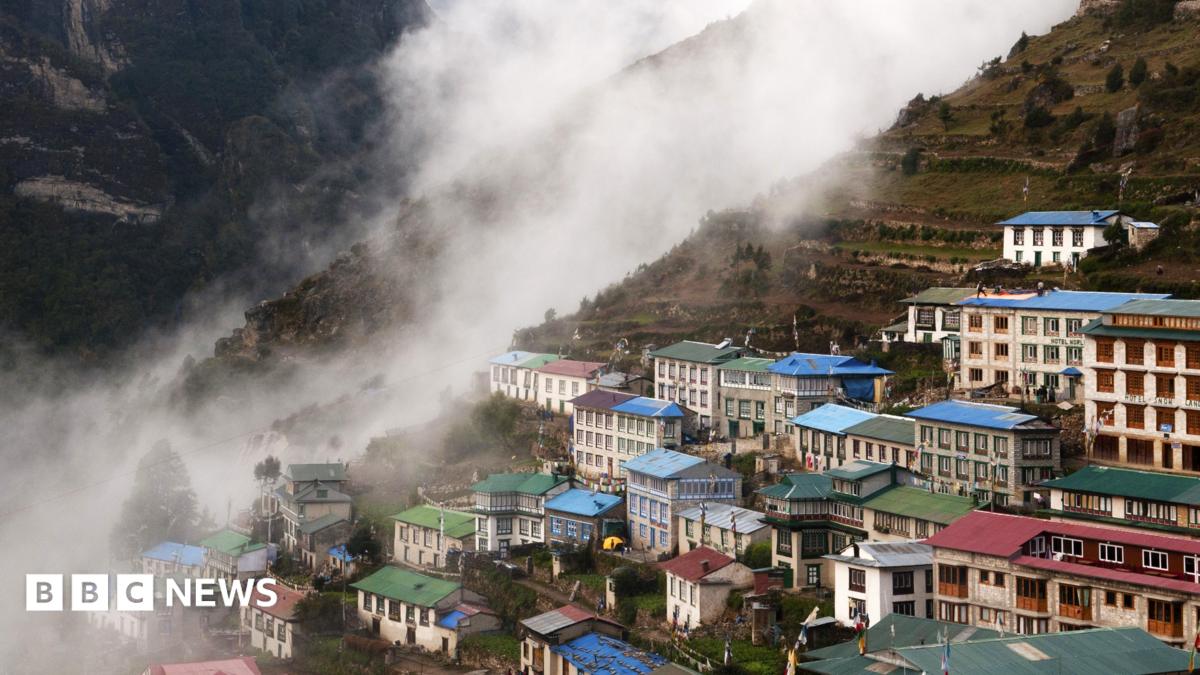
Featured image: Colourful buildings with blue, green and red roofs cluster on the steep hillside of Namche Bazaar in Nepal's Everest region, as thick cloud and mist drift through the valley and partially obscure the surrounding mountains.. Via original publisher. Image source