Winter transforms many European villages into serene, snow-dusted scenes that feel like scenes from a film. These alpine communities, known for their charm in summer, become even more enchanting when snow blankets rooftops and streets. The crisp air, quiet paths, and illuminated storefronts create an atmosphere that feels both timeless and deeply rooted in tradition.
Grindelwald, Switzerland
Located at 3,392 feet in the Bern region, Grindelwald sits at the base of the Eiger mountain. It is home to wooden houses, cafés, and hotels set against the backdrop of the Swiss Alps. The village’s architecture, with its timber-framed buildings and steeply pitched roofs, blends seamlessly with the mountainous terrain.
The Jungfrau Ski Region officially opens on November 29, offering miles of skiing for all skill levels. Visitors can explore Bussalp, an alpine pasture, and enjoy the Big Pintenfritz toboggan run—one of Europe’s longest.
Mountain-cart rides, cliff walks with breathtaking views of the Bernese Alps, and access to the UNESCO World Heritage site of the Aletsch Glacier are also available. The Aletsch Glacier, the longest glacier in the Alps, is visible from several vantage points and remains a key natural attraction for visitors and researchers alike.
Hallstatt, Austria
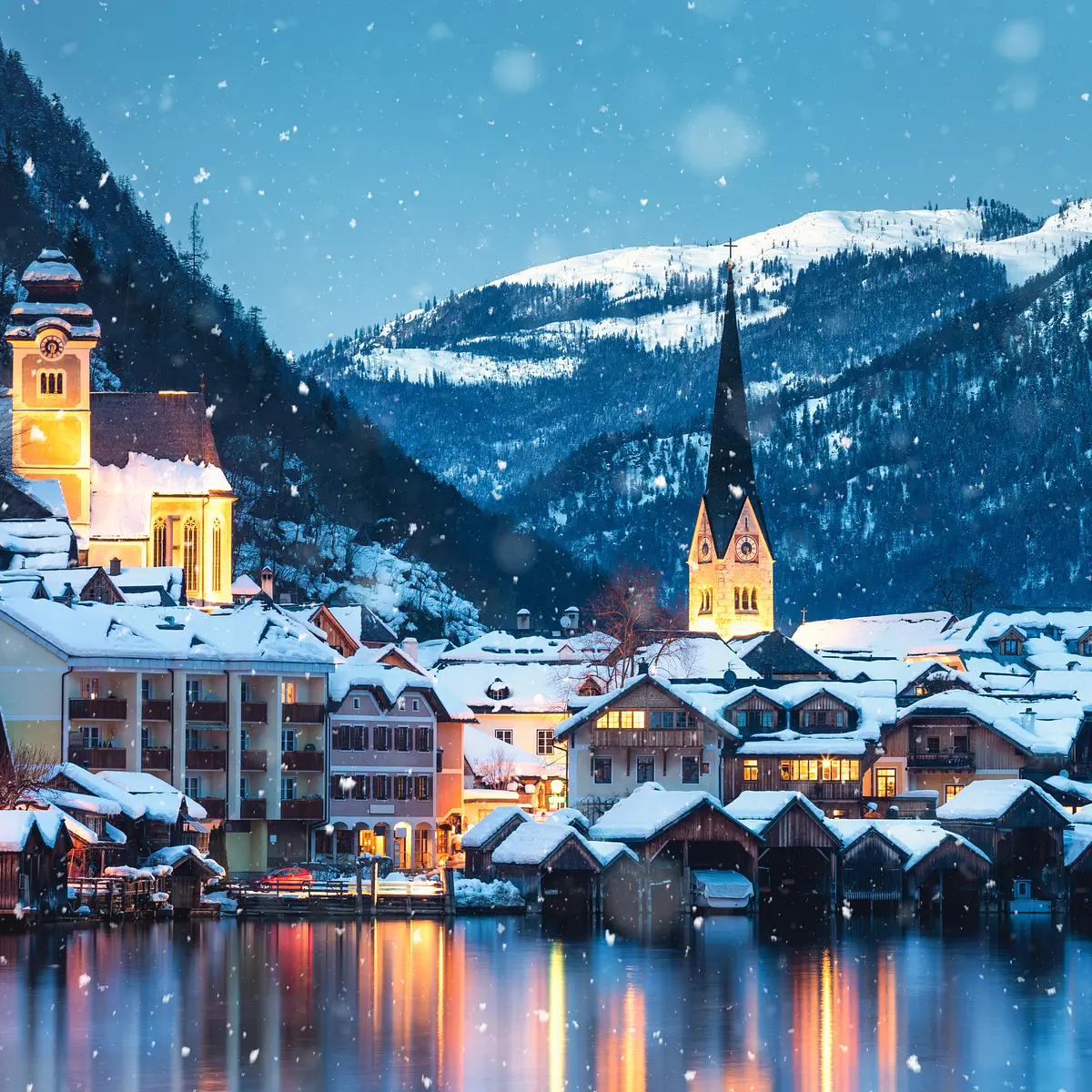
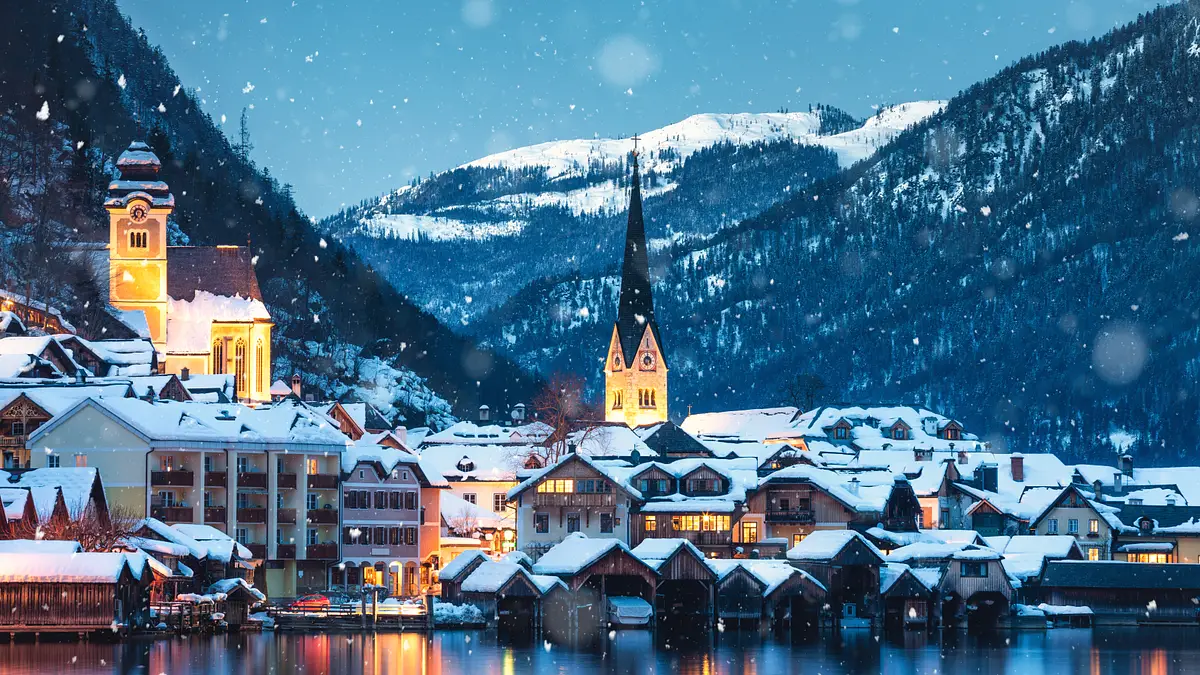
With a population of 741, Hallstatt is a UNESCO World Heritage Site for nearly three decades. Its alpine setting makes it a postcard-perfect destination. The village lies nestled in a narrow valley between the mountains, with the lake forming a natural centerpiece.
Skiing at Dachstein Krippenstein and Dachstein West begins in December, with Dachstein West being particularly popular for families due to its well-maintained facilities and child-friendly zones. These resorts offer a range of slopes suitable for beginners and intermediate skiers.
During the winter season, the old town comes alive with seasonal markets and artisanal shops. Visitors can find handmade goods such as woolen textiles, hand-painted ceramics, and traditional Austrian pastries like Kaiserschmarrn and Apfelstrudel. A Christkindlmarkt is held annually on December 8, where local families and artisans gather to celebrate the holiday season with festive decorations and live music.
A gondola ride to the Skywalk provides panoramic views of the lake and the snow-covered village, offering a unique perspective of the landscape as it transforms under winter light.
Megève, France
Megève, in the French Alps, was founded by Benedictine monks and developed in the 1910s and 1920s as a French alternative to St. Moritz. It hosted events during the 1968 Winter Olympics, including a demonstration of alpine skiing and winter sports competitions.
The ski area spans three mountains, with Mont d’Arbois being the largest and offering varied slopes for all skill levels. The resort’s development was influenced by the need for a high-altitude, accessible alpine destination that could serve both elite athletes and leisure travelers.
While prices can be high, budget-friendly hotels are available for travelers looking to save a few euros. Non-skiers can enjoy ice skating at the village’s outdoor rink, curling at the local rink, dog sledding on specially groomed trails, snowshoeing through forested paths, and hot-air balloon rides during the early winter months.
Megeve is easily accessible from Geneva Airport, with a direct shuttle service available for travelers arriving by air.
Malbun, Liechtenstein
Malbun is Liechtenstein’s only ski resort. With a population of 44, it lies near the Austrian border and features over a mile of ski slopes. The village is one of the smallest in Europe yet offers a full range of winter activities.
The village typically opens in mid- to late December. The steep mountain peaks provide breathtaking views from every vantage point, and the surrounding valley offers a natural amphitheater of snow-covered slopes and rock formations.
Several walking trails are available, including the popular Sassweg, which winds through snow-dusted forests and offers scenic overlooks. Sledding and snowshoeing are available, with guided tours offered for families and groups.
Businesses in Malbun use Swiss francs, and German is the primary language, though English is understood at tourist spots. The local economy is largely supported by seasonal tourism, with many residents relying on winter visitors for income.
Travelers typically begin their journey in Zurich, where they take a train to either Sargans in Switzerland or Feldkirch in Austria, then a bus to Vaduz (Liechtenstein’s capital), followed by another 30-minute bus ride to Malbun.
Ortisei, Italy
Ortisei, in northern Italy’s Dolomites at over 4,000 feet, is part of the Val Gardena region. It is surrounded by other small villages and remains a popular year-round destination.
Visitors access the Dolomiti Superski area and the Sellaronda circuit, an extensive network of ski routes connecting several valleys.
For those not into skiing, Ortisei offers bakeries, cafés, and shops. Wood carving is a local tradition, with elaborate wooden altars and sculptures visible throughout the town. These carvings often depict religious themes and local legends, reflecting the cultural heritage of the region.
Kranjska Gora, Slovenia
Located in the Julian Alps near the Italian and Austrian borders, Kranjska Gora is close to Triglav National Park. The resort relies on snowmaking during warmer months to maintain consistent snow coverage, especially during early winter.

It has 18 ski slopes, with the season beginning in December. The nearby Planica site is world-renowned for ski jumping and ski flying, hosting international competitions and events throughout the winter season.
Winter activities include sledding, ice skating, snowshoeing, and hiking. The central square, Trg na Gorici, features food stalls and festive street lights. The area is especially vibrant during Christmas, with local residents organizing candlelight walks and traditional music performances.
Visitors can sip mulled wine by a fire, admire handmade crafts, and enjoy a walk through the village that feels like a Hallmark movie scene. The local crafts include hand-painted pottery, embroidered textiles, and wooden toys.
Mittenwald, Germany
Mittenwald, in southern Bavaria near the Austrian border, is known as the ‘Village of One Thousand Violins.’ This musical heritage dates back to the 17th century, when a group of violin makers established a workshop in the town.
It still hosts a violin-making school and a museum, the Geigenbaumuseum, dedicated to the craft and performance of violins. The museum features historical instruments, tools, and interactive displays that allow visitors to learn about the art of violin-making.
Obermarkt, the historic main street, features brightly painted buildings with Lüftlmalereien—Bavarian mural art. These murals often depict scenes from local history, folk traditions, and seasonal celebrations.
The Altstadt offers authentic Bavarian food and local beer. Dishes such as Weisswurst, pretzels, and schnitzel are staples of the local cuisine, often served in traditional taverns with live music.
Travelers can ride the Karwendelbahn cable car for scenic views. Winter activities include snowshoeing, hiking, ice skating, sleigh rides, and tobogganing. Skiers can choose from Familienparadies Kranzberg (easier slopes) or Dammkar (for experienced skiers). The town is accessible via train from Munich or Innsbruck.
These villages offer a blend of natural beauty, cultural traditions, and winter activities. While some are accessible by train or nearby airports, others require multi-leg travel. Each location provides a distinct experience—ranging from historic roots to modern winter recreation. The snow enhances the visual appeal of these places, making them feel more magical.
For travelers seeking a quiet, scenic escape, these European villages offer both charm and practical options. The winter season brings out the best in their alpine settings, highlighting not only the natural splendor but also the resilience and vibrancy of local communities.
Source: Mental Floss
Sources & further reading
Featured image: original publisher image. Via original publisher. Image source