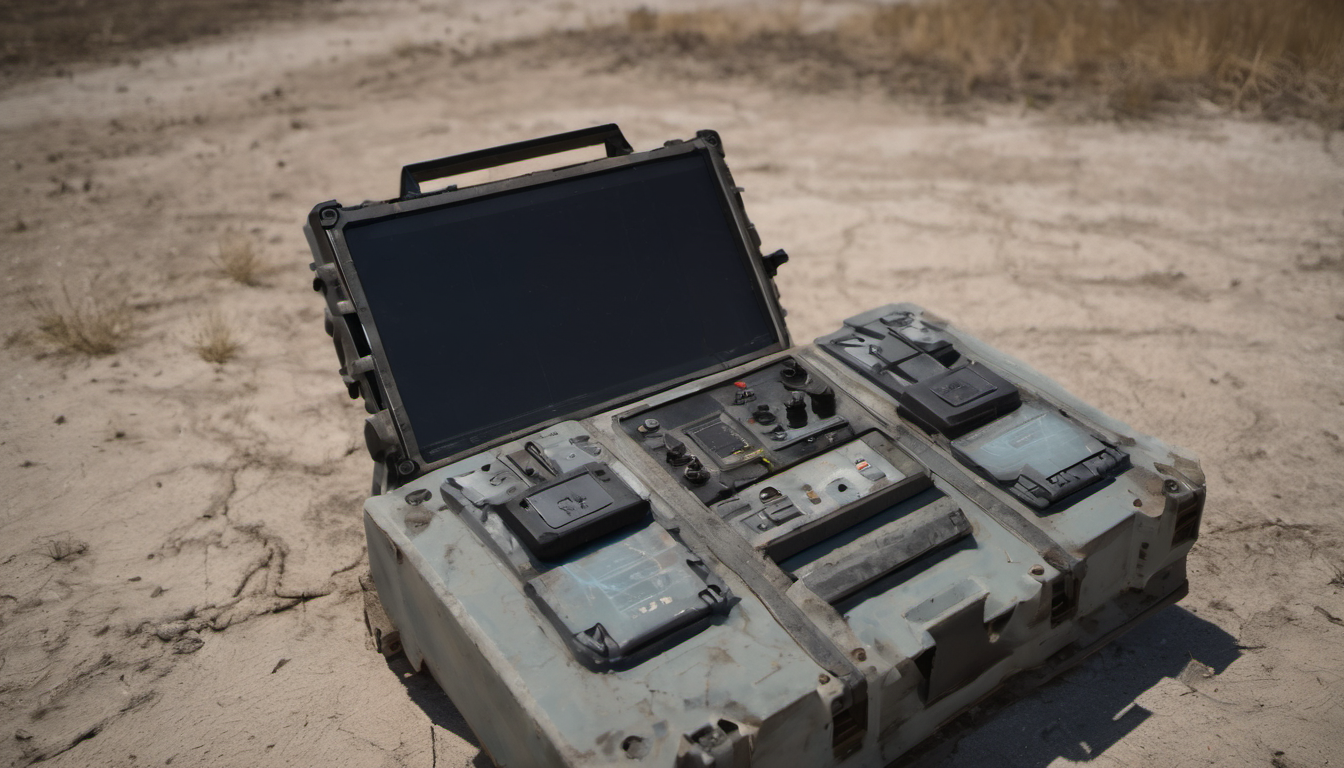
Featured image: A partially open, gray, ruggedized electronic case is the main subject. AI-generated image; not a photograph of the reported event.
Starlink, a satellite internet network operated by SpaceX, has become essential for Ukraine’s military since 2022. It delivers high-speed, resilient connectivity in areas where traditional infrastructure has been destroyed. Source: bbc.co.uk.
Why Starlink Matters on the Battlefield
Ukrainian forces use Starlink for real-time communication across land, sea, and air units. This allows quick coordination between frontline troops, command centers, and drone operators.
The network links drones, artillery, and command posts into a single real-time system. This cuts the time between detecting a threat and responding — a key edge in fast-moving combat.
Drone Operations and Network Performance
Ukrainian drones use Starlink to send live video, voice, and sensor data back to operators. This gives real-time awareness, even in remote areas.
Unlike traditional radio systems, Starlink signals are harder to jam. Its satellite-based design offers a more stable and secure communication path.
The Institute for the Study of War says Starlink enables a ‘sensor-to-shooter’ loop. This minimizes delays and allows precise, rapid responses to threats — especially against fast-moving enemy drones.
Recent Speed Restrictions and Operational Impact
On Tuesday, SpaceX set a 100mph (160km/h) speed limit for all Starlink-connected devices. This includes military drones used in Ukraine.
Top Ukrainian official Serhiy Beskrestnov says he was not informed of the change. He believes it is not accidental and may link to tensions between Kyiv and Washington.
The speed cap makes it nearly impossible for Ukrainian interceptors to track Russian Shahed drones. Shahed drones fly over 198mph. With Starlink capped at 100mph, interception efforts are effectively useless.
Expert Assessment of the Limitation
Tom Whittington, an electronic warfare expert at RUSI, says the cap ‘effectively precludes’ any device from exceeding 100mph. This hampers navigation, targeting, and real-time operations — especially in complex terrain.
Attribution and Policy Disputes
Musk claims Starlink is a commercial service. It cannot be used for offensive military actions. He wrote on X that Starshield — a military-grade system for the Pentagon — is owned by the US government.
He says speed limits on Starlink are decided by the US military, not SpaceX. This has sparked debate over how much control commercial space companies have in military operations.
Ukraine has raised concerns about the restriction. This highlights a gap in transparency between US defense agencies and Ukrainian leadership.
US President Donald Trump previously criticized Ukraine’s strikes on Russian oil refineries. He called for a new Ukrainian leader — a view echoed by Elon Musk. These remarks have deepened diplomatic friction and raised questions about US policy on access to critical tech.
Background: How Starlink Works in Conflict Zones
Starlink uses low-orbit satellites to deliver internet without ground infrastructure. This makes it valuable in war zones where towers and cables have been destroyed.
Both Ukrainian and Russian forces have used the system. But SpaceX previously limited Russian military terminals. That move slowed Russian advances and confused Russian commanders — showing the system’s strategic value.
Limitations and Open Questions
Starlink does not work inside Russia. So it only supports operations outside Russian territory. There is no known alternative for Ukraine’s real-time battlefield communication.
While Starlink supports drone operations, the speed cap raises concerns about transparency, accountability, and the balance of power between commercial space firms and national militaries.
Experts stress that Starlink’s effectiveness depends on consistent, unimpeded access. That access is now under threat — a growing concern in modern warfare.
Source: BBC News, https://www.bbc.co.uk/news/articles/cqkgk4zg54reo?at_medium=RSS&at_campaign=rss