Crown imperial is a spring-blooming bulb that stands out in gardens with its striking orange flower head and elegant green crown. It’s one of the few spring bulbs that can command attention in a garden, drawing neighbors’ eyes and sparking curiosity. Source: ruralsprout.com.
What Is a Crown Imperial?
The crown imperial, scientifically known as Fritillaria imperialis, is a member of the lily family. It is sometimes called orange fritillary or simply fritillary.
Its flowers form a cluster of bell-shaped blooms topped by a green crown, which gives it its name. The plant emerges in late winter or early spring, typically between March and April, and blooms for several weeks. This timing makes it a standout in the spring garden, appearing just as the weather begins to warm and other bulbs are still in dormancy.
It is one of several fritillary species. Others include Fritillaria persica (Persian lily) and Fritillaria melagris (snake’s head fritillary). While these species share similar characteristics, such as a layered structure and a preference for well-drained soil, they differ in bloom color, size, and foliage shape. For instance, Fritillaria persica produces smaller, darker bells and is often used in more intimate or shaded garden settings. Gardeners should ensure they are purchasing the crown imperial variety when buying bulbs, as the name and appearance are distinct enough to be recognized even by casual observers.
How to Plant Crown Imperial Bulbs
Crown imperial bulbs are large and have a distinctive structure. They resemble onions, with thin layers and a central hole. This structure is not only visually interesting but also functionally significant—like lily bulbs, they store energy in their layers to fuel growth during the spring season.
When planting, the hole in the center of the bulb should not face straight up or directly sideways. Instead, it should be slightly tilted. This prevents water from pooling in the hole during winter months, which could lead to rot. A vendor once wrote on a paper bag: ‘Mickey, we’re going to have a rainy winter, so make sure you plant this bulb slightly tilted. Otherwise, it will rot.’ This practical note reflects a deep understanding of how weather conditions affect plant health and underscores the importance of thoughtful planting.
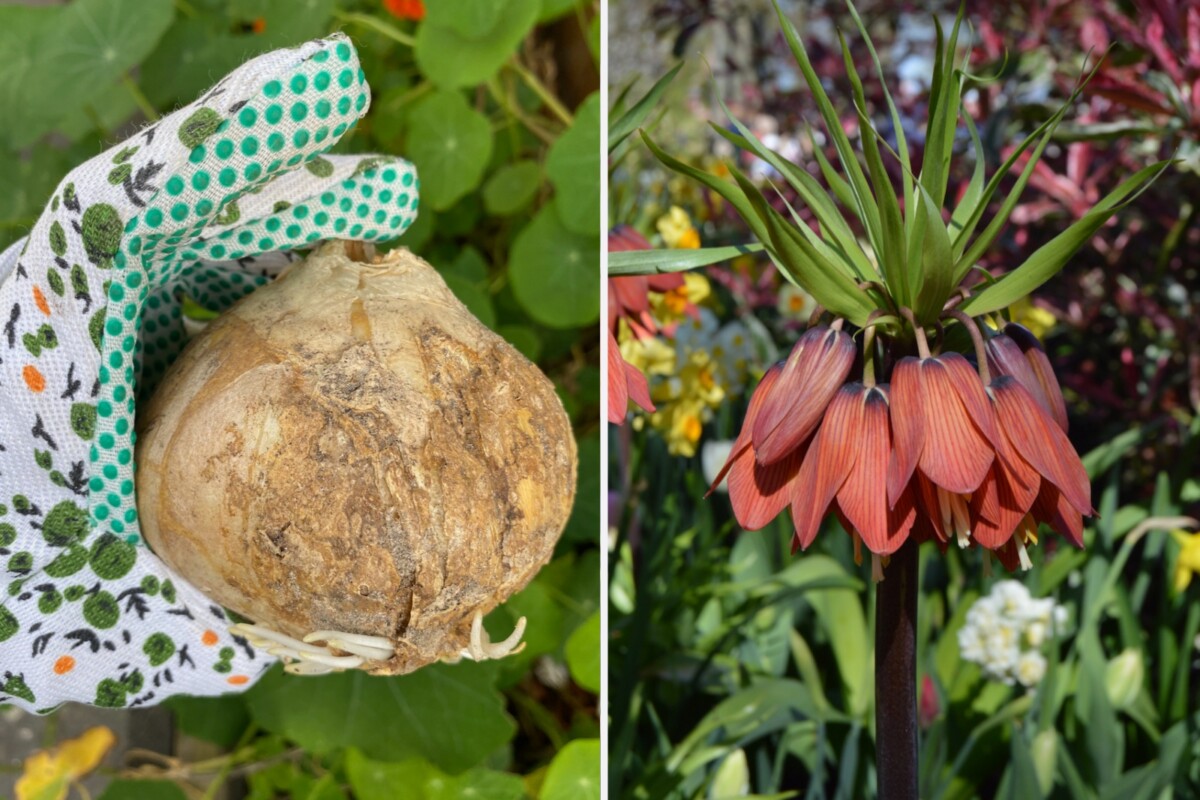
While the bulb may not grow upright when planted, it naturally leans toward sunlight. This behavior is part of the plant’s growth mechanism: as the stem emerges, it follows the path of light, gradually adjusting its orientation. After several years of growing fritillaries, the author has observed that the plant stabilizes and grows upright on its own, even without being planted in a vertical position. This adaptability makes crown imperial a resilient choice for gardeners who may not have precise control over planting angles.
Why It Works in Dry Gardens
Many spring bulbs, like daffodils and muscari, prefer moist soil and struggle in dry, hot conditions. Crown imperial, however, is well-suited to dry, sunny garden spots. Its large bulb stores significant energy and moisture, allowing it to withstand high summer temperatures underground. The plant remains dormant during the summer months and re-emerges in spring, making it ideal for garden corners that bake under summer sun.
It thrives in well-drained soil and performs best in sunny borders. In regions with hot, dry summers, such as the southern United States or Mediterranean climates, crown imperial is a reliable choice. Unlike some bulbs that require consistent moisture to thrive, crown imperial is less dependent on soil moisture, thanks to its robust bulb structure and deep root system. This makes it particularly useful in xeriscaping or low-water garden designs, where water conservation is a priority.
Planting for Visual Impact
Crown imperial grows to about three feet tall—roughly one meter—making it a dominant presence in spring gardens. This height gives it a commanding visual presence, especially when viewed from a distance or from a walkway.
It can be used as a focal point in a flower bed. In show gardens, it is sometimes planted in large drifts, where a section of the garden is dedicated entirely to crown imperial blooms. However, the author notes that such groupings can lose the plant’s elegance and grandeur. The uniformity of a dense cluster can make the flowers appear repetitive rather than dynamic.
Instead, the author recommends scattering crown imperial bulbs among shorter spring blooms like tulips, muscari, and daffodils. This creates a layered effect, with the crown imperial acting like an exclamation mark—drawing the eye upward and adding visual rhythm to the garden. The contrast between the tall, bold crown imperial and the shorter, more delicate flowers enhances the garden’s texture and depth. When paired with Fritillaria persica, which has smaller, dark bell-shaped flowers, the combination offers a textural and color contrast that enriches the overall garden design.
Smell and Wildlife Benefits
Unlike many spring flowers, crown imperial has a musky scent. This fragrance is noticeable when planting and when the flowers open in spring. The scent is not overpowering, but rather a subtle, earthy note that is distinct and identifiable. It does not smell unpleasant, but rather different—like a natural, organic aroma that is common in certain plant families.
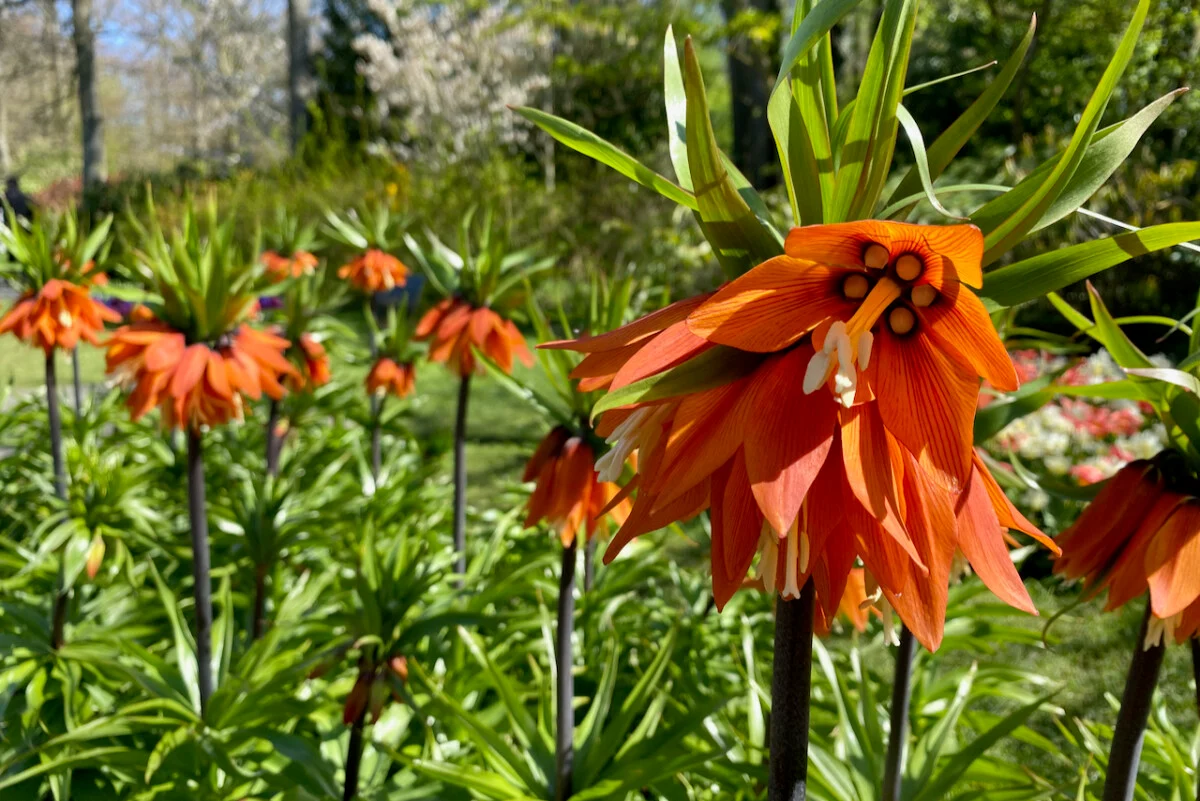
Importantly, this musky aroma helps deter wildlife such as squirrels, deer, and rabbits. These animals often feed on spring bulbs, and the scent acts as a natural repellent. This benefit is especially valuable in gardens where other bulbs are vulnerable to animal damage. The presence of crown imperial can therefore serve a dual purpose: it enhances the garden’s aesthetic and protects other plants from being eaten.
For those sensitive to strong or musky smells, the author suggests starting with a single bulb to test the scent. If acceptable, a full collection can be planted the following year. This cautious approach allows gardeners to experience the plant’s characteristics without committing to a large investment or a potentially overwhelming sensory experience.
When neighbors ask about the flower, the author recommends inviting them to smell it themselves—while keeping the banana bread safely on the porch. This playful interaction not only educates neighbors about the plant but also fosters a sense of community and shared joy in gardening.
Personal Experience and Gardening Background
Mickey Gast, the author, is a gardener and writer who has lived in urban and suburban environments. Her journey began with a peace lily, which sparked a lifelong interest in houseplants. Over the years, she has managed gardens in community plots, campus spaces, and small balconies. These experiences taught her the value of adaptability and learning from diverse climates.
She has developed a deep appreciation for plants that thrive in challenging conditions—whether it’s limited space, poor soil, or extreme weather. Her hands-on experience with various garden types has informed her understanding of plant needs, especially in relation to weather and soil conditions. This practical knowledge is reflected in her detailed notes on bulb care and planting techniques.
Today, she maintains a suburban backyard garden focused on pollinator-friendly plants. Her plant experiments are shared on Instagram at @greenwithpurpose, and her writing is available at GreenWithPurpose.com. Her personal notes on bulb care reflect a deep, hands-on understanding of plant needs—especially in relation to weather and soil conditions.
Sources & further reading
Featured image: Plant the bulb slightly tilted to prevent water from pooling in the hole.. Via original publisher. Image source