The Great British Bake Off returned this week with a new pastry challenge that has both bakers and home cooks intrigued. The show’s signature Pastry Week featured a range of traditional and innovative bakes, from savoury pasties to global-inspired fillings. Source: bbcgoodfood.com.
Pastry Week Challenges
The opening challenge asked bakers to create eight identical handheld savoury pies. These pies varied in flavour, including venison and stout, Vietnamese bánh mì-inspired fillings, Jamaican patties, and Nigerian meat pies.
One pie was described as ‘absolutely perfect’ by Nigella Lawson, the show’s host and pastry expert. Paul Hollywood, the other judge, praised another as one of the best pies he has tasted in a long time. This highlights the high technical standards expected in pastry craftsmanship.
The Karpatka Challenge
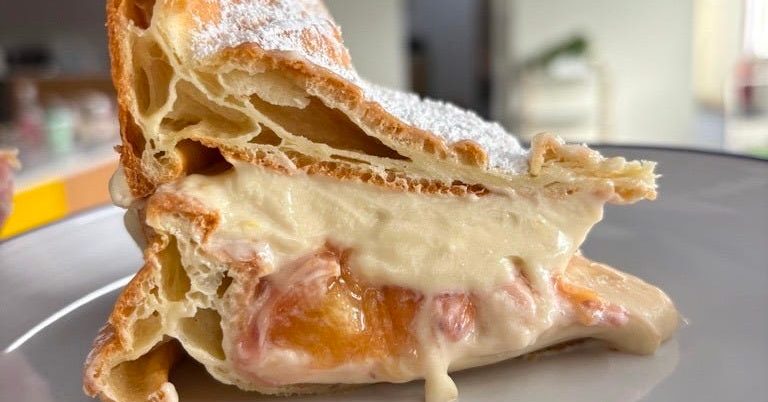
For the first time on the show, bakers faced a new technical challenge: the karpatka. This dessert is a Polish-inspired treat named after the Carpathian Mountains. It features two layers of choux pastry, sandwiched with a thick vanilla custard, resembling a layered custard slice or millefeuille.
Paul Hollywood warned that the challenge has many pitfalls. Achieving the right balance between crisp choux and creamy custard is difficult. Some bakers may struggle with texture, temperature, or layering.
How to Make a Karpatka at Home
The recipe is designed for home bakers with clear, step-by-step instructions. It uses familiar ingredients and techniques, making it accessible without needing professional equipment.
For the Chamomile Custard
- 500ml whole milk
- 3 camomile teabags
- 6 egg yolks (whites can be frozen for other recipes)
- 5 tbsp cornflour
- 120g golden caster sugar
- 120ml double cream
For the Choux Pastry
- Neutral-tasting oil (e.g. vegetable) for tins
- 80ml milk
- 80g salted butter, cubed
- 100g self-raising flour
- 1 tbsp caster sugar
- 3 eggs, beaten
For the Lemon-Plum Filling
- 2 large or 4 small plums, halved and stoned
- 2 tbsp light brown soft sugar (more may be needed if plums are tart)
- ½ lemon, zested and juiced
- Icing sugar, to serve
- Heat milk and add tea bags. Cover and leave to infuse for 20 minutes. Remove tea bags and reheat gently.
- Whisk egg yolks, cornflour, sugar, and a pinch of salt until creamy. Slowly stream in warm milk, whisking continuously. Return to a pan.
- Heat on medium until thick and smooth. Strain through a sieve into a bowl. Cover and chill for about one hour.
- Line two 20cm springform tins with baking parchment. Oil the sides.
- Place plums, lemon zest, juice, and sugar in a roasting tin. Toss to coat. Roast for 25–30 minutes until softened but not mushy. Cool in tin, then cut into quarters.
- Heat milk and 80ml water. Add butter cubes. Bring to a rolling boil. Whisk flour, sugar, and salt in a bowl.
- When milk is boiling, pour in flour and stir until no lumps remain. Cook until a light, white film forms on the pan bottom—about 1 to 2 minutes.
- Transfer to a plate to cool slightly. Return to pan and add 1 tbsp of beaten egg. Stir vigorously with a wooden spoon.
- Repeat with more egg, adding a little at a time, until the mixture is slow, shiny, and forms a V-shape when dropped.
- Pipe half of the choux into the tins. Smooth the top with a spoon, adding decorative swirls.
- Bake for 25–27 minutes until deeply golden and risen. Cool slightly in the tin before removing and cooling completely on a wire rack.
- Once custard is cold, beat it to loosen. Whip cream to soft peaks. Fold cream into custard.
- Place one choux pastry lid on the bottom of a tin. Spoon in half the custard. Add plums. Smooth over the remaining custard. Cover with the second choux lid.
- Chill for one hour. When ready to serve, release the springform tin and transfer to a plate. Dust with icing sugar and slice into thick wedges.
The recipe allows flexibility. Fillings can be adapted to personal taste—chamomile and lemon plums are used here, but vanilla or other flavours are viable alternatives.
For those who enjoy the show, the next episode will feature Free From Week, with a quarter-final spot up for grabs. The competition continues to showcase both technical skill and creative diversity in baking.
Home bakers can now try the karpatka without the pressure of judging. The recipe offers a clear path from ingredient to finished dessert, with each step grounded in practical, tested methods.
For more pastry inspiration, see Nigella’s bread and butter pudding appearance or explore Dutch baby German pancake. A similar layered dessert, panna cotta with cranberry compote, offers a different texture and flavour profile.
Sources & further reading
Featured image: A slice of Polish karpatka cake on a plate. Via original publisher. Image source