Summer was a wake-up call, winter could be dire — a warning about food supply vulnerabilities in Wales has emerged from a growing concern over climate change and global disruptions. Source: bbc.co.uk.
Wales’ Dependence on Imported Produce
Wales imports most of its fruit and vegetables. Only 6% of school meals are grown locally. This means the country’s food supply relies heavily on global regions — many of which face rising droughts and wildfires.
Most produce comes from southern Europe and North Africa. These areas are already hot and dry. Climate change is making conditions worse. Crop yields are at risk. The supply chain is fragile.
Climate and Supply Chain Risks
Summer droughts and wildfires have already stressed food systems. These events show how vulnerable current models are.
Winter flooding poses a greater threat. Heavy rain can damage roads, block transport, and flood storage. In rural Wales, infrastructure may not withstand such events. Food distribution could collapse.
Climate variability is becoming more intense. Without adaptation, food systems may fail during emergencies or global shocks.
Centralised Food System and Security Risks
Duncan Fisher, co-founder of Our Food Trust, says the UK’s food system is overly centralised. 95% of food comes from just nine supermarkets.
This system runs on a ‘just-in-time’ model. Food is delivered only when needed. There’s little storage. It’s moved in lorries on motorways.
This makes the system fragile. A single failure — from a cyberattack to a traffic jam — could stop food flow. There’s no buffer. Supplies vanish quickly.
Local Farming Efforts in Wales
Fisher and Sue Holbrook started Our Food Trust about 10 years ago. Their goal is 100 farms growing fruit and vegetables for local markets.
Even though 90% of Wales is farmland, only 0.1% is used for horticulture. This shows a gap between potential and current use.
Challenges for New Farmers
Stable housing is a major barrier. Farmers must be on-site to respond to emergencies.
High winds or a sheep entering a field could destroy crops in hours. Only someone living on the land can act fast.
Planning rules make it hard to build homes on farmland. These rules were made for cities, not farms. Aspiring farmers struggle to find both land and housing.
Progress on Temporary Housing
With Powys Council and the Bannau Brycheiniog National Park Authority, three temporary homes have been built on 36 acres of council land.
Three more are under construction. This gives more farmers access to on-site housing and helps them operate safely.
Farmer Perspective: Lydia Dibben
Lydia Dibben, 28, runs a farm near Newtown, Powys. She says access to land and housing is the biggest barrier.
Without a home, she’d need a second job to afford rent. That leaves little time for farming.
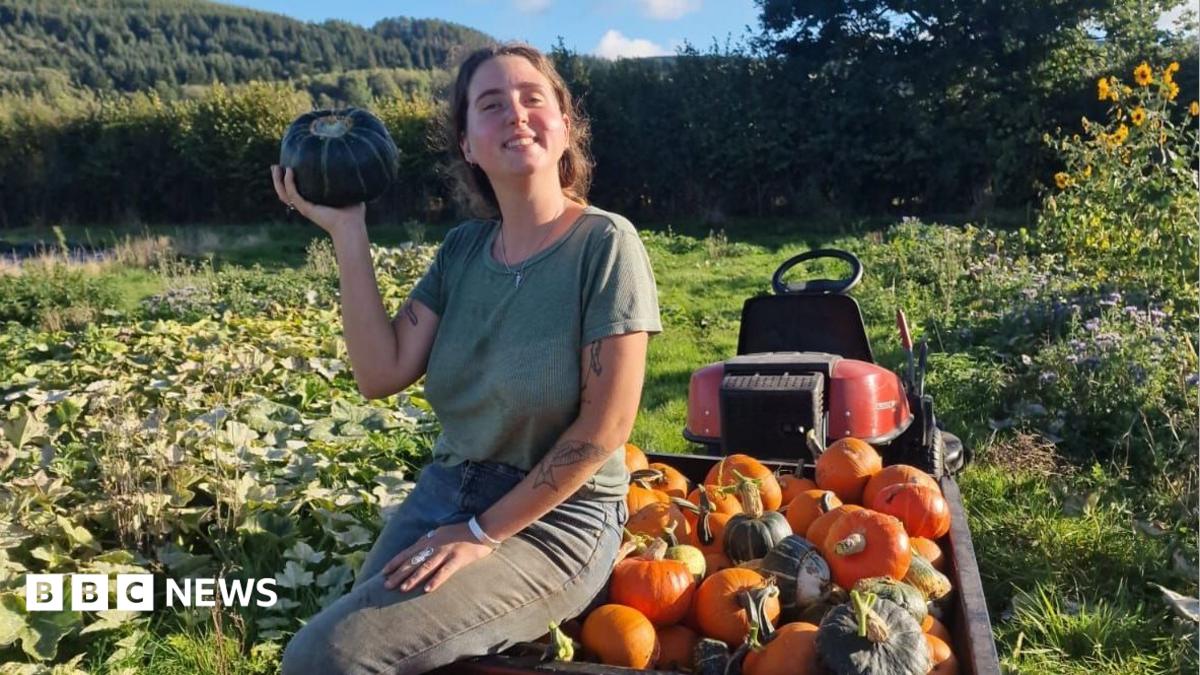
She grows on just over an acre. She supplies 50 vegetable boxes weekly. She runs four farmers’ markets a month and supplies wholesale markets.
She believes hundreds of people are fed through her farm. This shows small farms can have a big impact.
Climate Challenges in Practice
She often worked until midnight to water crops.
By 09:00, polytunnels became too hot. She had to go indoors and wait until 17:00 to return.
Even with consistent watering, crops grew slowly. Plants were stunted. This was due to extreme heat and lack of rain.
She hasn’t received her water bill. She fears it will be very high. Without enough water, farming fails.
What This Means for the Future
There’s a common belief that growing food is simple — like growing grapes or peaches. In reality, farming must adapt to heat and unpredictable weather.
Farmers need to choose crops that handle heat and drought. This includes selecting more resilient varieties.
Dibben envisions a future where one small farm exists every 10 miles in Wales. This would create a resilient, local food network. It would reduce reliance on global supply chains.
Government Responses
The Welsh government says it has made ‘significant progress’ on a national food strategy. The plan aims for a more resilient, integrated, and sustainable food system.
It has begun mapping the current state of the sector. It’s working with key stakeholders to understand challenges.
The UK government’s Department for Environment, Food and Rural Affairs says it recognises grower challenges. It will cut planning red tape and invest £200m in crop-boosting technology.
The prime minister has said food security is national security. The government is working to strengthen supply chains.
Key Limitations and Open Questions
Only 0.1% of farmland is used for horticulture. This shows a large gap in land use. Access to land and housing remains a key barrier.
Climate impacts vary by region. Some areas may face worse disruptions than others.
What to Watch Next
How fast the government moves on housing and land access will shape local farming growth.
Monitoring crop performance in extreme weather will show where systems are weak and where improvements are needed.
Source: BBC News — ‘Summer was a wake-up call, winter could be dire’ warning over food supplies
Sources & further reading
Featured image: Lydia Dibben sits on a trailer full of pumpkins in a sunny field, holding up a dark green squash against a backdrop of farmland and hills. Lydia has her hair tied up and is wearing a sage green t-shirt and grey jeans.. Via original publisher. Image source