Young people across Europe have staged coordinated protests under the slogan ‘fight for our future, not their wars’.
What Happened
On Friday, activists from over 50 groups gathered in cities including Berlin, Paris, Rome, Madrid, and London.
They lit flares, burned cardboard models of tanks, and waved placards with messages like ‘fight for our future’.
The Youth Strike coalition says these demonstrations are Europe’s largest coordinated youth protest in recent years.
Events were planned in about 400 cities. The message remains consistent across national lines.
Key Demands
- End militarisation and conscription
- Invest in education and public welfare
- Stand with Palestine
- Push for climate and social justice
- Transform the current economic and political system
Organisers say these demands are deeply connected, even if expressed differently in each country.
In Italy, Alessandro di Miceli said the protests are about claiming a better, dignified future. He noted the goals remain unified despite country-specific details.
Leonor Chicó, a Portuguese organiser, said: ‘As young people, we must organise and fight for our future — no one else will do it for us.’
She added that governments show daily that young people’s needs are not a priority.
Shabbir Lakha of the UK-based Stop The War coalition said the mobilisation is a crucial step in building a lasting international movement.
Background and Context
The protests began after weeks of demonstrations in France, sparked by long-running school protests.
Since then, governments have faced growing pressure to address affordable housing, public services, and social equality.
Groups with past protest experience are now involved. In France, the gilets jaunes — active from 2018 to 2019 — are among the organisers.
In Germany, about 1,000 students marched in Berlin, fearing a return to compulsory military service.
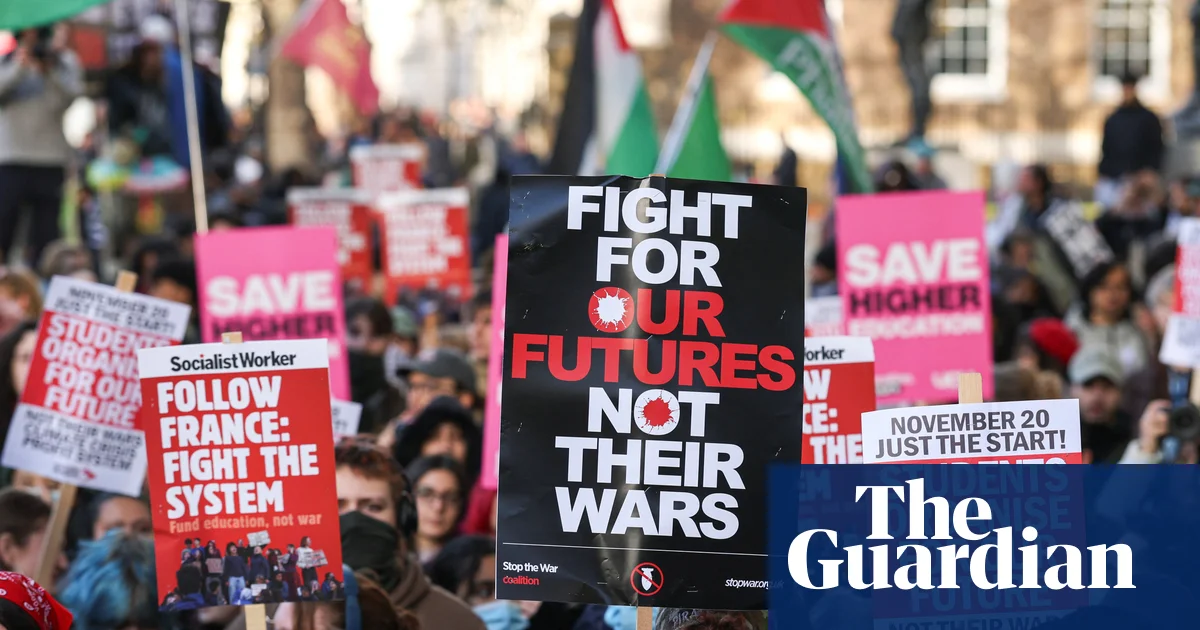
In London, youth-led marchers held banners reading: ‘No to war, racism, climate crisis, capitalism’.
In Spain, protests occurred on the anniversary of dictator Francisco Franco’s death, adding historical weight.
Young people express deep frustration with current policies. Laura Peritore, a 24-year-old university student in Italy, said: ‘We are living under a government that is cutting healthcare and education. It’s taking away our present and trying to rob us of our future. We will not back down — we will take our future back.’
Why It Matters
The scale and coordination show a growing youth-led response to economic and social challenges.
These protests reflect a shift: young people now demand systemic change, not just isolated policy fixes.
The demonstrations highlight tensions between national policies and global issues — like climate justice, militarisation, and inequality — that cross borders.
For governments, the protests present a serious challenge in balancing public order with demands for equity and accountability.
Further coverage is available at Protests Across Europe Over Cost of Living and Housing Protests in Portugal: A Crisis of Injustice and Repression.
For more on the original report, see the Guardian’s original report.
What to Watch Next
Government responses in France and Italy may shape how other countries react.
The role of established groups like the gilets jaunes could influence future mobilisations.
Public reactions to demands — especially on education, housing, and military spending — will be closely watched.
Any increase in arrests or crackdowns may signal a broader political response.
As the protests continue, the focus will remain on whether young people can sustain public attention and pressure for real reform.
Sources & further reading
Featured image: original publisher image. Via original publisher. Image source