50 Years Ago Today: The Beach Boys Play Pivotal ‘Brian’s Back’ Concert in Cincinnati Source: rollingstone.com.
On November 22, 1976, the Beach Boys performed a landmark concert at the Riverfront Coliseum in Cincinnati, Ohio. It was the first time since 1964 that Brian Wilson, the band’s creative heart, had returned to the stage. The show marked a pivotal moment in the group’s history — a rare live performance that included new material and a deep connection to fans.
What Happened: A Historic Return
The concert was part of a broader tour known as the ‘Brian’s Back’ campaign. After years of declining interest in new music, the band had begun playing arenas and stadiums, relying on hits from the 1960s.
Band manager Steve Love convinced Brian Wilson to return to the stage. The effort was backed by a special NBC television broadcast, produced by Lorne Michaels and the original Saturday Night Live team. A famous sketch featured Dan Aykroyd and John Belushi as the ‘Surf Police’ storming into Wilson’s bedroom to force him to surf — a symbolic gesture of the band’s revival. The sketch was not only a comedic highlight but also a cultural touchstone, blending satire with the band’s surf-inspired identity.
Rolling Stone published a classic photo of Wilson in a blue robe standing on the sand. It appeared on the Nov. 4, 1976, cover. The image became iconic, capturing Wilson as both a cultural figure and a nostalgic icon. The photo was not just a visual representation — it was a carefully composed moment that emphasized his physical presence, vulnerability, and connection to the beach, a central metaphor in the band’s music.
Key Facts: The Night in Cincinnati
- The concert began with ‘Wouldn’t It Be Nice’ and ‘Palisades Park’.
- Mike Love introduced Brian Wilson, saying, ‘My cousin, the one and only, the magnificent, Brian Wilson!’
- After the introduction, the band played ‘Little Deuce Coupe,’ ‘Darlin’,’ ‘In My Room,’ and ‘God Only Knows’ — songs that sparked strong audience reactions.
- Al Jardine performed ‘Back Home,’ a song about returning to his birthplace in Ohio. It resonated with the local crowd.
- The band played a trio of 1960s hits — ‘Catch a Wave,’ ‘Heroes and Villains,’ and ‘Surfin’ USA’ — before introducing Joellyn Lambert, a former taxi driver who inspired the song ‘Susie Cincinnati’.
- Lambert was contacted through a local ad and appeared at the show. She said, ‘I still can’t believe this is really happening.’
- The performance ended with a long run of surf-era hits, culminating in ‘Fun, Fun, Fun’.
Background: The Rise of a Nostalgia Wave
The 1970s saw a surge in nostalgia for 1960s pop culture. Films like American Graffiti and Happy Days helped reframe the era as a golden age of music and youth culture. The Beach Boys, with their surf-themed sound and iconic image, were at the center of that revival.
Endless Summer, a 1974 compilation, reached No. This success allowed the band to focus on live performances rather than new studio work. As Al Jardine told Rolling Stone in 2025, ‘We knocked them dead every time we went out just playing the hits.’ The band’s live shows became a form of cultural ritual — a return to a shared youth experience, where fans could relive the music of their formative years.
But by 1976, that momentum had slowed. The band needed a new strategy. The return of Brian Wilson offered a fresh narrative — one of a once-legendary figure re-emerging after years of absence. This wasn’t just a performance; it was a symbolic act of cultural resurrection. The idea of a 1960s group reappearing in the mainstream was once considered improbable, but the Beach Boys had become a cultural touchstone through decades of media exposure and fan devotion.
Why It Mattered: A Moment of Authenticity
Though Brian Wilson was only briefly visible during the show, his presence was symbolic. As Dennis Freeman of the News Record wrote, ‘Brian was introduced early on in the first set. Most of the crowd stood to acknowledge one of the giants in the history of rock. He didn’t do much — sat impassively behind his piano — but it was important to the group that he was with them again.’
For fans, the performance was a rare glimpse into the band’s creative process. The unreleased songs — especially ‘Airplane’ — were deeply personal. They reflected a new direction, one that blended personal memory with musical innovation. The song ‘Airplane’ was not just a catchy tune; it captured the emotional journey of a fan’s experience — the thrill of flight, the isolation of travel, and the longing for connection. It was a song that spoke to the universal human condition, not just to the Beach Boys’ fanbase.
‘Airplane’ became a standout moment. It was so powerful that the band only performed it a handful more times. It wasn’t played again after 1979. The song didn’t receive a full live performance until Al Jardine’s 2025 tour with the Pet Sounds Band. This delay underscores how fragile such creative moments can be — even when they are deeply felt, they may not be sustained in the face of commercial or logistical pressures.
Personal Connections and Fan Engagement
One of the most touching elements of the night was the appearance of Joellyn Lambert. A former taxi driver, she had driven Al Jardine through Cincinnati in 1970, and her story inspired the song ‘Susie Cincinnati.’ The Beach Boys placed a notice in the local paper, seeking her out. This act of outreach demonstrated a genuine effort to connect with the real people behind the music.
When Lambert was tracked down and invited to the concert, she was visibly moved. ‘I still can’t believe this is really happening,’ she told the Cincinnati Post. ‘I’m now stopped on the street and asked if I’m really “Susie Cincinnati.”’ This moment illustrates how music can transcend the studio and become part of a shared human narrative. It shows that a song is not just a composition — it is a story, a memory, a bond between artist and audience.
Limitations and Aftermath
Despite the excitement of the night, the new material did not become a lasting part of the band’s identity. After the tour, the Beach Boys largely abandoned any pretense of being a creative force. They reverted to playing only 1960s hits. By the late 1970s, the group had effectively ended its role as a studio innovator. The idea of releasing new songs — especially from an unreleased album — became unthinkable. The audience had seen something rare, but the band did not sustain that momentum.
The concert also highlighted the risks of large-scale live events. Eleven fans were trampled when doors opened during a concert. The event prompted a city-wide review of concert safety protocols. As a result, Cincinnati banned ‘festival seating’ at concerts. The ban lasted until 2002, when Bruce Springsteen and the E Street Band performed at the U.S. Bank Arena on the Rising tour — a moment that marked the gradual return of safe, organized large-scale events in the city.
Legacy and Cultural Impact
The 1976 Cincinnati concert remains a rare example of a band bridging the past and present. It showed how nostalgia, personal stories, and live performance could create a powerful emotional connection. The performance was not just a musical event — it was a cultural event that resonated across generations.
Though the Beach Boys did not continue to evolve creatively after this point, the concert stands as a testament to the enduring power of music. It proved that even in a changing cultural landscape, fans still seek authenticity and connection. The show demonstrated that music can be both a reflection of the past and a bridge to the future — especially when it is rooted in real human experiences and shared memories.
For music fans, this night is more than a historical footnote. It is a reminder that live performance — especially when it includes new, personal, and unfiltered music — can still move audiences deeply. The Beach Boys’ return to the stage in 1976 was not just a revival of a band — it was a revival of a cultural identity, one that continues to inspire fans today.
Sources & further reading
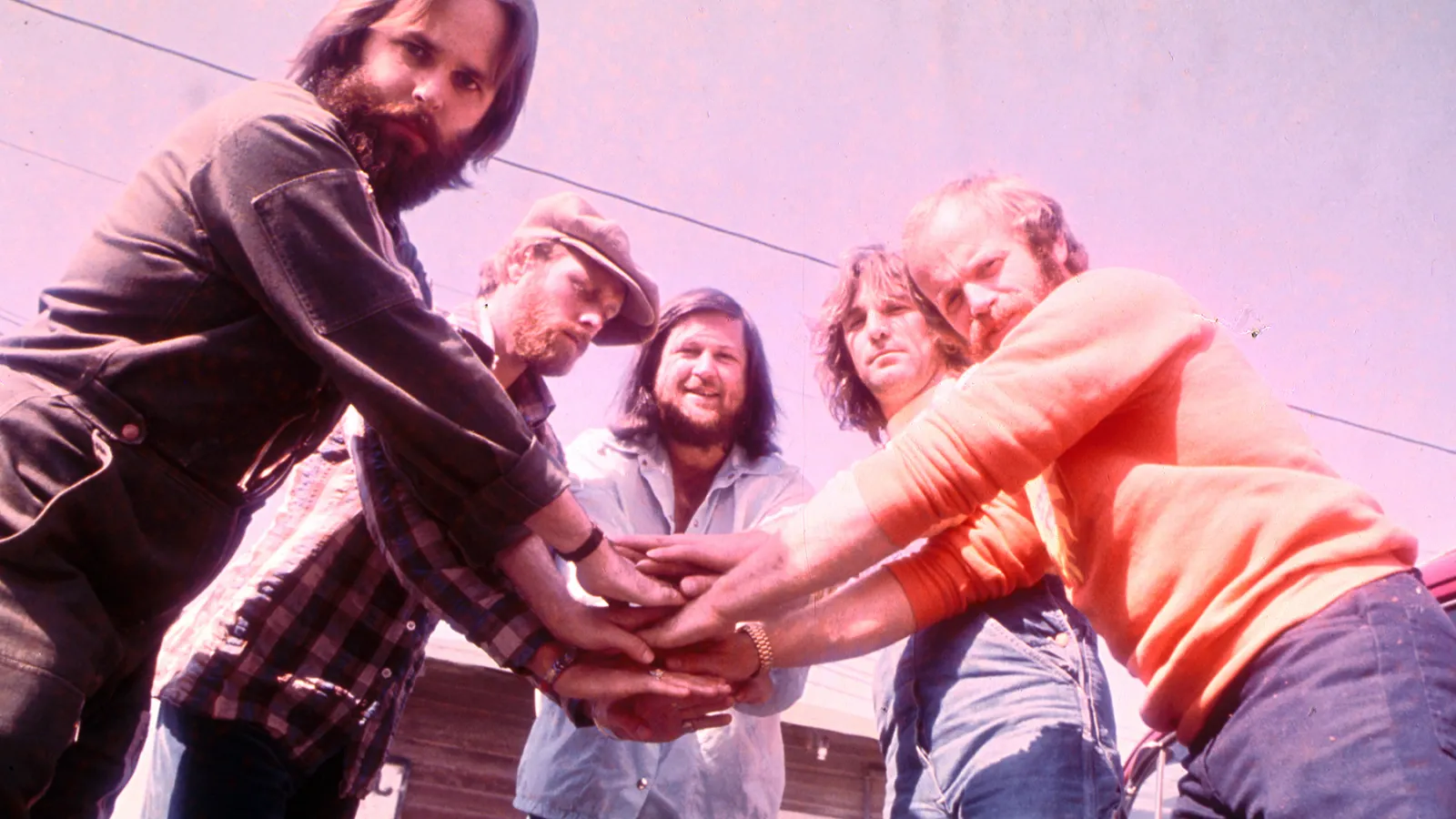
Featured image: CIRCA 1976: Rock and roll band "The Beach Boys" pose for a portrait in circa 1976. (L-R) Carl Wilson, Mike Love, Brian Wilson, Dennis Wilson, Al Jardine. (Photo by Michael Ochs Archives/Getty Images). Via original publisher. Image source