Gingerbread muffins are a festive treat that blends classic gingerbread flavours with rich, moist textures and a gooey caramel centre. These muffins are not only delicious but also embody the spirit of winter and Christmas baking, offering a warm, inviting experience that resonates with traditional holiday tastes.
What Makes These Muffins Special?
Created by Jane’s Patisserie, these gingerbread muffins combine the warmth of traditional gingerbread with modern baking techniques. The recipe is rooted in a carefully balanced blend of ingredients that work together to produce a soft, fluffy texture with a deep, spiced character. The use of a classic muffin mix as a base ensures consistency and ease of preparation, while the addition of warming spices—ginger, cinnamon, and nutmeg—brings out the familiar, comforting notes associated with gingerbread.
The muffin base is built with melted butter and a flavourless oil, which provides a rich, smooth texture without overpowering the flavour profile. Dark brown soft sugar is used for its natural depth and molasses-like undertone, which complements the treacle that is central to the recipe. While light brown sugar can be substituted, the author emphasizes that treacle delivers a more authentic, complex flavour that is difficult to replicate with alternatives.
Key Ingredients and Substitutions
- Treacle: A key ingredient, treacle adds a deep, molasses-like depth. It can be swapped with golden syrup, though the author recommends treacle for authenticity. This substitution is important because treacle has a more robust, slightly tangy profile that enhances the overall flavour balance of the muffin.
- White chocolate chunks: These are optional but add a rich, sweet contrast to the spiced base. They can be replaced with milk or dark chocolate, allowing for personal preference or dietary variation. The presence of chocolate introduces a creamy, slightly bitter note that contrasts beautifully with the warm, earthy spices.
- Caramel centre: A homemade caramel sauce is used to fill the muffins. This adds a gooey, warm layer that melts slightly when warmed, creating a delightful sensory experience. While store-bought caramel can be used, the author notes that homemade caramel offers a more consistent texture and a deeper, richer flavour due to the controlled reduction process.
- Mini gingerbread biscuits: These are used as a decorative topping. They are optional and can be omitted or replaced with a sprinkling of Demerara sugar for a crunchy top. This choice allows bakers to tailor the presentation to their preferences or available ingredients.
Vanilla extract is included to provide a bright, aromatic contrast to the natural molasses taste of the treacle and spices. The author notes that spice levels can be adjusted—doubling the amount of ground ginger may suit those who prefer stronger spice, especially in cases where the base flavour is not sufficiently pronounced.
How the Recipe Is Prepared
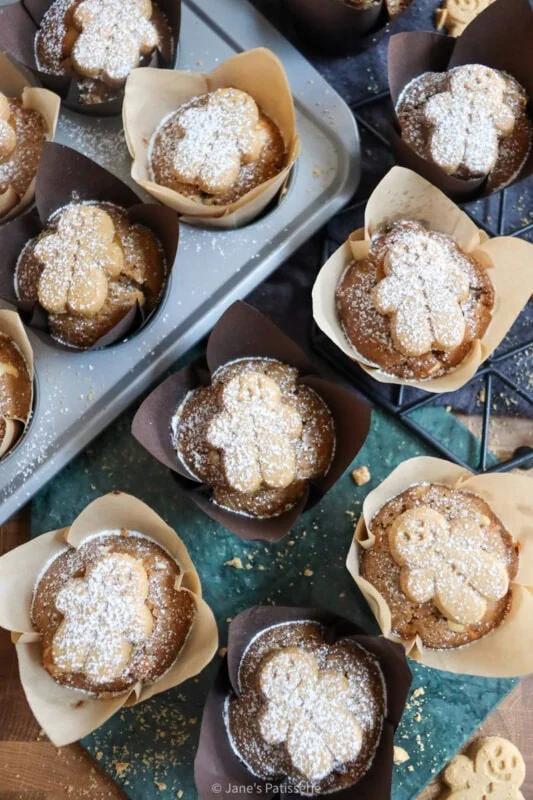
The muffins are baked in tulip-style cases, which are significantly larger than standard muffin tins. These cases are designed to accommodate a fuller rise, allowing the muffins to expand properly and maintain their soft, airy texture. This is especially important in recipes that rely on a delicate balance of moisture and structure.
After baking at 200°C (180°C fan) for 22 to 25 minutes, the muffins are removed from the oven and allowed to cool slightly. This brief cooling period is critical—overheating or immediate handling can cause the structure to collapse or the filling to become too runny.
For the filling, a piping bag is used to insert caramel sauce into the top of each muffin. The author recommends piping in about 1 to 2 tablespoons of sauce into the centre of each muffin. This method ensures even distribution and prevents the filling from spilling or forming lumps. The sauce is gently squeezed into the muffin cavity, allowing it to settle and create a smooth, gooey centre.
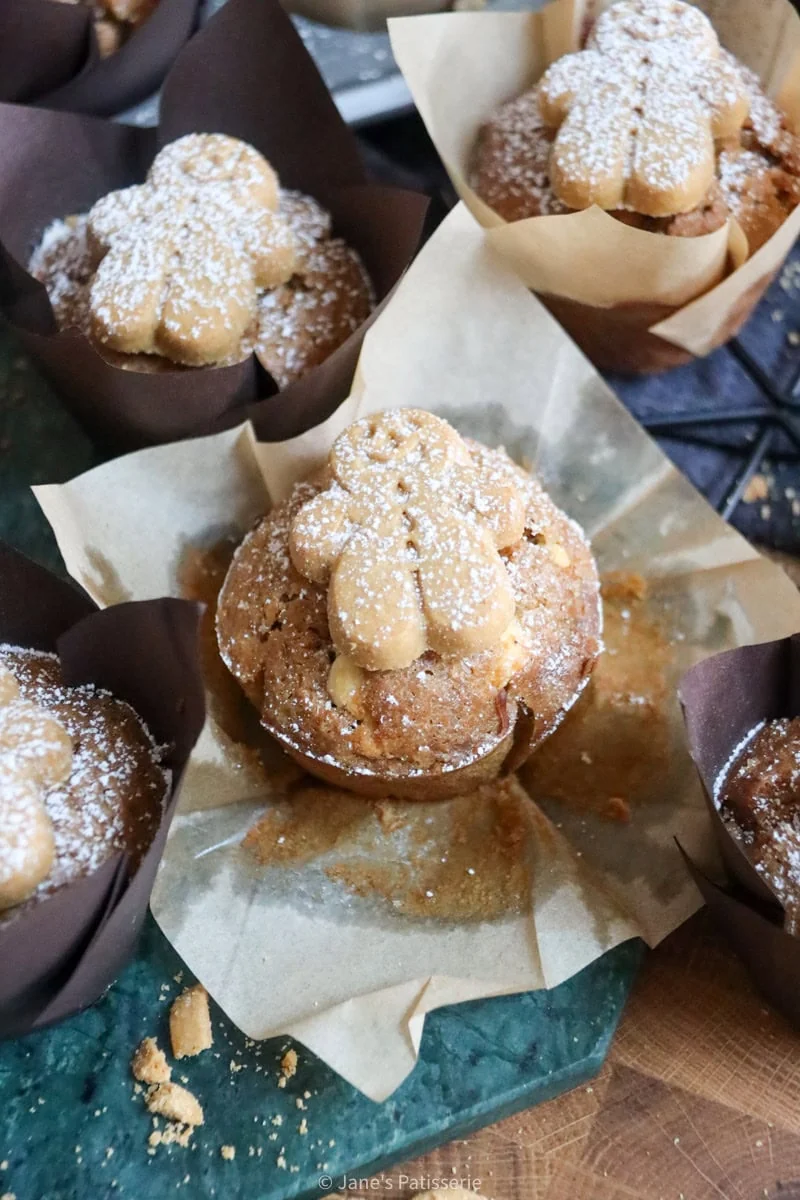
A light drizzle of extra caramel is added over the top, and a mini gingerbread biscuit is placed on top. The entire batch is then dusted with icing sugar for a festive finish. This final touch not only enhances the visual appeal but also adds a subtle sweetness and a crisp contrast to the soft, chewy texture of the muffin.
Storage and Shelf Life
The muffins are best enjoyed fresh, right after baking. They are most delicious when warm and soft, with the caramel centre melting slightly upon contact with the tongue. This makes them ideal for serving at holiday gatherings or as part of a festive afternoon tea.
At room temperature, they can last up to four days. While they may remain edible beyond this period, the texture and moisture content will gradually diminish. Refrigeration is not recommended because it may cause the muffins to dry out, especially in the presence of the caramel filling, which can harden and lose its smoothness.
For longer storage, the muffins can be frozen for three months or more. When ready to serve, they should be thawed either overnight in the fridge or at room temperature for about two hours. Thawing in the fridge helps preserve the texture, while room temperature thawing allows for a quicker, more convenient serving experience.
Author’s Notes and Personal Experience
According to Jane’s Patisserie, this recipe has been developed over time and is one of several gingerbread-themed bakes they have created. The author has kept this recipe a secret for some time, suggesting a level of craftsmanship and care in the preparation process. This may indicate that the recipe has been refined through repeated testing and personal experimentation, resulting in a consistent and reliable outcome.
The author emphasizes that overmixing the batter is a common mistake that leads to dense, less fluffy results. They personally avoid using mixers for this recipe, opting instead for hand mixing to maintain texture. This hands-on approach ensures that the batter remains light and airy, which is essential for achieving the soft, fluffy consistency that defines these muffins.
Why This Recipe Matters in Holiday Baking
These muffins are ideal for winter and Christmas baking. They offer a comforting, warm experience that aligns with traditional holiday tastes. By combining familiar gingerbread elements with a rich caramel centre and chocolate, the recipe delivers both nostalgia and innovation.
They are particularly well-suited for festive gatherings, where texture and flavour are key to creating a warm, inviting atmosphere. The combination of soft, moist base, spiced warmth, and gooey filling makes them a standout choice for holiday tables or as a gift item.
Limitations and Considerations
The recipe relies on specific ingredients like treacle and buttermilk. These may not be available in all regions or households. While substitutions are offered, the author does not guarantee that all alternatives will produce the same texture or flavour. For instance, buttermilk can be made at home by mixing milk with lemon juice or vinegar, but the resulting mixture may vary slightly in acidity and consistency.
There is no mention of allergens or dietary restrictions, so individuals with sensitivities should check ingredient lists carefully. The presence of dairy, eggs, and potential nut-based chocolate means that those with allergies may need to modify the recipe accordingly.
The recipe is not designed for large-scale production. It is best suited for home bakers or small groups. The use of individual tulip cases and the time-intensive filling process make it less practical for commercial or mass production settings.
The author does not provide a detailed breakdown of nutritional values or calorie counts, limiting its use for health-focused audiences. However, the recipe is clearly designed with flavour and texture in mind, not nutritional balance.
What to Watch For in Future Baking
As holiday baking continues to evolve, recipes like these may inspire more fusion-style desserts that blend traditional tastes with modern techniques. Future iterations might explore different types of fillings or spice blends to cater to diverse palates—such as adding cardamom, cloves, or even a hint of orange zest—to create new sensory experiences.
With increasing interest in homemade, seasonal treats, recipes that balance simplicity and depth will remain popular. The success of this gingerbread muffin recipe demonstrates how a well-crafted, ingredient-focused approach can deliver both emotional satisfaction and culinary excellence.
Source: Jane’s Patisserie – Gingerbread Muffins
Sources & further reading
Featured image: original publisher image. Via original publisher. Image source