A growth mindset is a belief that abilities and intelligence can be developed over time through effort, learning, and persistence. This concept, popularized by psychologist Carol Dweck, helps individuals view challenges as opportunities rather than threats. Rather than seeing talent as something fixed and unchangeable, people with a growth mindset understand that skills and intelligence are shaped by experience, feedback, and consistent practice.
The Difference Between Growth and Fixed Mindsets
According to psychological research, individuals with a fixed mindset view talent and ability as innate and unchangeable. They often avoid challenges, fear failure, and believe that effort is wasted if results aren’t immediate. For instance, a student who believes they are not good at math may stop trying after one failure, assuming their lack of skill is permanent. This mindset can lead to avoidance of difficult tasks, reluctance to seek help, and a tendency to dismiss feedback as criticism.
In contrast, those with a growth mindset see effort as a path to improvement. They view failure as feedback, not proof of inadequacy. They are more likely to persist through setbacks and welcome constructive criticism. Instead of seeing a mistake as a sign of weakness, they interpret it as a signal that they can learn more about the subject. This shift in perspective allows individuals to adapt, grow, and develop resilience in the face of adversity.
For example, a student with a growth mindset might analyze a test result, identify where they struggled, and then create a study plan to improve. They may also ask for help, reflect on their learning process, and adjust their approach. This proactive attitude fosters long-term skill development and emotional stability.
Benefits of a Growth Mindset
Developing a growth mindset offers numerous benefits that extend across education, careers, and personal relationships. One key benefit is reduced fear of failure, which makes people more open to trying new things. When individuals believe that abilities can grow with effort, they are less likely to avoid challenges or give up when things don’t go as planned.
Another benefit is a stronger inclination to learn from feedback. Instead of rejecting criticism, individuals with this mindset see it as a valuable tool for improvement. This leads to consistent skill development over time, especially in fields that require continuous learning, such as technology, medicine, or creative arts.
Additionally, a growth mindset lowers stress because success is defined by progress, not perfection. Rather than striving for flawless outcomes, people focus on the journey and the steps they take to move forward. This shift in focus reduces anxiety and promotes a more balanced, sustainable approach to achievement.
Finally, goal achievement becomes more sustainable. People with a growth mindset are not driven by the need to reach an ideal endpoint but are immersed in the process of achieving their goals. This focus on process over outcome leads to greater motivation, resilience, and long-term commitment.
These benefits are supported by research in education, psychology, and workplace performance, which indicates that individuals with growth mindsets tend to adapt better to change, respond more positively to feedback, and maintain consistent performance under pressure.
Key Growth Mindset Worksheets
The following worksheets are designed to help individuals assess and develop a growth mindset. All are available for free download from the source website.
The Mindset Quiz
This 10-question quiz asks users to rate statements on a scale from -0 to 3. After scoring, users can interpret their results using a provided chart. The quiz helps identify whether someone leans toward a fixed or growth mindset. For example, statements like ‘I believe I can improve with effort’ or ‘I don’t mind making mistakes’ are evaluated based on how strongly a person agrees with them.
Users can access the printable PDF version by clicking a link beneath the quiz image on the source page. This allows for easy sharing and use in personal or educational settings.
Growth Mindset Printable Pack
Designed for homeschooling families, this pack includes coloring pages with motivational quotes about growth. These visual tools help children and adults alike connect abstract concepts to tangible, positive imagery. The pack also includes reflection questions that guide users in assessing their own beliefs about ability and effort.
Access requires a newsletter subscription. After signing up, users receive a direct download link via email. This subscription model ensures that the content is delivered in a timely and organized manner, though it may limit accessibility for users who do not wish to subscribe.
Finding a New Way of Thinking
This eight-page workbook guides users through a structured process to shift from negative to positive thinking. It includes steps such as identifying a negative mindset, defining a desired outcome, identifying what’s holding you back, challenging your thoughts, and finding a new way of thinking. Reflection spaces are provided for users to write responses, allowing for deeper self-exploration.
For instance, a person struggling with self-doubt might use this workbook to explore how their beliefs about themselves were formed and how they can reframe them. The workbook is particularly useful for personal development, especially in areas like relationships, home organization, or career transitions.
Growth Mindset Journaling Template
This light brown template includes prompts for journaling about personal growth. Sections cover areas of improvement, root causes, new beliefs, and actionable steps. By regularly reflecting on these prompts, users can track their progress and identify patterns in their thinking and behavior.
For example, someone might write that they struggle with time management, trace it back to a past experience of feeling overwhelmed, and then commit to setting daily time blocks. This structured reflection helps build self-awareness and accountability.
Users can download the PDF by clicking a link in the section titled ‘How do I create a growth mindset?’ on the source page. The journaling format makes it ideal for daily use, especially when combined with habit tracking or goal setting.
Daily Self-Growth Plan Template
This weekly planner helps users set daily goals. It includes spaces for major goals, daily to-dos, and fun activities. The planner supports a balanced lifestyle by integrating personal development with everyday routines.
Two versions are offered: a black-and-white minimalist design and a pastel one. The minimalist version emphasizes clarity and simplicity, while the pastel version adds visual appeal and emotional comfort. Both are designed to be used consistently over time, helping users build sustainable habits.
Growth Mindset Test
A quick test that asks users to rate statements on a scale. The total score is compared to a chart to determine mindset type. This test is designed for rapid self-assessment and can be used as a starting point for deeper exploration.
To print, users can right-click on a Pinterest image, copy it, paste it into a Word document, and save it for printing. While this method is functional, it requires manual steps and may not be ideal for users who prefer digital formats.
Overcome All-or-Nothing Thinking
This worksheet addresses the tendency to demand perfection. It includes reflection questions on how users expect themselves to perform and how they respond to failure. For example, it might ask, ‘What happens when I don’t meet my expectations?’ or ‘Do I see failure as a personal flaw or a learning opportunity?’
It supports a shift toward accepting imperfections. Access requires a newsletter subscription. A download link is sent via email, leading to an editable Canva file. This format allows users to personalize the worksheet to their unique experiences, enhancing its relevance and impact.
Limiting Belief Worksheet
This three-page workbook helps uncover deeply held beliefs that may block personal growth. It includes prompts to explore the origin and impact of these beliefs. For instance, a user might reflect on how they were told they weren’t good at math as a child and how that belief still influences their confidence today.
Users can download the PDF by clicking a link beneath an image of the worksheet in the article. The prompts are designed to encourage introspection and emotional awareness, helping users identify and challenge beliefs that no longer serve them.
The Power of Yet
Designed for children, this worksheet introduces the concept of ‘yet’ as a way to reframe limitations. It allows kids to write things they can’t do…yet. For example, a child might write, ‘I can’t ride a bike yet,’ or ‘I can’t solve math problems yet,’ which shifts the narrative from impossibility to possibility.
It is useful in classrooms or for homeschooling. The download link is found near the end of the article, under the phrase ‘this graphic organizer.’ This tool helps children develop emotional resilience and a more flexible view of their capabilities.
Free SMART Goals Worksheet
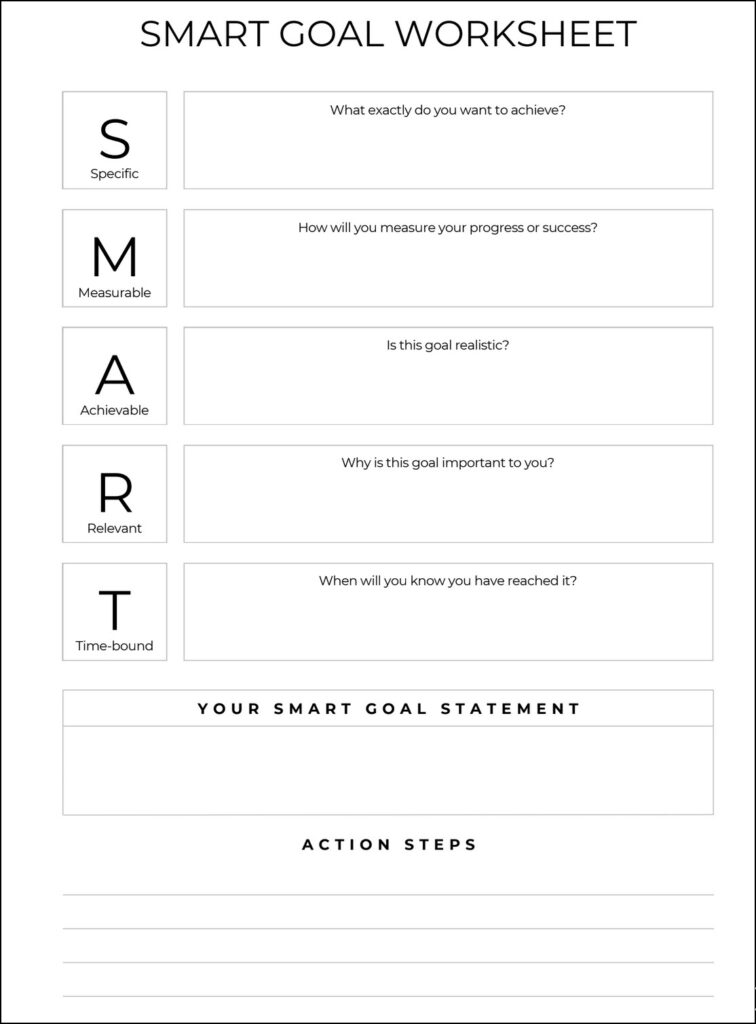
A separate, free resource helps users define clear goals and break them into manageable steps. The SMART Goals Worksheet uses a structured format to ensure goals are specific, measurable, achievable, relevant, and time-bound. This tool supports goal tracking and progress monitoring.
Users can access a Google Drive folder with options for A4, A5, and US Letter sizes. This tool is particularly effective when used in conjunction with other worksheets, such as the journaling or daily planner, to create a cohesive personal development system.
Why These Worksheets Matter
These tools are practical and accessible. They allow users to reflect, set goals, and build habits in a structured way. The worksheets are designed for different age groups and life stages, from children to adults. For instance, a child might use the ‘Power of Yet’ worksheet to build confidence, while an adult might use the journaling template to manage career transitions.
They are not meant to diagnose or replace professional advice. Instead, they serve as starting points for self-reflection and personal development. Their effectiveness depends on consistent use and honest self-assessment. Some may find the prompts emotionally challenging, especially when confronting deeply held beliefs.
Limitations and Considerations
None of the worksheets are clinical tools. They are not validated by medical or psychological institutions. Their effectiveness is based on anecdotal and educational use, not scientific trials. As such, they should be viewed as supportive tools rather than definitive solutions.
Access to some worksheets requires a newsletter subscription. This may limit availability for users who do not wish to subscribe. Additionally, some templates, like the Canva file, require editing tools. Not all users may have access to such software.
There is no mention of cultural or developmental differences in how these worksheets may be interpreted or applied across diverse populations. For example, cultural values around achievement, failure, or effort may influence how users respond to the prompts.
The source does not provide evidence of long-term outcomes or user success rates. The benefits described are based on general psychological principles, not empirical data from the worksheets themselves. Users should approach these tools as part of a broader self-development strategy, not as standalone solutions.
For more resources on mindset development, readers may explore related content such as children’s books on growth mindset or habits for personal success.
Further reading includes: 9 Growth Mindset Worksheets for Kids, Students, and Adults and Develop Good Habits.
Sources & further reading
Featured image: growth mindset worksheets | growth mindset worksheets free | printable growth mindset worksheets. Via original publisher. Image source