Amid growing interest in indoor gardening, many home users are seeking simple, effective ways to grow fresh greens without soil or messy tools. Amy Draiss, Digital Community Manager at Gardening Know How, shares her experience upgrading from a $1.50 Dollar Tree greenhouse to the Vego Garden EZ Microgreens Planter. Source: gardeningknowhow.com.
The Dollar Tree Greenhouse: A Starting Point
Early in her microgreens journey, Amy used a 7″ x 5″ mini greenhouse from Dollar Tree. It included a seed-starting tray and a clear humidity dome, making it ideal for beginners.
She found it functional for a short period—enough to grow a small batch of microgreens. However, the plastic tray lacked drainage holes, which she had to fix by poking holes herself.
She also needed a second tray beneath to catch excess water. Over time, the plastic became brittle and flimsy, making it less reliable for repeated use.
Despite its low cost, the setup was limited by material durability and required manual adjustments. It worked well initially but failed to meet her long-term needs. The lack of structural integrity meant that after just a few growing cycles, the tray began to warp and crack under the weight of the soil and moisture, especially when exposed to temperature fluctuations common in kitchen environments. This fragility made it impractical for consistent use, particularly when multiple batches of seeds were being started in succession.
Additionally, the absence of a built-in drainage system meant that users had to rely on external solutions—such as placing a secondary tray underneath—to manage runoff. This not only added clutter to the workspace but also increased the risk of spills or accidental contamination of surfaces. Amy noted that this setup was particularly unsuitable for households with young children or pets, where spills could lead to unintended messes or safety hazards.
Introducing the Vego Garden EZ Microgreens Planter
The Vego Garden EZ Microgreens Planter arrived as a more structured solution. It includes two complete dome sets, four 10″ x 10″ trays, two humidity dome covers, and 20 bamboo fiber growing mats.
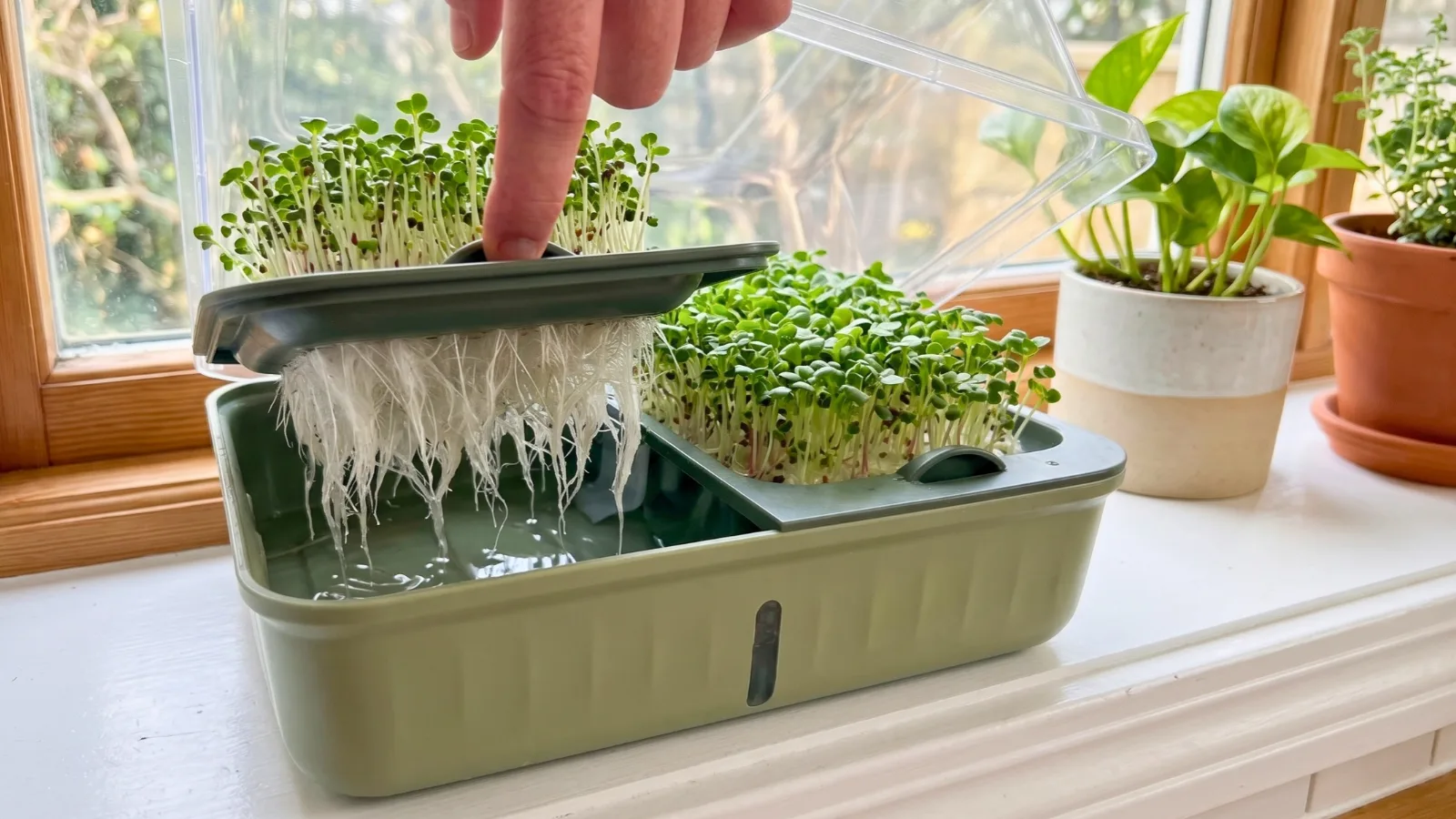
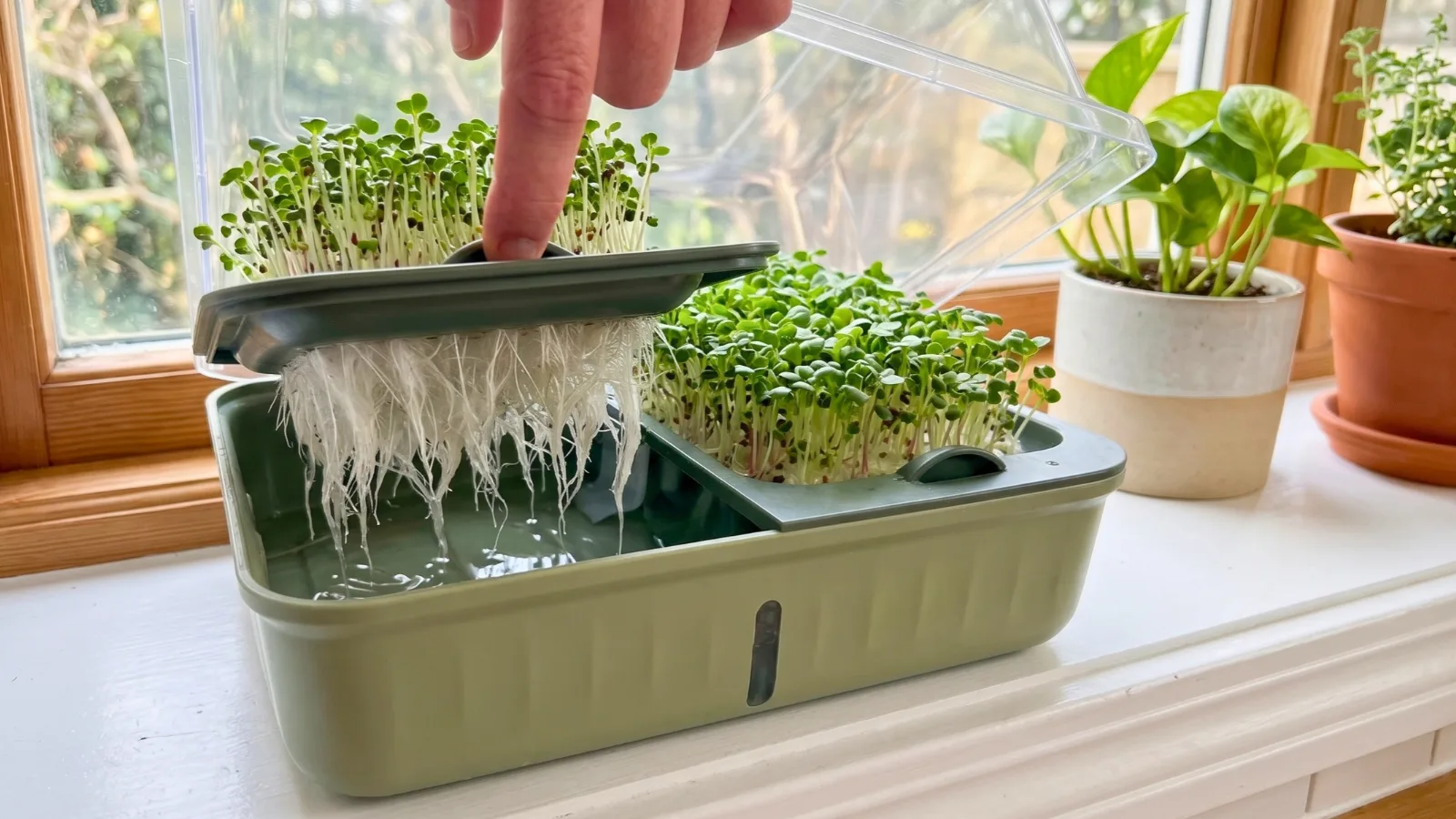
Each mat is designed to wick moisture from a water reservoir below, eliminating the need for soil. The system is intended specifically for microgreens, which grow quickly and require minimal care.
Unlike the Dollar Tree version, the Vego planter is made from food-safe plastic and avoids soil entirely. This makes it cleaner and easier to maintain, especially in kitchen environments. The bamboo fiber mats are not only biodegradable but also naturally absorb moisture while allowing for air circulation, which helps prevent mold and rot—common issues in soil-based systems.
The inclusion of two full dome sets is a significant feature. It allows users to grow two separate batches simultaneously or to share one set with a friend or family member, promoting social engagement and collaborative gardening. This design choice reflects a growing trend in home gardening toward shared experiences and community-based practices, where individuals can exchange harvests or co-create garden projects.
How the Planter Works: A Step-by-Step Process
- Place the water reservoir on a table or countertop.
- Insert the growing trays into the planter and add the bamboo fiber mats.
- Ensure the wicking tabs on the mats are tucked beneath the reservoir to maintain contact with water.
- Spread seeds evenly over the mats using a small amount of seed mix.
- Lightly mist the seeds to help them settle.
- Secure the humidity dome and close the vent to retain moisture.
- Position the planter near a sunny window or use a grow light if natural light is limited.
After three days, sprouts begin to appear. By day eight, the microgreens have developed visible leaves and a robust root system.
Once new growth is visible, the dome vent should be opened to allow airflow and prevent mold. This step is critical for healthy development. Microgreens thrive in environments with consistent humidity and moderate temperatures, and the controlled environment of the planter helps maintain these conditions without requiring active monitoring.
Personal Experience and Key Benefits
Amy found the setup remarkably easy to use. The instruction booklet was clear, though she noted she didn’t need to follow every step closely—many actions were intuitive. The process required no specialized tools or prior gardening knowledge, making it accessible to anyone, regardless of experience level.
She began with a Mellow Blend mix from Botanical Interests, which includes broccoli, kohlrabi, and red acre cabbage. This blend is mild and suited to her taste preferences. However, she has since experimented with other varieties, including pea shoots, radish sprouts, and sunflower microgreens, each offering distinct flavors and textures that enhance the nutritional and culinary value of the harvest.
With the planter, she now has space to grow multiple varieties side by side. This allows for experimentation with different flavors and colors, enhancing both variety and enjoyment. The ability to grow multiple types of greens in one system also supports a more balanced diet, as microgreens are rich in vitamins C, E, and K, as well as antioxidants.
She emphasizes that the system works year-round. Even during winter, when outdoor gardening is not possible, the planter provides a consistent source of fresh greens. This reliability is especially valuable for individuals living in urban areas or regions with harsh winters, where access to fresh produce is limited.
Limitations and Design Considerations
One notable limitation is the water-level viewing window on the reservoir. It is dark and casts a shadow, making it difficult to see how much water remains. Amy notes that she has to use a phone flashlight or lift the tray to check the water level. This design flaw could be a point of improvement in future versions. A more transparent or illuminated reservoir would allow users to monitor water levels without removing the planter from its location, improving both convenience and user confidence.
While the system is efficient, it does not support deep-rooted vegetables or larger plants. It is specifically designed for microgreens, which grow rapidly and require minimal space. This limitation means it is not suitable for growing herbs like basil or thyme, nor for larger crops such as lettuce or tomatoes. Users should understand that the planter is optimized for quick, small-scale production rather than long-term or large-scale cultivation.
There is no mention of long-term durability or performance under extreme conditions, such as very low light or high humidity. In environments with limited natural light or fluctuating temperatures, the planter may require more frequent intervention or supplemental lighting to maintain optimal growth conditions.
Why This Matters for Home Gardeners
For those new to gardening, the Vego Garden EZ Planter offers a low-barrier entry into growing fresh greens indoors. It eliminates soil, reduces mess, and requires minimal maintenance. The system is especially useful for people with limited space or who live in urban environments. The planter fits well on a kitchen counter or shelf, making it accessible and visible.
Its design supports a hands-on, joyful approach to gardening—one that does not require specialized tools or extensive knowledge. This accessibility helps demystify gardening for beginners and encourages more people to engage with plant cultivation as a regular, enjoyable activity.
Comparison with Other Indoor Systems
While the Vego planter is designed specifically for microgreens, other systems like the ZestiGreens or Gardyn kits offer broader versatility.
The ZestiGreens kit includes a bamboo-framed tray and self-watering reservoir, with reusable components and seeds. The Back to the Roots kit uses organic seeds and compostable trays, emphasizing low-waste practices. These alternatives provide different trade-offs: durability, sustainability, or variety. The Vego planter stands out for its simplicity and focus on microgreens.
For users who prioritize ease and consistency over variety, the Vego planter is a strong choice. However, those seeking a more flexible system that can grow a wider range of plants may find other kits more suitable.
What to Watch For in Future Models
Based on user feedback, future iterations of the Vego planter may address the visibility issue in the water reservoir. Improvements could include better lighting, clearer markings, or a more durable plastic structure. These changes would enhance usability and user confidence.
Additionally, expanding the range of seed blends or adding compatibility with grow lights might increase appeal. For instance, a version with pre-seeded mats or a built-in LED light would allow users to grow greens even in low-light environments, broadening its accessibility.
As more people adopt indoor gardening, such systems will likely evolve to meet growing demands for simplicity, reliability, and adaptability. The Vego Garden EZ Microgreens Planter represents a solid entry point in this evolving space—offering a clean, efficient, and user-friendly solution for those who want to grow fresh greens without soil or soil-related cleanup.
For now, Amy’s experience confirms that upgrading from a basic dollar-store greenhouse to a dedicated microgreens planter is worth it—especially for those who enjoy the process and value consistent access to fresh greens.
She recommends the Vego Garden EZ Microgreens Planter to anyone looking for a tidy, easy-to-use indoor gardening solution. It is ideal for beginners and those who want to grow greens without soil or soil-related cleanup.
For more on growing microgreens, see how to grow microgreens. For a broader look at indoor garden systems, explore the best indoor garden systems.
And if you’re interested in a similar setup with a focus on sustainability, check out the Back to the Roots kit.
Sources & further reading
Featured image: blank. Via original publisher. Image source