LongHouse Reserve in East Hampton, New York, is a 16-acre garden where art and landscape merge in unexpected ways.
Origins of a Sculptural Garden
LongHouse Reserve began as the private home and garden of Jack Lenor Larsen, a renowned artist, collector, and textile designer. Located in East Hampton, New York, the property has since become a public garden and sculpture collection.
Larsen, known for his work in textiles and fiber arts, brought a deep appreciation for form, texture, and materiality to his design. His background influenced how he shaped garden elements—emphasizing surface quality, pattern, and the balance between structure and nature.
When he first created the garden in the 1970s, Larsen designed it so art and nature were not separate. He integrated sculptures into the landscape’s flow and rhythm. This approach reflects a broader trend in garden design that values artistic expression over simple function.
After Larsen passed, the property was transferred to the LongHouse Reserve Foundation. The foundation now manages the space, preserving its original design while offering public access and educational opportunities.
Key Sculptural Features
Buckminster Fuller’s Fly’s Eye Dome is one of the garden’s most notable structures. Fabricated in 1998 by John Kuhtik, it follows Fuller’s original design. The dome’s honeycomb structure frames views of the surrounding garden and reflects Fuller’s philosophy of geometric order.
The dome acts as a visual anchor, guiding the viewer’s eye. Its placement at the edge of the property creates a dynamic link between the built structure and the natural environment. The reflective surface changes with the sun, adding a daily shift in appearance.
The Red Garden features a path that widens at the top and narrows at the end. The red posts gradually get shorter, creating a forced perspective. This makes the path appear much longer than it actually is.
Former GPOD editor Joseph Tychonievich noted that this design is intentional and effective. He said, ‘One tassel in a tree looks silly. Scores of them, as here, look intentional and beautiful.’ White tassels hanging from trees glow in late winter sunlight, showing how design should be consistent and comprehensive.
The Red Garden uses visual psychology to extend the viewer’s sense of space. The gradual change in scale and proportion creates a natural illusion of depth and distance.
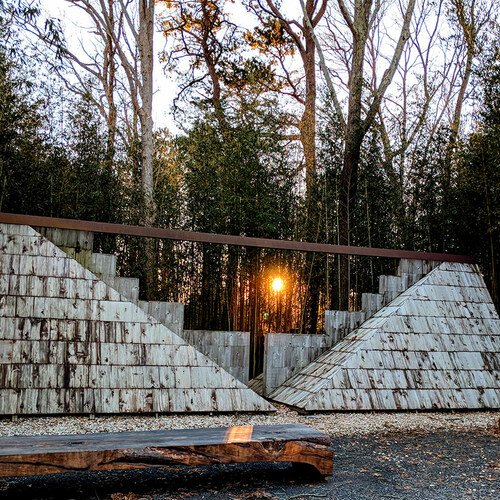
A sculpture inspired by the Brooklyn Bridge stands with the setting sun behind a mass of bamboo. The bamboo, grown on-site, adds both structure and texture. The sweeping curves echo the bridge’s form and the natural flow of the landscape. As the sun sets, shadows deepen, turning the scene into a dramatic, cinematic moment.
The garden reuses materials. Soil from a pond was used to build dunes and hills. Prunings from bamboo stands were repurposed into a pagoda beneath towering trees. This reflects a commitment to sustainability and resourcefulness in design.
Design Philosophy and Aesthetic Principles
LongHouse Reserve blends art and nature through intentional design. The garden does not just include sculptures—it integrates them into the landscape’s rhythm and flow.
Designers focus on scale, proportion, and materiality. The tassels are arranged in clusters, not randomly. This pattern creates a sense of order and cohesion throughout the space.
The forced perspective in the Red Garden is not a gimmick. It’s a deliberate choice to extend the viewer’s sense of space. This aligns with design theories that value spatial storytelling. Visitors move through the garden as participants in a story shaped by form, light, and movement.
The use of natural materials—soil, prunings, bamboo—supports ecological values. It also reflects a hands-on approach where waste becomes a resource. This philosophy matches current trends in sustainable gardening, where beauty and environmental health go hand in hand.
Seasonal Variations and Visitor Experience
Winter offers a clear view of the garden’s structure. The tassels stand out against the sky. In spring, plants bloom and foliage returns. The tassels now contrast with lush greenery. The bamboo becomes a textured canopy that filters sunlight and creates dappled patterns.
Joseph Tychonievich noted the garden’s character shifts with the seasons. The sculptures remain, but their relationship to nature grows more layered. In summer, birds, insects, and blooming plants bring life and sound. In autumn, foliage deepens, turning the garden into a seasonal canvas.
Visitors experience more than just sculptures. They feel the interplay between human design and natural growth. The garden challenges the idea that gardens are only green spaces. Instead, they can be dynamic, evolving environments shaped by both creativity and nature.
Broader Context in Garden Design
LongHouse Reserve is part of a growing trend in garden design that values artistic integration. Fine Gardening has previously featured Piet Oudolf’s sculpture garden at Singer Laren. These spaces show a shift in how people view outdoor areas.
They are no longer seen as just functional spaces. Instead, they are seen as places of expression, memory, and aesthetic exploration. Art in a garden does not reduce its natural character—it enhances it by adding new layers of meaning and experience.
Call to Community Engagement
Fine Gardening invites readers to share their own garden experiences. The publication encourages submissions of photos, plant collections, or visits to notable gardens.
Submissions can be made via a dedicated form or by emailing [email protected]. Readers are asked to include details such as location, gardening history, successes, failures, and favorite plants.
These personal stories help build a community of gardeners who share both practical and emotional experiences. By sharing their gardens, readers contribute to a collective story of human connection to nature—where design, art, and nature come together in everyday spaces.
For more, read the original article from the GPOD Archives.
LongHouse Reserve stands as a testament to how art and nature can be harmonized—not just in appearance, but in purpose and philosophy.
Sources & further reading
Featured image: THUMBNAIL-1×1. Via original publisher. Image source