Most spring bulbs don’t like wet soil. They rot if left in waterlogged ground for long periods. But some bulbs are naturally adapted to damp conditions. These can thrive in gardens that stay wet over winter, offering gardeners a resilient and beautiful solution in consistently moist environments. Source: homesandgardens.com.
Camassia: Vibrant Flowers in Damp Ground
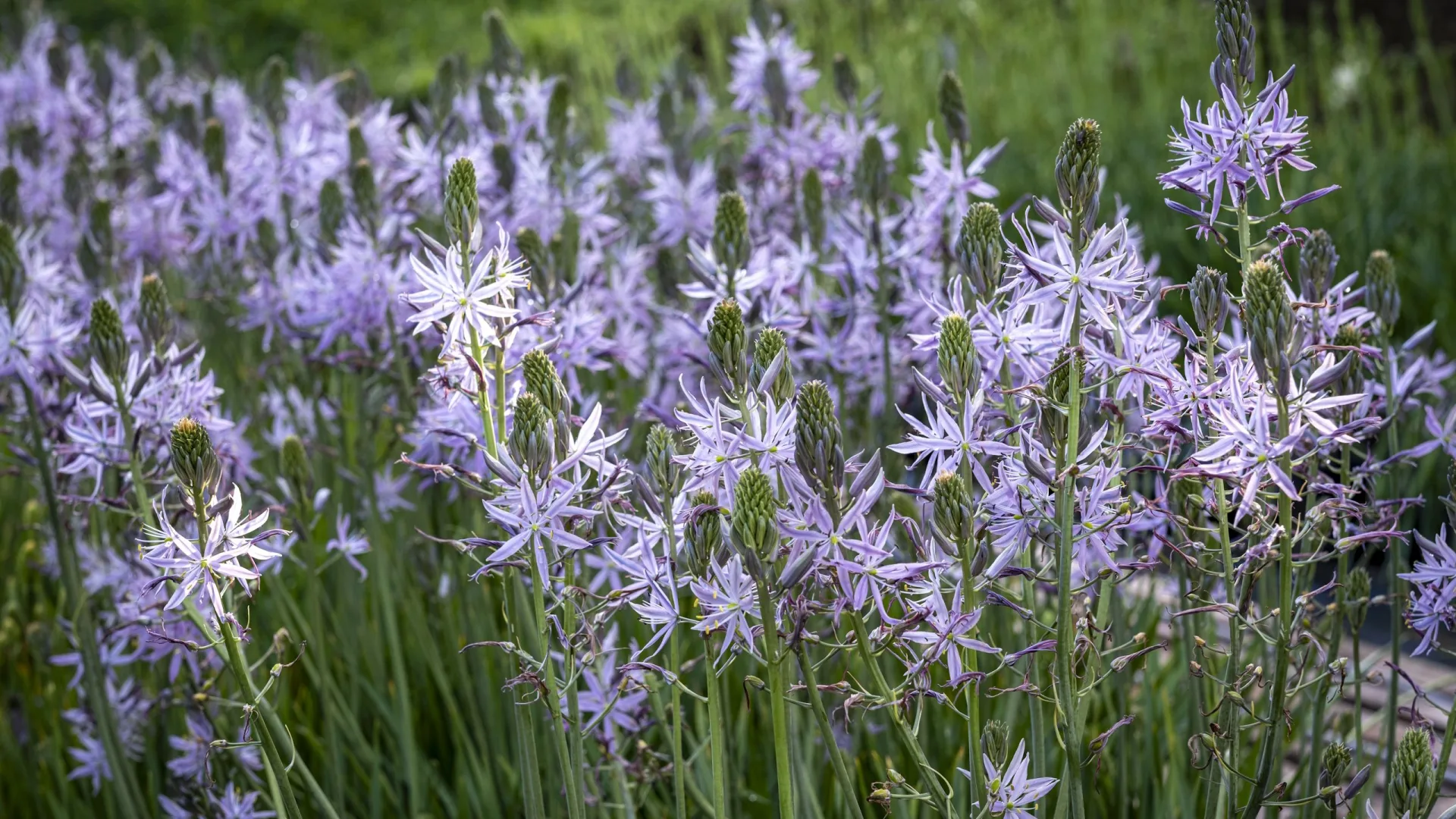
Camassia bulbs come from the damp prairies of the US Northwest. They grow well in poor, wet soils. These bulbs outperform others in damp areas where most spring bulbs would fail.
They produce tall, star-shaped flower spikes up to three feet tall. Blooms appear in late spring in shades of blue, white, or cream. When planted in groups, they create bold displays in flower beds, pond banks, rain gardens, or wildflower meadows. They can naturalize and spread over time.
Camassias handle winter wetness. But they do best when soil dries in summer. Prolonged waterlogging still risks rot. Still, they are drought-tolerant, surviving dry spells after flowering.
Plant in fall, between September and November. Cool, workable soil is ideal. A long-handled bulb planter makes digging easier. Tools like The Home Depot’s steel planter have reinforced steel and automatic soil-release features. They help place bulbs correctly and avoid damage.
Try Camassia ‘Cusickii’ for lavender-blue spikes. A pack of five is available on Amazon. It works well in small gardens or large landscapes.
Checkered Lily: Delicate Flowers in Damp Borders
The checkered lily, or Fritillaria meleagris, is known as snake’s head fritillary. It has grown in European wet meadows and water gardens for centuries. It adapts well to moist, well-drained soils.
It blooms in mid to late spring with delicate, bell-shaped flowers in pink, purple, or white. The flowers hang from slender stems, giving a graceful look. It works well in borders, rock gardens, woodland edges, or naturalizing lawns.
It likes damp soil but not standing water. Prolonged saturation can cause rot. In hot climates, give it afternoon shade to prevent wilting.
It grows in zones 4 to 9. It’s low-maintenance once established. A pack of bulbs is available at Walmart.
Summer Snowflake: A Moisture-Adapted Bulb
Leucojum, or snowflakes, is related to snowdrops. Both have bell-shaped white flowers. Snowflakes are more resilient in wet soil and less likely to rot.
Two main types: spring snowflake (Leucojum vernum) and summer snowflake (Leucojum aestivum). The spring variety tolerates damp soil. The summer snowflake prefers moist ground and can handle winter waterlogging. It’s ideal for bog gardens, rain gardens, or wet areas.
One key benefit: it resists being eaten by squirrels. The plant contains a bitter chemical, making it unpalatable. This is especially useful in winter when animals search for food.
Plant bulbs 6 to 8 inches apart, with the pointy end up. Over time, the clump spreads naturally into a dense, flowering mat.
A six-pack of summer snowflake bulbs is available on Amazon. It’s a great choice for beginners and experienced gardeners.
When to Plant: It’s Not Too Late
Even if fall planting has passed, it’s not too late. As long as soil isn’t frozen or waterlogged, bulbs can still be planted. Tulips, daffodils, and hyacinths can be planted as late as January. But they’ll flower later than fall-planted bulbs.
Best results come in fall when soil is cool and not frozen. In milder winters, spring planting can still work. The key is avoiding saturated or frozen soil. These conditions block root growth and increase rot risk.
Tools for Planting
Using the right tools makes planting easier. A steel bulb planter has reinforced steel and an automatic soil-release feature. Depth markers help ensure proper planting depth.
A two-piece set with short and long handles offers flexibility. The short handle fits small beds. The long handle gives better reach for large plots.
Other tools include a hori-hori knife, useful for digging and planting. The long-handle planter has a 37-inch wooden handle and T-shaped grip. Its bend-proof stainless steel head ensures durability and precision.
A 11-inch bulb tool with a sharp stainless steel edge and wooden handle suits small jobs. The stainless steel dibbler has a wooden handle and leather cord. It can be hung and used for planting seeds, seedlings, or bulbs.
For compacted soil, try the lasagna method. Layer compost and organic matter over winter. This improves soil structure and helps retain moisture. It creates a better environment for bulbs to grow roots.
These bulbs offer reliable beauty and resilience in wet conditions. They’re essential for gardens facing damp climates or seasonal flooding.
Sources & further reading
Featured image: The purple flowers of Camassia 'Aurora' growing in a flower bed. Via original publisher. Image source