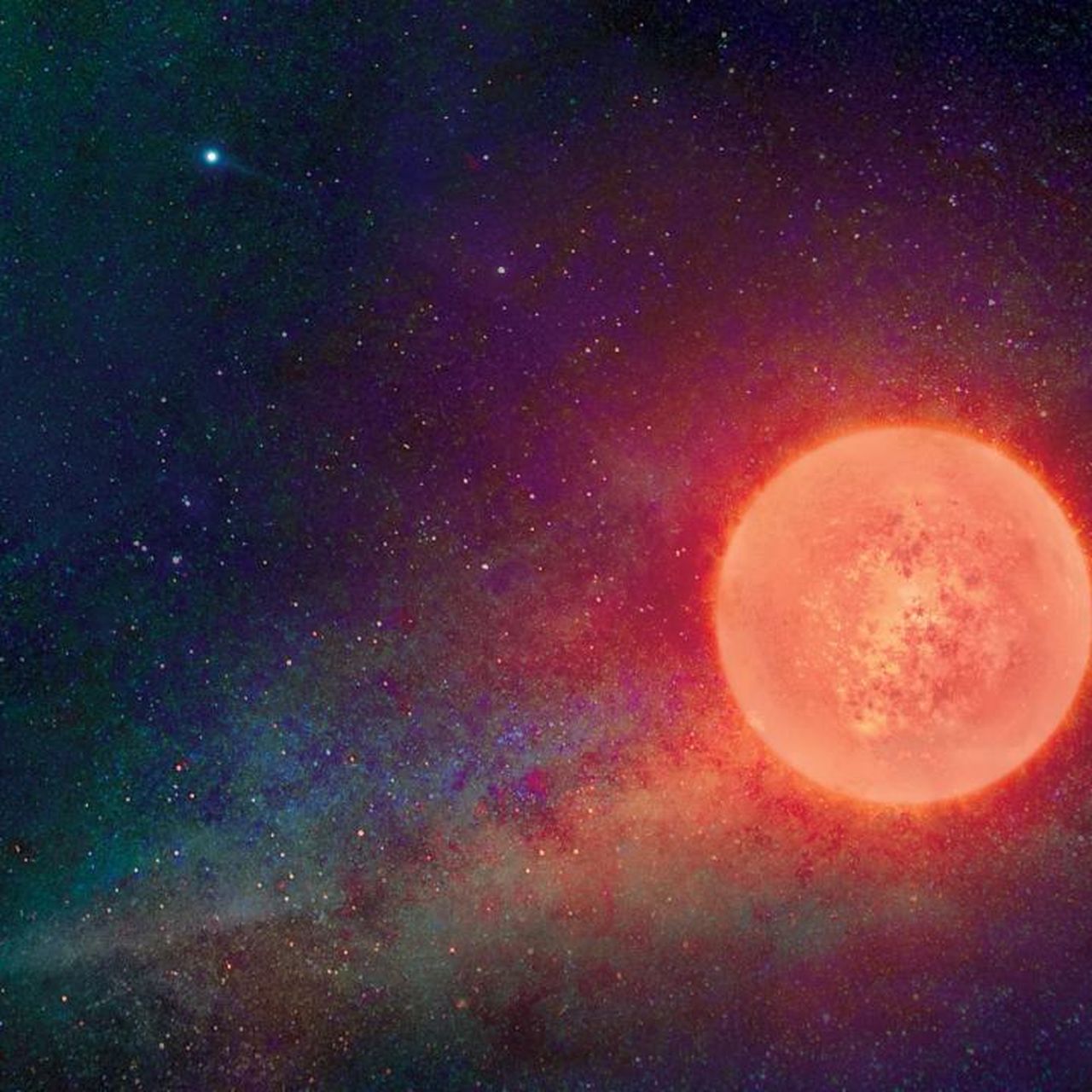
Astronomers have found a rare triple-star system just 28 light-years from Earth. It defies current models of how stars evolve and interact. The system, named Welopōʻai, includes a red dwarf and two white dwarfs. It should not exist according to existing astrophysical theories. Source: smithsonianmag.com.
What Happened
Researchers were searching for exoplanets using the Canada-France-Hawaii Telescope on Mauna Kea. The instrument detects tiny shifts in a star’s motion caused by orbiting planets. These shifts are usually just a few meters per second.
When they pointed the telescope at a nearby red dwarf, they saw velocity changes over 1,000 times stronger than expected. The shift reached nearly 16 kilometers per second—far beyond what any planet could cause.
This extreme signal meant a massive, unseen object was pulling on the star. The team quickly realized it wasn’t a planet. It was something much heavier—likely a dead star.
Key Facts About the System
- The system is named Welopōʻai, combining Hawaiian words welo (inherited trait) and pō‘ai (orbit). It means ‘a path of family traits,’ linking celestial motion with heritage.
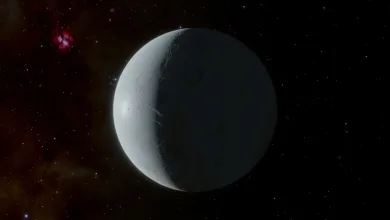
- It features a red dwarf star—a small, cool star that burns slowly—and two white dwarfs. White dwarfs are dense remnants of dead stars.
- One white dwarf orbits the red dwarf at about 4.6 times Earth’s distance from the Sun. This is a close, tight orbit.
- A second white dwarf circles the red dwarf pair at 124 times the Earth-Sun distance. It is far away and moves slowly.
- Welopōʻai is the only known triple-star system with two white dwarfs and a regular star within 100 light-years of Earth. No similar systems have been found nearby.
Why It Challenges Science
Stars about 1.4 times the mass of the Sun grow into red giants. During this phase, they expand to hundreds of times their original size. Such stars should engulf nearby stars.
Yet in Welopōʻai, the red dwarf remains intact and in a stable orbit. This outcome contradicts theory. It shows a system that should be unstable and impossible.
What Scientists Say
Étienne Artigau, lead author from the University of Montreal, called it ‘a freak thing’ and ‘an annoying object.’ He says the team wasn’t looking for a star system at all.
Patrick Dufour, a co-author, says: ‘This system should not exist.’ There’s no known explanation for how it formed under current models.
Paul Delaney, a retired astrophysicist from York University, suggests the two white dwarfs were once close. He believes they once interacted gravitationally. Today’s far white dwarf was much closer in the past.
What This Means for Future Research
Welopōʻai reveals gaps in our understanding of star systems. It shows a configuration that current models predict as impossible.
Scientists are now planning more observations with instruments like Gemini North. These will help track the stars’ motions and test gravitational interactions.
If similar systems exist elsewhere, it could mean our models of stellar evolution are incomplete. Or that rare, unseen forces shape star systems in ways we haven’t seen.
This discovery may point to a new class of stellar systems. It could reshape how we think about star formation and stability.
Sources & further reading
Featured image: original publisher image. Via original publisher. Image source