Out beyond Neptune, the Solar System reveals a hidden layer of complexity. The familiar orbit of the planets gives way to a vast, icy expanse where light is extremely weak and objects are few and far between. Source: sciencealert.com.
What’s Lurking Beyond Neptune?
For decades, astronomers have mapped the outer Solar System using telescopes that rely on sunlight to detect reflected light. By Neptune’s distance—about 30 times Earth’s distance from the Sun—sunlight is 900 times weaker than at Earth. Only a tiny fraction of that reflected light reaches our instruments.
This makes detection of distant objects extremely difficult, especially when the objects are small or have low albedo (reflectivity).
Despite these challenges, advances in telescope sensitivity and data processing have allowed astronomers to identify thousands of trans-Neptunian objects (TNOs), including many with highly eccentric and inclined orbits. These orbits do not conform to the expected patterns that would arise from the gravitational influence of the four known giant planets—Jupiter, Saturn, Uranus, and Neptune.
Such anomalies were once attributed to the gravitational perturbations of Planet Nine, a hypothetical planet proposed to explain the clustering of certain TNOs in distant, inclined orbits. However, recent research suggests that the orbital patterns observed may not be a single phenomenon, but rather a collection of distinct behaviors that could be explained by more than one hidden world.
Planet X2: A Hidden Super-Earth
Planet X2 is not a direct successor to Planet Nine. It explains a different set of orbital behaviors. While Planet Nine is thought to influence the orbits of TNOs that lie in the outer reaches of the Kuiper Belt and beyond, Planet X2 appears to account for a separate population of objects—those with extreme orbital tilts and very distant perihelia (closest approach to the Sun).
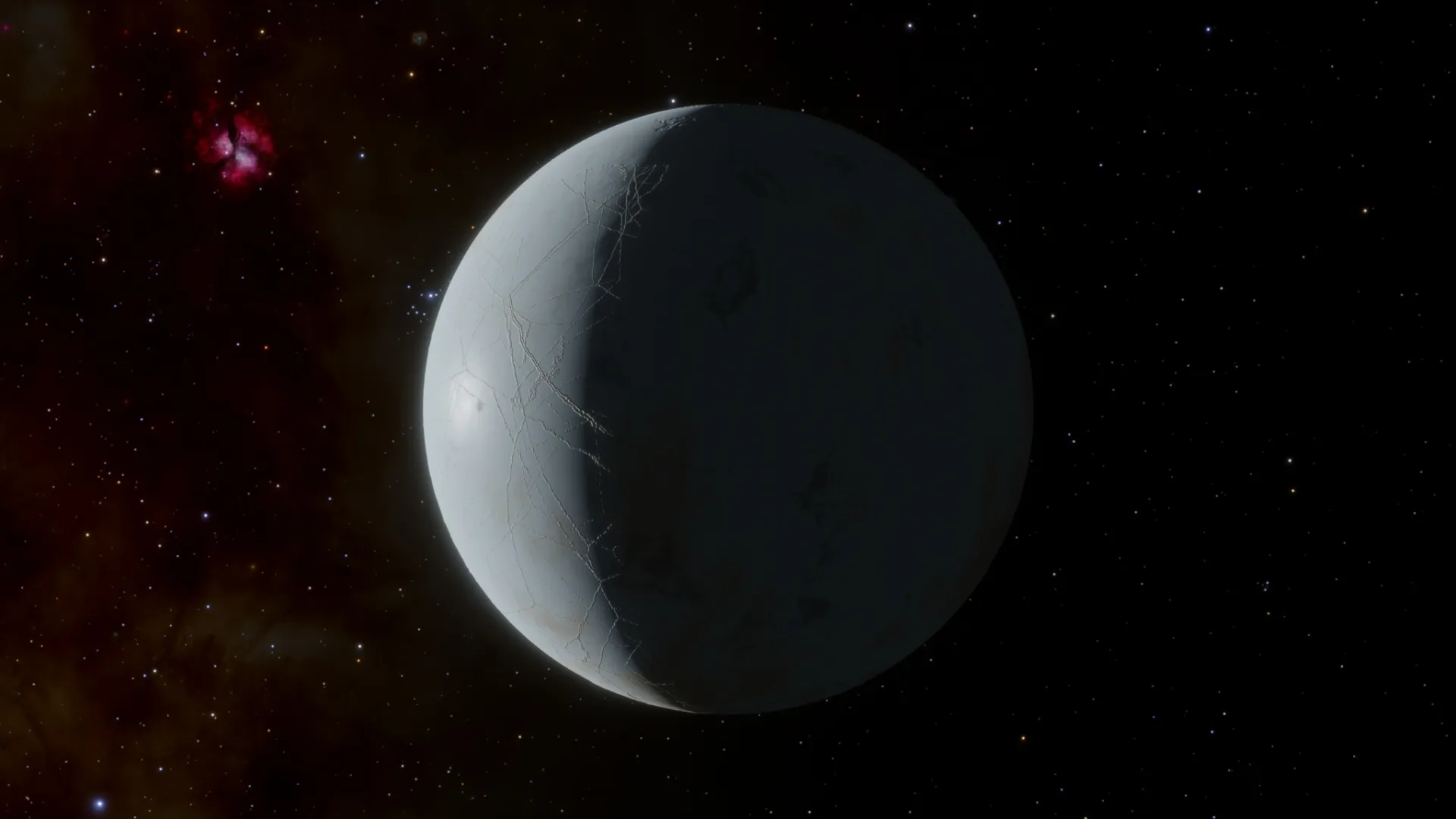
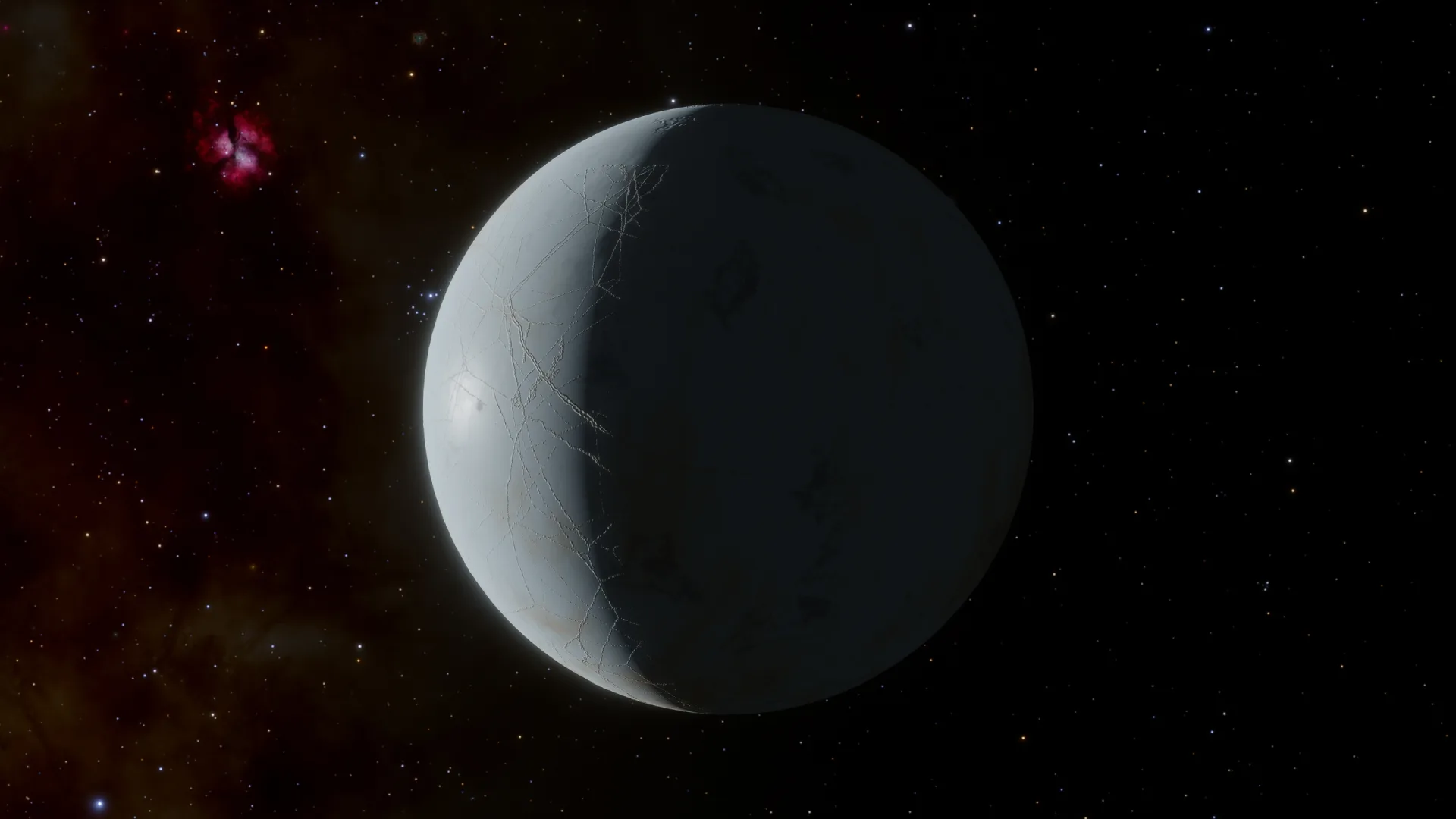
According to simulations conducted by Patryk Sofia Lykawka, Pedro Bernardinelli, and Jonti Horner, Planet X2 would be a super-Earth-sized world, with a mass between 1 and 2 times that of Earth. At this distance, the planet would never come closer than 200 AU to the Sun, placing it in a region where temperatures are near absolute zero and where solar radiation is negligible.
Such a distant orbit would make direct observation nearly impossible with current technology. The planet would be extremely faint, and its light would be millions of times dimmer than what we can detect from Earth. Yet, its gravitational influence could still be felt through subtle perturbations in the orbits of nearby TNOs.
How the Hypothesis Was Built
The team behind the Planet X2 hypothesis conducted detailed computer simulations spanning 4.5 billion years—covering the entire evolutionary history of the Solar System from its formation to the present day. These simulations modeled the gravitational interactions between the giant planets and the population of icy bodies that formed in the outer solar nebula.
They tested two versions of the model: one that included only the four known giant planets, and another that added a distant, massive planet—similar in mass to Earth or slightly larger—located far beyond Neptune. The simulations tracked how the orbits of TNOs evolved under these different conditions.
When the additional planet was included, the model began to reproduce key orbital features observed in real data.
The match between the simulated and observed orbital distributions is not perfect, but it is statistically significant. In planetary dynamics, a model that produces a consistent pattern across multiple independent datasets is considered a strong candidate for explaining observed phenomena.
Why This Matters
Planet X2 could reshape our understanding of how the outer Solar System formed. The presence of a massive, distant planet suggests that gravitational interactions in the early stages of the Solar System were more dynamic than previously assumed. It implies that planetary migration—where planets move inward or outward due to gravitational interactions—was not a rare event but a common feature of planetary system evolution.
Such reshuffling is not uncommon in planetary systems. Observations of exoplanetary systems show a wide variety of architectures—some with multiple planets in tight orbits, others with planets in highly eccentric or retrograde orbits. These systems suggest that planetary systems are not always stable or orderly, and that gravitational interactions can scatter worlds into unusual orbits or even eject them from the system entirely.
If Planet X2 exists, it likely formed much closer to the Sun—within the region where rocky planets are typically born—before being scattered outward by gravitational encounters with the giant planets. This scenario aligns with known mechanisms of planetary migration and is consistent with the idea that many of the outer Solar System’s objects may have originated in the inner regions and were later flung into their current positions.
Limitations of the Model
Despite its strengths, the simulation does not fully account for all observed data. For instance, the distribution of semimajor axes in TNOs detected by the Dark Energy Survey shows a slight mismatch with the model’s predictions. While the model reproduces the clustering of orbits and the tilt patterns, the spread of orbital distances does not perfectly align.
Jonti Horner acknowledges this limitation. ‘This isn’t a perfect fit. You wouldn’t expect it to be. I’d be more worried if it was, to be honest,’ he said. ‘But it’s a very, very, very good start, and it is quite compelling.’
These discrepancies may stem from several factors: the limited number of observed TNOs, the complexity of early Solar System dynamics, or the possibility that other unseen forces—such as a second, smaller planet or a more complex gravitational field—may be influencing the orbits.
What to Watch Next
The Vera C. Rubin Observatory in Chile is beginning operations. This will result in the discovery of thousands of previously unknown TNOs, many of which will be located in the outer reaches of the Solar System.
As more data becomes available, astronomers will be able to test whether the orbital patterns predicted by Planet X2 are real. If the anomalies grow in number and consistency—especially in the populations of highly tilted and distant objects—then the hypothesis gains significant support.
There’s a chance the Rubin Observatory could spot Planet X2 itself. However, Horner cautions that such a detection would be a monumental technical achievement. The planet would be extremely distant and faint, and its signal would be buried beneath the noise of background stars and cosmic radiation. Even if detected, confirming its identity would require multiple observations over time to rule out other explanations.
Other scientists will also propose alternative models—such as the influence of a binary planet system, or the effect of a massive, unseen object in a different region. The scientific process demands that new ideas be challenged and tested. As Horner puts it: ‘This is one explanation, and you know, I encourage people to try and think of other explanations and test them and make predictions. It’s that make predictions thing that I think is so important. It’s if this is true, then predict.’
Planet X2 does not rule out Planet Nine. The two hypotheses explain different orbital patterns. It is possible there is neither, one, or both. The existence of multiple hidden worlds may reflect a broader truth: that planetary systems are not always stable or symmetric, and that the outer Solar System may have undergone a chaotic, dynamic period of growth and reorganization.
Our view of the outer Solar System is still evolving. What we see today may only be the beginning of a deeper understanding.
For more on how planetary systems evolve, see how the early Solar System chose fire over ice.
Sources & further reading
Featured image: Forget Planet Nine: Hints of a Second Secret World Emerge From The Edge of The Solar System. Via original publisher. Image source