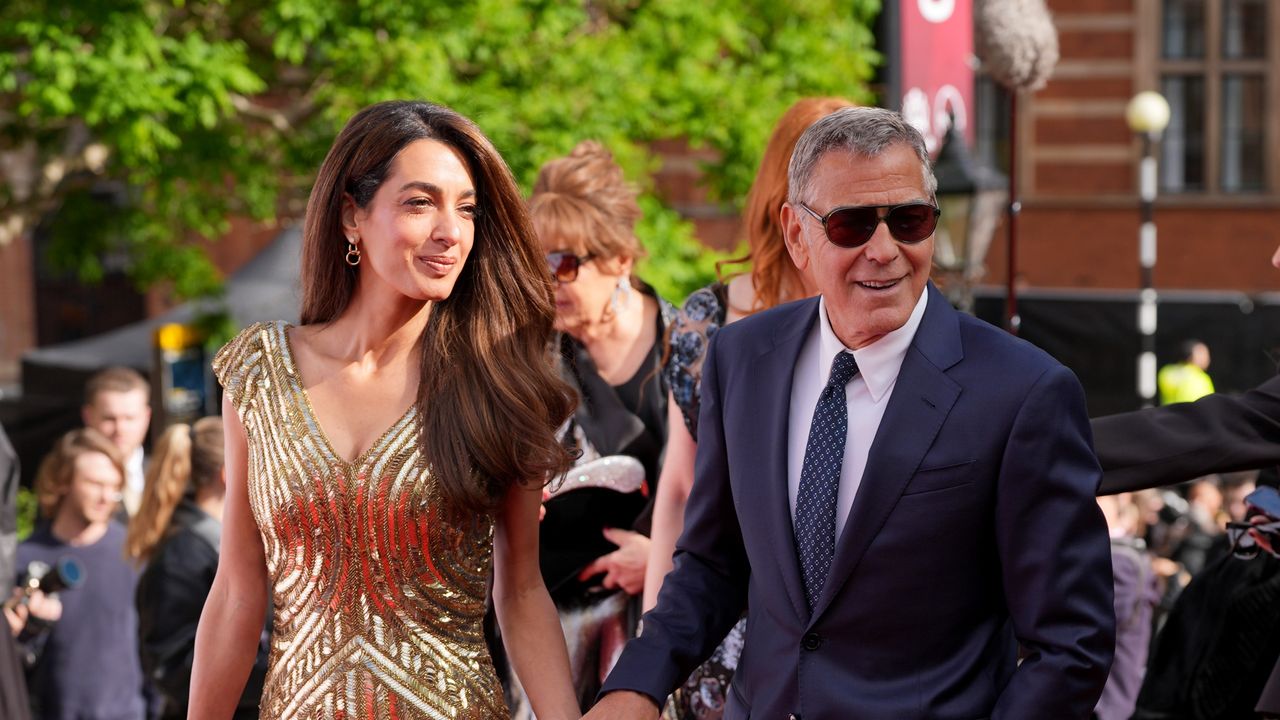
Amal Clooney just struck gold.
Tonight in London, the barrister and her husband, actor George Clooney, attended the King’s Trust 50th Anniversary Celebration at Royal Albert Hall. While Amal may have gone full “Pucci Girl Summer” earlier this week, tonight she did a sartorial 180 in a gold sequined gown courtesy of Alexander McQueen.

Amal Clooney at the King’s Trust 50th Anniversary Celebration
Joe Maher/Getty Images

Alexander McQueen fall 2007
Marcio Madeira
The human rights lawyer wore a dress from the fall 2007 collection—titled “In Memory of Elizabeth Howe”—an homage to McQueen’s familial ties to the Salem witch trials. The cap-sleeve, V-neck dress was embellished with gold sequins that contoured the body, and Amal carried over the theme to her accessories, adding a pair of pointy-toe pumps, a bracelet, earrings, and a clutch.

Cameron Diaz at the premiere of Shrek the Third, 2007.
JIL Studio
The dress has quite the pedigree: in May 2007, Cameron Diaz wore it to the Tokyo premiere of Shrek the Third; then, in 2010, it was sold at Bonham’s, following the designer’s untimely death. It hit the auction block again in December 2024 at Sotheby’s “Fashion Icons” auction, where it fetched a whopping $114,000. (It is not confirmed if Amal’s dress is the one that was sold at Sotheby’s.)
Though she’s lately been into fresh-off-the-runway Pucci and Balenciaga, this McQueen dress is just the latest in the barrister’s formidable vintage and archival collection. Earlier this year, she wore a vibrant red ruched Pierre Balmain couture gown from 1957 to the Golden Globes, while last summer she rocked a magenta Jean-Louis Scherrer minidress with a dramatic cape from fall 1995. But in her glittering Alexander McQueen dress, Amal Clooney just took home the gold.