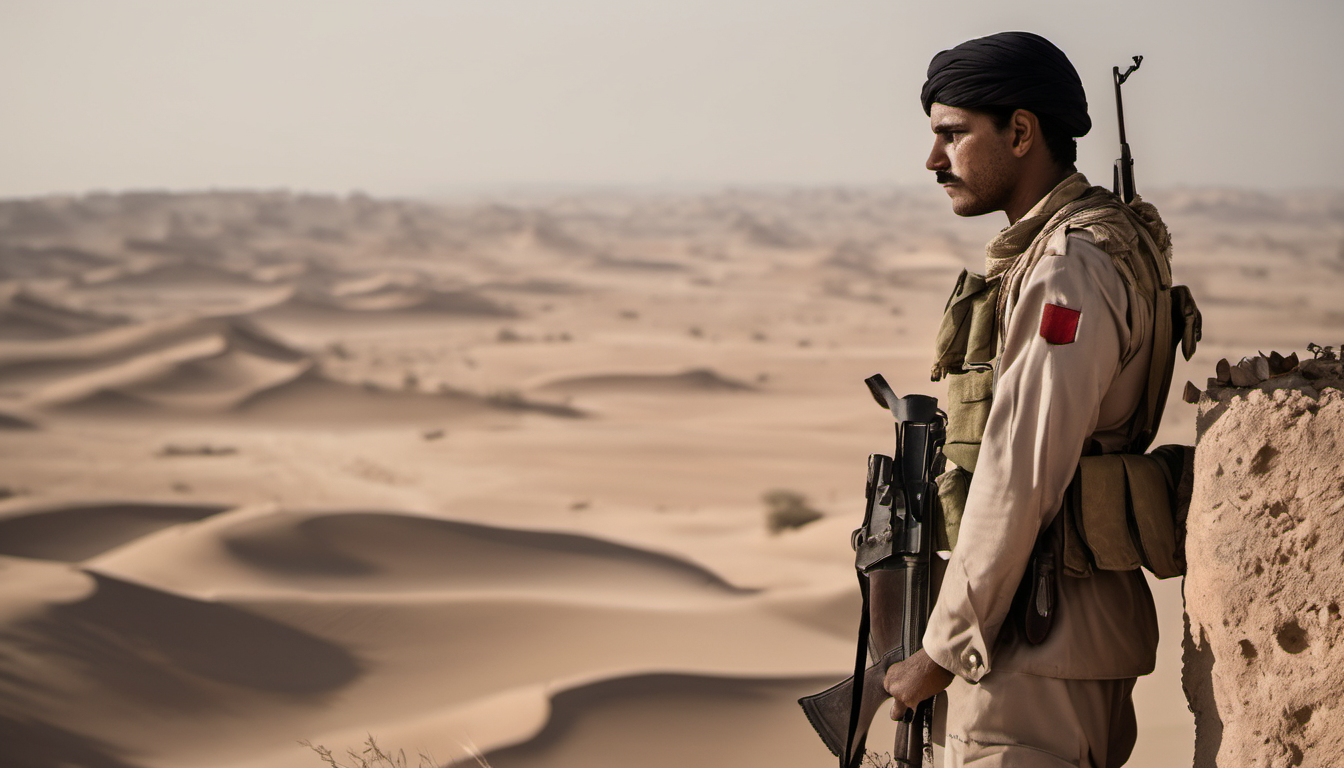
Featured image: A man wearing a turban and military-style clothing stands on a rocky outcrop overlooking a vast, sandy desert landscape. AI-generated image; not a photograph of the reported event.
BBC reporter Orla Guerin recently traveled with Yemen’s southern national security forces to a remote desert battlefield. The area is part of an ongoing conflict where Houthi rebels have been recently dislodged. Her journey, documented in a BBC News video, took her deep into southern Yemen’s rugged terrain, where frontline positions are held by government-backed forces. Source: bbc.co.uk.
What Happened on the Battlefield
During her visit, Orla Guerin observed defensive positions established along desert ridgelines, where soldiers maintain watchpoints and coordinate movements under harsh conditions. The terrain, marked by shifting dunes and sparse vegetation, presents significant navigation challenges and reduces visibility, especially during daylight hours. Local forces described how the environment makes it difficult to maintain consistent surveillance or rapid troop movements.
At a military hospital in Aden, medical staff reported receiving more than 50 patients in a single day—many with gunshot wounds, some with severe injuries requiring immediate surgical care. Several cases involved amputations due to shrapnel or blast trauma. The hospital, already operating at full capacity, has had to divert some patients to nearby facilities, underscoring the strain on medical infrastructure and the urgent need for expanded healthcare access.
Impact on Civilians and Fighters
Residents in surrounding villages have expressed growing anxiety over the ongoing conflict. Some communities have evacuated due to fear of attacks, while others remain because of limited alternative shelter. Children and elderly individuals are particularly at risk, with reports indicating that access to food, clean water, and medical services remains severely restricted.
For the armed forces, the desert environment introduces persistent logistical difficulties. Supply convoys are frequently delayed by sandstorms or ambushes. Fuel, ammunition, and medical supplies are delivered in small, vulnerable batches, increasing the risk of loss or interception. Soldiers have noted that these challenges are compounded by the lack of reliable communication networks in remote areas.
Why This Matters
The situation in southern Yemen is not isolated—it influences regional stability, particularly in relation to maritime security and key shipping lanes in the Red Sea. The conflict has drawn close attention from international actors, who monitor developments for potential spillover effects on global trade and security.
Humanitarian access remains a critical issue. Aid organizations have reported difficulty reaching remote areas due to ongoing hostilities and security risks. Without a clear de-escalation path, the situation could worsen, endangering both civilians and military personnel.
Limitations and Uncertainties
The BBC report does not provide a comprehensive assessment of Houthi operational capabilities or the government’s long-term military strategy. There is no official confirmation of the number of fighters displaced or the next phase of military operations. Local sources indicate that the situation remains volatile, with no clear timeline for ceasefire negotiations.
What to Watch Next
Observers will be closely monitoring troop movements and ceasefire developments in the coming days. Future reporting may include interviews with local medical staff, military commanders, or civilian witnesses, offering deeper insight into daily life and the realities of desert warfare in Yemen.
Source: BBC News Video – Orla Guerin travels with Yemen’s southern national security forces through desert battlefield