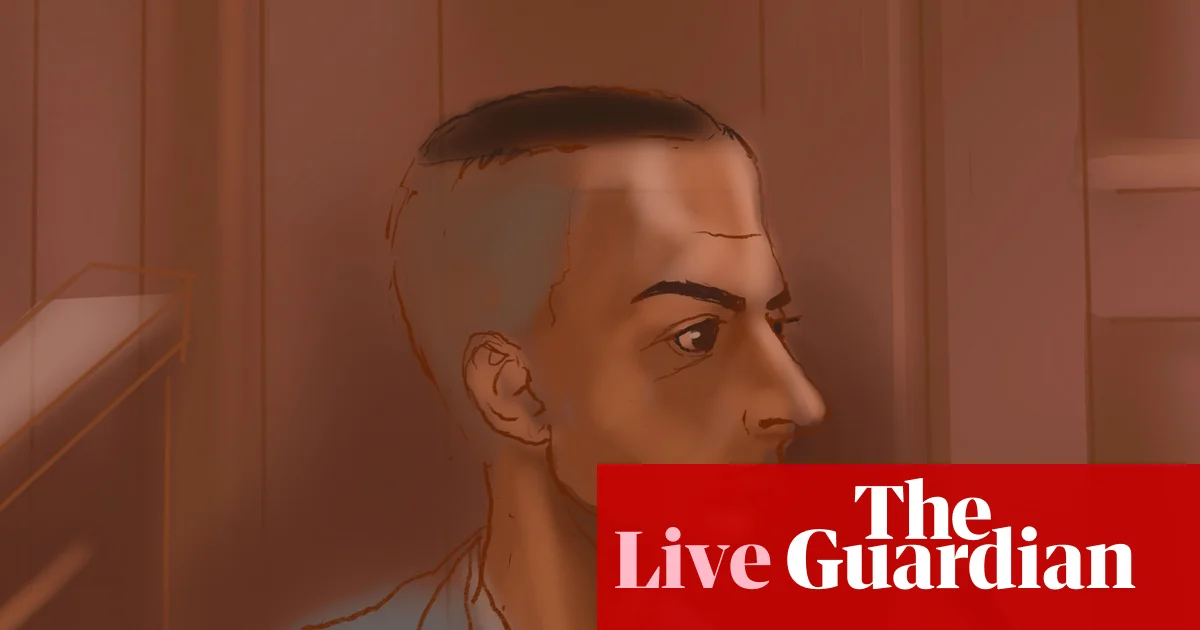
Key Development: Lamarre-Condon Gives Witness Evidence
The court has adjourned for lunch. Lamarre-Condon will continue giving evidence at 2pm.
Defence lawyer John Stratton SC asked whether Lamarre-Condon had visited Jesse Baird’s home and seen him through a bedroom window.
He said he saw the bedroom light was on through the sheer curtain.
He described seeing Jesse Baird having sex with a man he did not know. He paused for about five seconds, then left the house.
He said he did not stay, take photos, or behave inappropriately. Instead, he immediately left and later laughed with friends about the incident.
Lamarre-Condon stated this occurred only once. He said he and Baird had ended their relationship at that time.
What the Testimony Reveals
- Lamarre-Condon claims he saw a private scene at Baird’s home, but did not record or linger.
- He described the incident as a brief, unremarkable moment that triggered a reaction of amusement.
- He said he did not know the man in the bedroom, nor did he have any prior connection to him.
- The incident occurred only once, according to his account.
The defence is using this testimony to challenge the narrative that Lamarre-Condon had a motive or opportunity to commit violence.
Context: The Case Background
The deaths were initially reported as a domestic dispute, but later investigations suggested possible foul play.
Lamarre-Condon, a former police officer, was arrested in connection with the case. He is accused of fatally shooting both men.
The trial is ongoing and has drawn public attention due to the high-profile nature of the victims and the accused’s former law enforcement role.
Why This Matters
The testimony is central to the defence’s argument that Lamarre-Condon had no prior connection to the victims beyond a brief, non-violent encounter.
If the court accepts that the incident was a one-time, unremarkable observation, it may undermine claims of motive or emotional distress.
It also raises questions about how personal experiences are interpreted in criminal trials, especially when they involve private moments.
Limitations and Open Questions
The testimony does not address whether Lamarre-Condon had access to the home at other times.
It does not confirm whether the man in the bedroom was known to the victims or if any other interactions occurred.
There is no independent verification of the sighting. The account is based solely on Lamarre-Condon’s personal recollection.
Prosecution has not yet responded directly to this claim, and no evidence has been presented to contradict it.
Experts in criminal psychology note that such personal observations, while emotionally charged, are not sufficient to establish guilt or innocence.
What to Watch Next
Legal experts will be watching for how the court evaluates the credibility of this testimony.
Prosecution may introduce evidence of surveillance, phone records, or other data to show access or intent.
Public interest remains high, especially given the accused’s background as a former police officer.
For more on the trial, see the original report at The Guardian.
Stay updated with breaking news via The Guardian’s email newsletter.
Download the free app or listen to the daily news podcast for real-time updates.
For a broader look at legal proceedings in Australia, see Poland Constitutional Court Stand-Off.
Sources & further reading
Featured image: original publisher image. Via original publisher. Image source