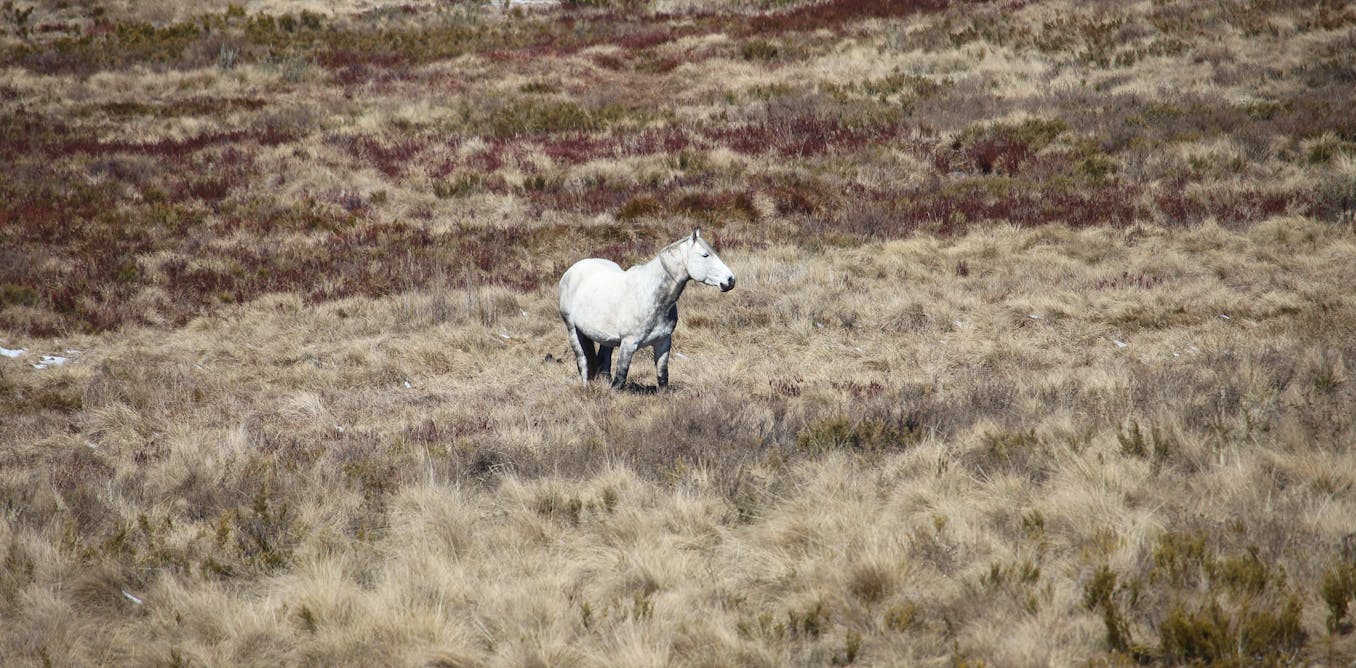
Last year, we noted early signs of recovery in Australia’s high country, following the reduction of feral horse numbers.
These had dropped from 17,000 in 2023 to around 3,000 in 2024 across Kosciuszko National Park, thanks to the management efforts of NSW National Parks staff and contractors.
But horse numbers are already bouncing back. The latest survey data estimate between 6,476 and 16,411 horses now roam the national park.
So, what happened?
A mild summer
The answer is simple. If feral horse eradication is impossible — or politically and legally off the table — then continuous management of horse numbers is essential.
With no aerial culling within the national park in 2025, two factors likely contributed to this rapid rebound.
First, horses move. Control efforts have largely focused on remote parts of Kosciuszko National Park, away from people, trails and roads. Once resident herds in these areas have been culled, horses from surrounding regions – particularly adjacent state forests – likely moved in.
Second, horses breed. After a mild summer with significant rainfall across the high country, most mares will have bred. During Autumn fieldwork, we observed large numbers of foals accompanying herds throughout the region.

crbellette/Getty
A numbers game
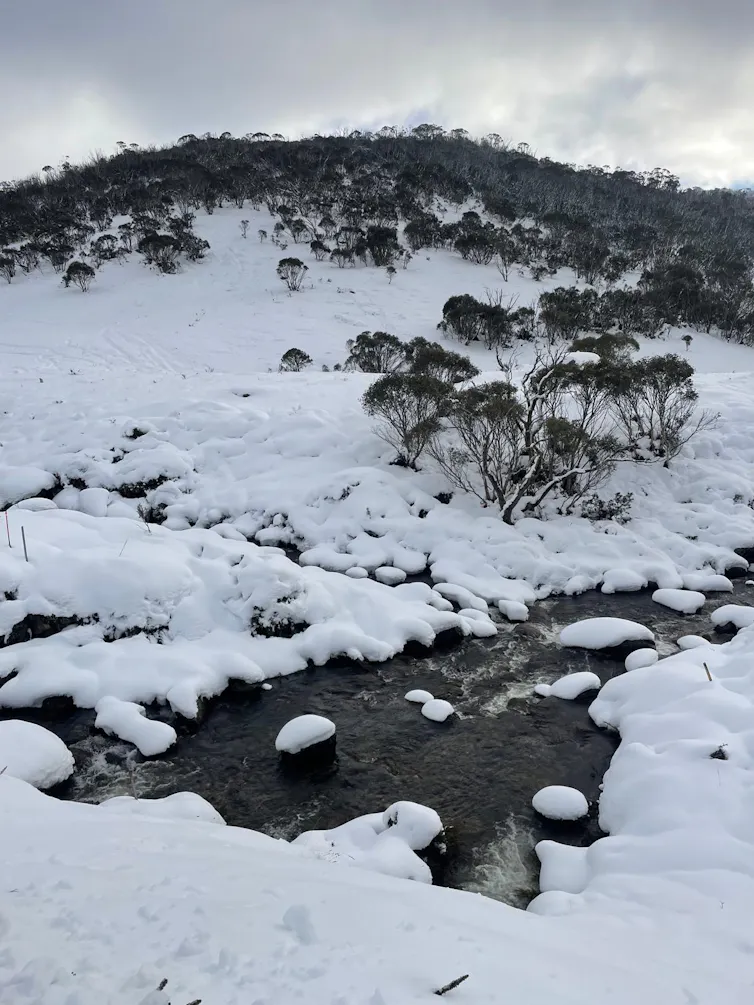
If numbers aren’t rapidly reduced again, things will only get worse, both for the fragile alpine environment and the horses themselves. With winter conditions imminent, many horses will struggle to maintain condition as snow covers grazing areas and energy reserves are depleted.
Ironically, some of the strongest opposition to culling overlooks these very real animal welfare consequences. Leaving horse populations unmanaged may ultimately result in prolonged suffering from starvation and exposure, compared with humane control conducted by trained professionals.
Forecast El Niño conditions may further compound these pressures, with drought likely to persist through spring and summer. As water and food become scarce, horses will likely concentrate around creeks, wetlands, alpine bogs, fens and meadows. These are precisely the alpine ecosystems most vulnerable to trampling, grazing and erosion.
And this is where hard-fought gains will be rapidly lost. Banks will become eroded, clear waters fouled and our fabled high plains replaced by overgrazed paddocks.
Author provided (no reuse)
A long-term effort
We don’t need to look far to see what happens when a population of feral animals goes unchecked. Great Keppel Island, for example, is overrun with a thousand or more feral goats, denuding dune and forcing increasingly exasperated locals to erect fences around their properties
As with horses in Kosciuszko, political hesitancy and delayed action on Great Keppel have allowed ecological damage to escalate while management becomes increasingly difficult and expensive.
New South Wales Environment Minister, Penny Sharpe, recently said the latest Kosciuszko feral horse numbers confirmed the need for “continued management”, required to meet the target of reducing feral horse numbers to 3,000 by mid-2027.
But where did that target come from? It’s a holdover from the repealed Kosciuszko Wild Horse Heritage Act and, when even basic population growth models are applied, the implications become clear. Maintaining a population of 3,000 horses would still require the removal of well over 1,000 animals every two years — indefinitely.
In other words, there is no “set and forget” solution. If horse populations are to remain capped, ongoing culling will be necessary in perpetuity.
Alternative solutions?
Some have suggested that instead of culling, rehoming and fertility control should be used. While many Australians might like the idea of a “brumby” or two grazing in the back paddock, the number of landholders willing and able to care for these animals is far smaller.
Even retired racehorses struggle to find suitable long-term homes once their racing careers end, highlighting the practical limitations of large-scale rehoming programs.
Likewise, although various fertility control options have been suggested, vaccines, intra-uterine devices or surgical sterilisation are all invasive procedures for which horses need to be caught and sedated. These may be effective to maintain a small herd in an easily accessible area. But previous assessments have warned such an approach must be carried out in concert with large scale culling efforts.
Population dynamics vs politics
We don’t have to look far to find other examples of how invasive species management could be improved. In 2016, then New Zealand Prime Minister John Key introduced a bold plan to rid Aotearoa of all introduced predators in the next 30 years.
Predator Free 2050 is the first national-scale initiative to reduce the impacts of introduced predators, capitalising on the invention of new technologies including real-time automated species identification to trap targeted species and mobilising neighbourhoods across the country to join the effort.
Australia faces a different set of challenges — larger landscapes, divided jurisdictions and deeply entrenched cultural and political debates around invasive species management.
But the broader lesson remains the same: meaningful conservation outcomes require long-term commitment, clear targets and the willingness to act before ecological problems become too difficult to reverse.