Liam Virgo’s journey from paralysis to independence offers a powerful insight into resilience and hope. At just thirteen, he was a healthy boy from Nottinghamshire. Then, within days, his body stopped working entirely.
What Happened to Liam’s Body
He lost the ability to walk, speak, or move his hands. He became completely incontinent. Medical teams conducted extensive tests—lumbar punctures, scans, and neurological evaluations.
Despite the intensity of these procedures, no physical cause was found. His brain and nervous system showed no damage. Doctors eventually diagnosed him with severe Functional Neurological Disorder (FND).
FND is a condition where the brain’s physical structure is normal, but the signals it sends to the body are disrupted. The medical team used a computer analogy: the hardware was fine, but the software had crashed. This means that although his brain cells were intact and functioning normally, the communication pathways between the brain and the body were malfunctioning, resulting in a complete loss of motor and sensory control.
Functional Neurological Disorder is not a rare condition. While it is often misunderstood as a psychological condition, FND is recognized in medical literature as a neurological disorder with real, observable symptoms. The diagnosis is made through clinical evaluation, ruling out all physical causes, and observing patterns of symptom presentation that align with known neurological criteria.
Life in the Hospital: A World Without Movement
For months, Liam was bedridden. He could not speak or move. His mind was isolated from the world. He waited for a miracle—a pill, a treatment, a breakthrough.
That day never came. He entered a deep state of psychological isolation. For six months, he described his mind as switched off. He didn’t know who was around him or what was happening. The hospital environment, though structured and supportive, could not bridge the gap between his physical state and his emotional reality. He felt like a ghost in his own body, observing the world from a distance, unable to interact or respond.
During this time, he felt powerless. The life he had planned as a teenager—going to school, playing sports, making friends—was gone. He mourned the future he had imagined, not realizing that healing might begin not with a fix, but with a shift in perspective. This period of emotional stagnation is common among individuals with sudden neurological disruptions. The mind, deprived of physical action, often retreats into a state of cognitive disengagement, where the individual loses a sense of agency and identity.
Turning Point: A Realization About Control
One afternoon, as his brain function improved, a key realization struck him. He could not control the signals in his nervous system. But he could control how he responded to the darkness.
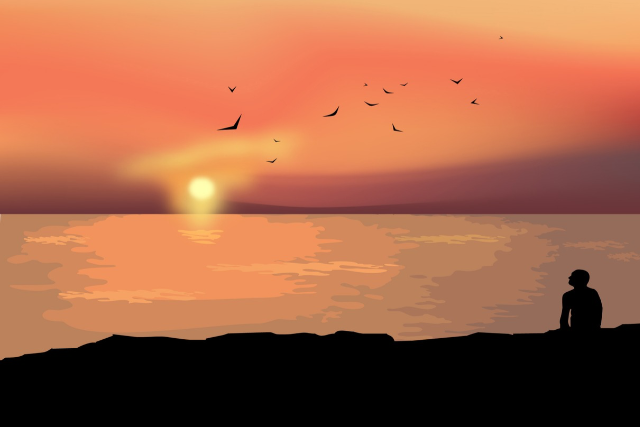
He understood that waiting for a massive recovery was keeping him trapped. Instead, he began to focus on the next small step. He stopped looking at the top of a mountain and started walking inch by inch. This shift in mindset was not a sudden epiphany, but the result of repeated exposure to small acts of self-observation and intention. He began to notice how his thoughts could influence his emotional state, even when his body could not respond.
For example, he started practicing mindfulness—focusing on his breath, the sensation of air entering and leaving his body. This simple act, though physically unremarkable, became a daily anchor. Each time he breathed deeply, he reminded himself that he was still present, still alive, still capable of awareness. This practice helped reestablish a connection between his mind and his experience of the world.
Building Mental Anchors
Liam created small, personal goals to keep his mind active. One of his anchors was to visit London. He spent hours visualizing the city, imagining streets, landmarks, and the feel of walking through parks. These mental images gave him a destination. Even when he was in bed, he could picture himself in a place he wanted to go. This became a powerful tool for emotional stability.
He also created other anchors—like visiting a seaside town in Cornwall, or attending a music festival in Manchester. These goals were not about achieving them immediately, but about maintaining a sense of forward motion. When he felt overwhelmed or depressed, he would close his eyes and mentally walk through the scenes of these places. This practice helped him maintain a sense of purpose and curiosity, even when his body was unable to move.
Research in cognitive psychology suggests that goal-setting and visualization are effective tools for emotional regulation. When individuals create vivid mental images of future experiences, their brains begin to simulate those experiences, which can reduce anxiety and increase motivation. For Liam, these mental anchors were not just fantasies—they were tools of resilience, helping him maintain a sense of direction and hope.
The Recovery Process: Micro-Milestones
Recovery wasn’t linear. It was built from tiny, daily achievements. The first move was a finger. Then a hand. Then the ability to sit up. Each step was celebrated as a milestone.
He learned to communicate again. He adapted to life in a wheelchair. Over time, he regained independence—not through a single event, but through consistent, patient effort. Each small movement was a victory. For instance, moving a finger required months of focused effort, but once achieved, it became a symbol of progress. He began to document these milestones in a journal, writing down what he felt, what he observed, and how each step changed his sense of self.
These micro-moments were not just physical—they were psychological. Each time he moved, he was relearning how to be in his body, how to trust his own perception, and how to believe in his capacity to grow. This process is similar to what therapists call ‘neuroplasticity’—the brain’s ability to reorganize itself by forming new neural connections. Through repeated practice, the brain begins to rewire itself, even in the face of severe disruption.
Living with FND Today
At twenty-three, Liam has traveled to over 120 towns and cities across the UK. This year, he stood up out of his wheelchair in the middle of London and took twenty photos—each a symbol of progress.
He has also met several celebrities, which helped him reconnect with public life. These experiences show that recovery is not just physical—it is also about reclaiming identity and purpose. His journey reflects a broader truth: people who face sudden, life-altering crises often discover new strengths, values, and forms of connection that were not visible before.
Through his blog and social media, Liam shares not only his travel adventures but also the emotional and psychological challenges he has faced. His content is designed to empower others who may be going through similar experiences, offering a model of resilience that is both realistic and hopeful.
Key Lessons from Liam’s Journey
- Hope is not passive. It is an active choice to find meaning in the present, not in a version of the past.
- Focus on micro-milestones. Small daily goals—like breathing deeply or reading one page—build resilience over time.
- Find mental anchors. A dream or goal, even if distant, gives your mind a place to go when your body is limited.
- Release the life you planned. Healing begins when you stop fighting your disability and accept it as part of your new reality.
- Independence doesn’t mean erasing challenges. It means thriving alongside them, with strength and awareness.
Liam’s story is not about a medical fix. It is about how people can rebuild their lives after a sudden, life-altering crisis. His journey reflects a deeper truth: recovery is not about returning to what was, but about discovering what can grow from what was lost.
For anyone facing a sudden loss of function—whether physical, emotional, or psychological—Liam’s experience offers a clear path forward. It is not about waiting for a miracle. It is about choosing to move, one small step at a time.
His journey is shared through his blog and social media. You can follow his ongoing travel discoveries on Instagram at @liamloveslondon.
While the content on Tiny Buddha is designed to support, not replace, medical or psychiatric treatment, Liam’s story is a powerful example of personal resilience. If you or someone you know is facing a similar challenge, it may be helpful to seek professional care.
For more stories of resilience and personal growth, explore the comments section or read other posts on the site.
Remember: your journey doesn’t have to follow a script. It can begin with a single breath, a single thought, or a single step.
Sources & further reading
Featured image: original publisher image. Via original publisher. Image source