Spain is a summer favorite, known for sunshine, golden beaches, and vibrant tapas culture. Yet popular spots often fill up fast, with limited access and crowded scenes.
For travelers seeking authentic, calm experiences, Spain offers hidden gems beyond the usual tourist trails. These destinations offer deeper cultural and natural connections—away from crowds and commercialized resorts.
Mallorca’s Inland Escape: A Retreat from the Coastline
Mallorca’s coast is famous, but its interior offers a quiet, rural escape. The region around Son Xotano stands out for its calm, traditional charm.
Set in a 12th-century manor house, Son Xotano is surrounded by ancient olive trees, vineyards, and lavender fields. There’s no beach, no crowds—just a peaceful, slow-paced atmosphere.
Isabelle Kliger, a Barcelona resident who visits Mallorca often, called it a ‘perfect escape’ for urban travelers. ‘The estate is quiet, with time slowing down,’ she wrote. ‘It’s not about spectacle—it’s about presence.’
Guests enjoy a private pool, garden terrace, and wellness space. Activities include yoga or simply sitting in silence. This setting helps travelers recharge mentally and emotionally.
Unlike coastal resorts, Son Xotano avoids tourist traps. No souvenir stalls, no overpriced dining. Instead, guests experience local rhythms—sunrise walks, quiet village strolls, and meals shared with hosts who speak of generations of farming traditions.
Ronda: Where Food, History, and Views Converge
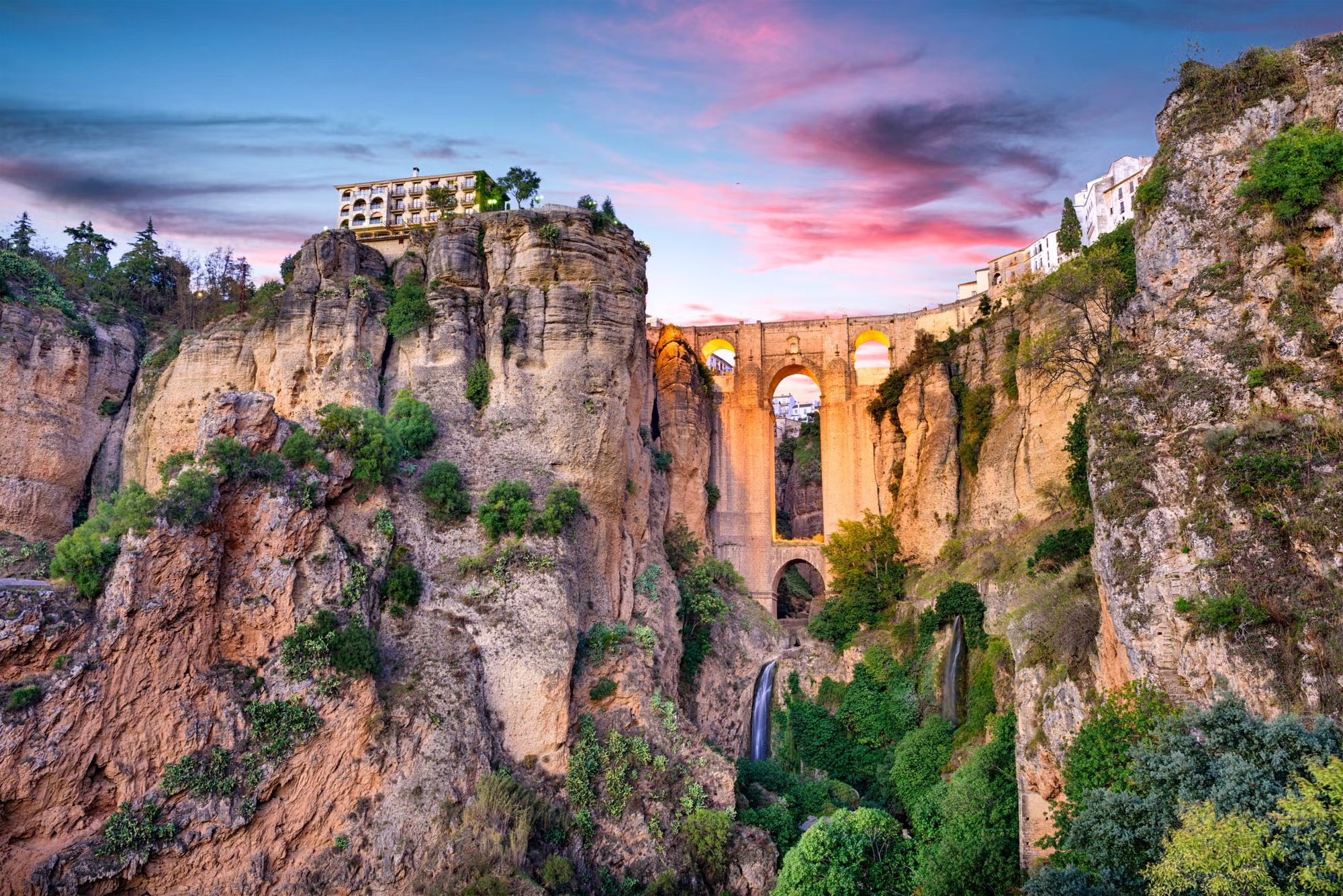
Ronda sits in Andalusia’s hills, famous for its Puente Nuevo bridge. The real magic, however, lies in its food culture and local life.
The city feels most alive in the late afternoon, after day-trippers leave. The streets return to a calm, human scale.
Katie Mather, a food and travel expert, says the best food is found away from the bridge. ‘The further you wander, the better the food,’ she notes.
Local dishes reflect regional roots. Butter beans and chickpeas in savory broths are common. Garlic-cooked snails (called caracoles) are a local favorite, often served with crusty bread.
Seafood is central to Ronda’s identity. Prawns with magenta whiskers and scallops served in half-shells are classic. These dishes show both tradition and local pride. A simple potato and egg tortilla is more than a meal—it’s a symbol of daily life in rural Spain.
La Palma: A Volcanic Sanctuary of Nature and Science
La Palma is one of Spain’s most untouched islands. While Tenerife and Lanzarote draw most tourists, La Palma remains wild and protected.
The island is a UNESCO Biosphere Reserve, shaped by volcanic activity. It hosts misty laurel forests, arid lava fields, and rare species.
Yvette Cook, a travel journalist, described walking on Volcan Teneguia as a sensory journey. ‘The wind whistles through cracks. My feet crunch over sharp volcanic clinker—like walking over spilt Coco Pops,’ she wrote.
La Palma’s night sky is world-class. Home to the Roque de los Muchachos Observatory, the island offers some of Earth’s clearest, darkest skies.
As twilight deepens, stars multiply. ‘The night itself seems to sparkle,’ Cook says. ‘It’s not just a view—it’s a feeling of peace and wonder that lingers long after you leave.’
Jerez de la Frontera: The Heart of Sherry and Gastronomy
Jerez de la Frontera is Spain’s future Capital of Gastronomy—set to receive the title in 2026.
Sherry is more than a drink—it’s a culinary foundation. At Mantua, a Michelin-starred restaurant, chef Israel Ramos uses sherry as a flavor base, not just a pairing.
‘Our roots are in tradition,’ he says. ‘But we marry that with modernity. It’s old and new.’ A 16-course tasting menu uses fino and oloroso sherry in sauces, reductions, and marinades.
Guests taste grilled octopus with sherry glaze and roasted vegetables with sherry vinegar. These dishes show how sherry transforms textures and flavors. The menu is both refined and deeply rooted in regional identity.
Elche: A Green Oasis in the Shadow of Alicante
Elche is often overlooked by travelers who fly to Alicante. But it holds a quiet treasure—the Palmeral.
This historic palm grove has over 200,000 trees. Built in the 18th century, it’s now a living space where nature and community blend.
Phil Thomas, who took a bus from Alicante-Elche Miguel Hernández Airport, found the Palmeral to be a peaceful, shaded oasis. ‘It’s dotted with fountains, benches, and statues—some old, some new,’ he wrote. ‘It feels like a shared civic space.’
Compared to crowded coastlines, Elche offers calm, green space. A beach isn’t the only way to enjoy Spain’s sun. A true escape lies in places where nature, culture, and community grow together.
Santiago de Compostela: A Culinary Pilgrimage
Santiago de Compostela is known as the end of the Camino de Santiago pilgrimage. But its food culture is equally compelling.
The Mercado de Abastos is one of the city’s oldest markets. It’s packed with glass counters full of cheeses, cured meats, and seafood.
Emma Henderson, who visited with chef José Pizarro, described it as ‘like entering a chocolate factory.’ Highlights include gambas rojas (red prawns), oyster shells larger than her hand, and giant brown crabs.
These aren’t just products—they’re expressions of cultural pride. The market shows deep respect for local producers and traditional methods. For Emma, it was more than shopping—it was a food pilgrimage, connecting her to the people, land, and culture of Galicia.
These destinations show Spain offers rich, diverse experiences beyond the tourist trails. They let travelers connect with local life, nature, and culture in calm, authentic settings.
Whether it’s Mallorca’s countryside, Ronda’s food, La Palma’s nature, or Santiago’s markets, each place offers a unique blend of history, food, and scenery.
For travelers seeking meaningful, low-crowd experiences, these hidden gems offer real value. They prove Spain’s appeal goes far beyond beaches and resorts. Exploring these places lets visitors enjoy the country’s beauty and culture without the pressure of mass tourism.
Travelers interested in off-the-beaten-path destinations may also explore hidden gems in Japan beyond Tokyo and Kyoto.
For more travel insights, visit the original source at The Independent.
Sources & further reading
Featured image: original publisher image. Via original publisher. Image source