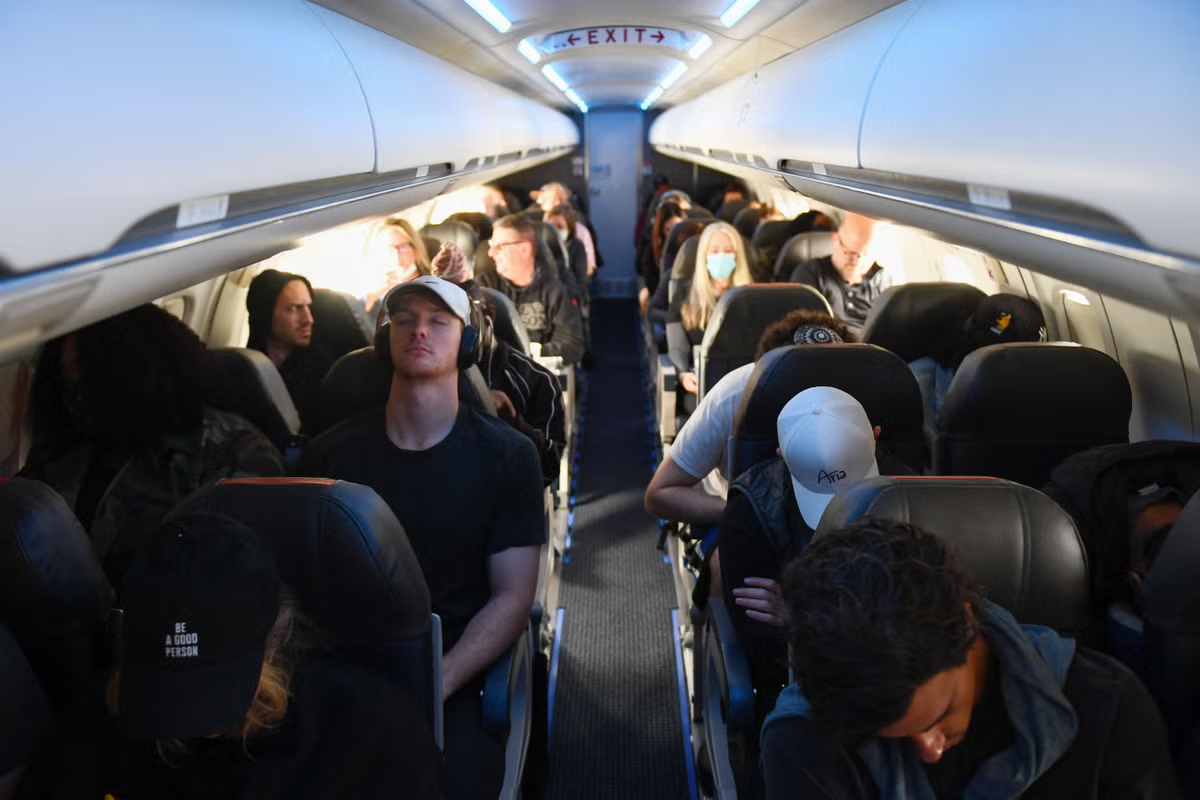
Passengers in the U.S. are now facing longer waits on tarmac. Delays of three hours or more have reached their highest level since 2009.
Delays on the Rise
According to a report by The New York Times, domestic flights with tarmac delays of at least 181 minutes have increased sharply. In 2009, about two out of every 10,000 flights had a three-hour delay. After 2010 passenger protections, that number dropped to near zero. The rate has now climbed back above one in 10,000 flights.
Why the Increase?
Since January 2025, the Department of Transportation has not fined an airline for a tarmac delay. It has not issued a consumer protection penalty in nearly two years. This lack of enforcement raises concerns about airline accountability.
Root Causes of Delays
- Severe weather like thunderstorms slows airport operations and creates runway backups.
- High flight volumes at major hubs cause congestion, especially during peak hours.
- Air traffic control inefficiencies—such as outdated systems—can trigger cascading delays.
- Airline scheduling that overbooks busy periods reduces flexibility during disruptions.
Expert Perspective
Michael McCormick, a professor at Embry-Riddle Aeronautical University and former air traffic controller, says there’s no disincentive for airlines to prevent long delays. Without penalties, airlines may prioritize schedules over passenger comfort.
What the Department Says
The Department of Transportation says it continues to investigate tarmac delays. It will take enforcement action when facts and the law support it. Fines are just one tool. The department has invested billions in airport infrastructure and air traffic technology to fix root causes.
Limitations of the Data
The report covers delays of at least 181 minutes—taxiing, runway returns, or diversions. It does not include the recent nationwide ground stop. While summer remains peak season, delays now extend into fall. October, which had few long delays last year, saw nearly as many as the worst month a decade earlier.
What to Watch Next
Passengers should stay alert for sudden disruptions. If new data shows repeated violations, enforcement may resume. Without consistent penalties, airlines may keep prioritizing schedules over comfort and safety.
Source: Independent.co.uk
Sources & further reading
Featured image: original publisher image. Via original publisher. Image source