Eric S. Raymond, a foundational figure in the open-source movement, has issued a stark declaration about the future of software development. His statement—The end of software secrecy is almost upon us. The death of closed source, and the final triumph of open source
—is not merely a philosophical assertion; it is a direct consequence of observable technological shifts, particularly in the capabilities of artificial intelligence and reverse engineering tools. Source: techradar.com.
The Quote and Its Context
Raymond made this statement on X, a social media platform widely used by tech professionals and thought leaders. The post emerged from a personal reflection, not a formal policy or industry report, but it carries significant weight due to Raymond’s decades-long influence in software engineering and open-source philosophy.
Raymond has been a central figure in the evolution of open-source software since the 1980s. He co-authored the influential book The Cathedral and the Bazaar, which laid out the principles of open-source development and demonstrated how community-driven software could achieve quality and innovation comparable to proprietary systems. His work helped shape the modern software ecosystem, where collaboration and transparency are seen as core values.
His current statement builds on this legacy. It reflects a shift from a belief that closed-source software could survive through cost advantages to a conviction that its viability is now fundamentally undermined by new technologies—specifically, AI-powered reverse engineering.
What Triggers This View?
Raymond’s insight stems from a specific technical development: the use of AI to decompile software binaries. He initially encountered this concept during a demonstration where an old video game was decompiled and ported into a modern format using AI tools. At the time, he viewed it as a clever but limited experiment—something fun, perhaps, but not scalable to real-world software.
He later learned that this approach has been successfully applied to entire AAA video games, which represent some of the most complex software systems ever created. These games involve millions of lines of code, intricate graphics pipelines, and sophisticated game engines—all of which are compiled into binary files that are typically inaccessible to end users.
Raymond notes that if a binary can be decompiled and analyzed using AI, then the barrier to understanding or modifying software code is significantly reduced. This implies that the traditional ‘secrecy moat’—the assumption that hiding source code behind compiled binaries provides meaningful protection—is no longer valid.
He draws a critical distinction between past predictions of closed-source decline and his current view. Historically, the shift toward open-source was attributed to economic factors—such as the cost of maintaining and updating closed-source software. However, Raymond now believes that the collapse of closed-source software may be driven not by economics, but by technological capability. He calls this a ‘technoapocalypse’—a term used metaphorically to describe a technological collapse of the closed-source model, not a literal end of civilization.
Implications for the Industry
Raymond argues that the traditional model of software development—where source code is hidden and only the compiled binary is distributed—is no longer sustainable. The primary defense against reverse engineering, once thought to be the secrecy of source code, is now being eroded by AI tools that can analyze, interpret, and reconstruct software behavior from binary data.
He suggests that the only viable defense against such decompilation is to move software into cloud-based environments. Software as a Service (SaaS) platforms, which run applications in the cloud and do not distribute standalone binaries, are inherently more difficult to reverse engineer. The code executes in a secure, isolated environment, and users do not have access to the underlying machine code or executable files.
Moreover, cloud-based systems often operate on dynamic, encrypted, and distributed architectures that make it technically infeasible to extract or analyze the full software stack. This shift means that future software development may increasingly rely on SaaS models rather than traditional downloadable applications.
Raymond emphasizes that this is not a slow, gradual transition. It is a paradigm shift—one that could lead to the near-complete obsolescence of closed-source software in many domains. He warns that while AI tools may allow decompilation, legal frameworks still impose limits. Copyright law, for instance, generally prohibits the decompilation of software for purposes other than interoperability or repair. This means that even if AI enables decompilation, such actions may not be widely or freely performed.
Broader Industry Trends
Raymond’s view aligns with other prominent voices in the tech industry. Nvidia’s CEO, Jensen Huang, once stated: AI is going to eat software.
This reflects a growing reality: AI tools are no longer just assisting developers—they are becoming integral to the software lifecycle. From code generation to bug detection, AI is now capable of automating tasks that once required human expertise.
Enterprises are increasingly adopting AI-driven development tools to generate code, optimize performance, and debug applications. These tools often operate by analyzing large datasets of existing code, identifying patterns, and producing new code that mirrors established structures. This capability enables AI to not only understand software but to reconstruct it from binary artifacts.
For example, AI models trained on vast repositories of open-source code can now infer the structure and behavior of software systems simply by observing their outputs. This ability to ‘read’ software through its behavior—rather than requiring access to source code—represents a fundamental shift in how software is understood and maintained.
Why This Matters to Developers and Businesses
For software companies, this shift means a fundamental rethinking of intellectual property and security. A company that once relied on secrecy to maintain a competitive edge now faces a new reality: its code could be reverse-engineered with relative ease, especially if it is distributed as a binary.
Businesses must now consider how to protect their software in a world where binaries are not the final barrier to access. This includes reevaluating licensing models, adopting stronger encryption, or transitioning to cloud-based platforms that inherently limit access to source code.
Moreover, developers may need to rethink how they design software. If AI can reconstruct code from behavior, then software that is not designed with modularity or interoperability in mind may become obsolete. The future of software may lie in systems that are inherently transparent, modular, and built for reuse—hallmarks of open-source development.
Limitations and Open Questions
Raymond’s prediction is not without limitations. It does not claim that all software will be decompiled or that every closed-source product will be exposed. The effectiveness of AI-driven reverse engineering depends on several factors, including the complexity of the software, the level of obfuscation, and the presence of encryption or hardware-level protections.
For instance, software with strong encryption, such as cryptographic libraries or secure boot systems, may remain resistant to AI-based analysis. Similarly, systems that use hardware-based security features—like Trusted Execution Environments (TEEs)—can still provide a layer of protection against unauthorized access.
Additionally, legal protections remain in place. Copyright law, for example, still governs the use of software and prohibits unauthorized decompilation for purposes beyond interoperability. This means that even if AI tools can decompile software, such actions may be legally restricted or challenged in court.
There is also no consensus on whether this shift will lead to a collapse of closed-source software. Some experts believe it will evolve—closed-source software will adapt, rather than vanish. Others argue that the open-source model will dominate, especially as AI tools become more accessible and developers increasingly value transparency and collaboration.
What to Watch Next
Several developments will shape the future of software secrecy:
- AI tools that can decompile and analyze large software systems will likely grow in sophistication. As AI models become more powerful and trained on larger datasets, their ability to interpret and reconstruct software behavior will improve.
- More companies may adopt cloud-based SaaS models to protect their code. As the benefits of cloud computing in terms of security and accessibility become clearer, more organizations will shift toward SaaS platforms.
- Legal debates over reverse engineering and software ownership may intensify. As AI enables new forms of software analysis, courts may need to define the boundaries of what constitutes fair use or unauthorized access.
- Open-source projects may gain greater traction as alternatives to closed-source systems. With AI making it easier to understand and build upon existing code, open-source projects may become more attractive to both developers and enterprises.
These trends are already visible in the industry. For example, major tech firms such as Google, Microsoft, and Amazon have increasingly open-sourced components of their products—such as Chrome, Windows, and AWS services—to build trust, accelerate innovation, and foster community development.
The shift Raymond describes is not a sudden event. It is the result of years of technical progress and growing access to AI tools. From early programming languages to modern machine learning models, the trajectory of software development has consistently moved toward openness and automation.
His statement marks a turning point—not in the sense of a single incident, but in the philosophical underpinnings of software development. It suggests that the future of software lies not in secrecy, but in transparency and collaboration.
For developers, businesses, and users alike, the implications are clear: the era of software secrecy is ending. Open-source is no longer a choice—it may be the only viable path forward.
For more on influential voices in tech, see the TechRadar QOTD series.
For a related perspective, explore Marc Andreessen’s famous claim that software is eating the world
, now reinterpreted through the lens of AI.
Raymond’s insight is part of a larger conversation about how technology evolves. It reflects a shift from control to access—a shift that may redefine how software is built, shared, and used.
As AI tools grow more powerful, the line between closed and open software will continue to blur. And in that blurring, transparency may become the new standard.
Sources & further reading
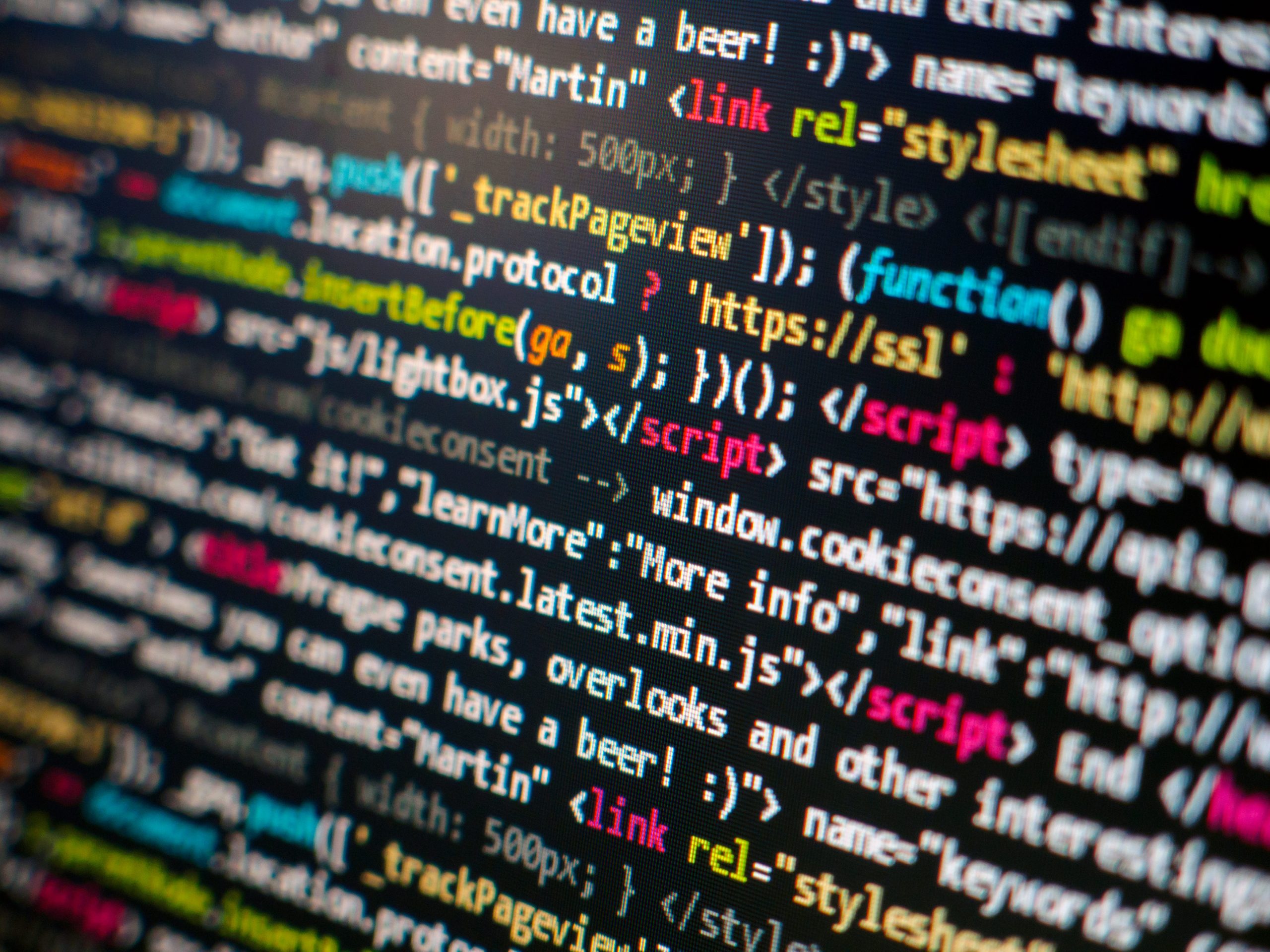
Featured image: Programming code.jpg by Martin Vorel, CC BY-SA 4.0, via Wikimedia Commons. Image source · License