A reader questions the purpose of next-generation consoles, citing stalled sales and limited technological progress. The discussion spans hardware limitations, market dynamics, and creative challenges in game development. Source: metro.co.uk.
Is There a Point to Next-Gen Consoles?
A reader argues that the push for new consoles has lost its justification. Sales of gaming consoles have slowed, and hardware shortages have made the transition less practical. The original rationale—revitalizing sales through new hardware—now appears questionable.
The reader points out that 8K displays have not taken off. Most televisions remain in HD or 4K. HDMI 2.2, a technical upgrade, is the only notable improvement. However, this requires new TVs, which are not widely adopted. The lack of consumer demand for ultra-high-resolution displays suggests that the next generation of consoles may not deliver a tangible upgrade in visual fidelity for the average player.
Market and Development Challenges
A reader notes that North American studios face rising operational costs. Salaries in cities like California and Seattle are high, and competition with tech firms drives up expenses. Executive compensation in the US is significantly higher than in Japan, increasing overall overheads. This contrasts with Japanese studios, where labor costs are lower and development cycles are often more efficient.
Game budgets are rising, but the market for console and PC games has stagnated. Gamers generally resist paying more than £60–70 for a title. Some games require 20 million sales to break even, while others achieve profitability at just two million. This disparity highlights a fundamental imbalance in the industry’s financial model—some titles are designed for massive scale, while others rely on niche appeal and long-term player engagement.
These financial realities make long-term sustainability difficult. Studios must balance development timelines with rising costs. Without structural changes—such as shared cost models or more efficient pipelines—the North American sector may struggle to remain viable. The reliance on high-cost talent pools also makes studios vulnerable to economic shifts, such as inflation or labor strikes.
Game Design and Player Experience
One reader praises Onimusha: Way of the Sword for its strong combat and boss battles. It shows that gameplay quality can outweigh presentation flaws. The game’s combat mechanics, such as sword strikes and environmental interactions, are described as fluid and responsive, offering a satisfying experience during intense sequences.
Another critic highlights Yoshi and the Mysterious Book as a game with strong ideas but poor presentation. The music and visuals are described as unimpressive. The game could have been more cohesive if the book mechanic had been reworked into a central hub, with a Mario-inspired title. This suggests that even when a game has compelling core mechanics, poor narrative or visual design can undermine its overall impact.
Despite its flaws, the game’s core mechanics are praised. The reader suggests it might have become a classic with better design choices. This reflects a broader concern: many games are half-finished or lack a clear vision. A lack of long-term planning or consistent development cycles can result in games that feel inconsistent or incomplete, especially in later stages of release.
Player Controls and Motion Technology
A reader shares personal experiences with motion controls. In Ōkami, the tutorial section required precise gestures to slice a boulder. After 45 minutes of failed attempts, the player abandoned the game. The tutorial was not only difficult to complete but also failed to provide clear feedback or guidance, leaving players frustrated and disengaged.
In Zelda: Skyward Sword, wiggling remotes to attack led to repeated failures. The player ended up losing health while avoiding enemies. In Breath of the Wild, motion-controlled ball mazes in handheld mode caused extreme physical strain. These experiences demonstrate that motion controls, while innovative, are not well-suited for complex or precise gameplay. They often require a level of physical dexterity that is not accessible to all players, especially those with mobility limitations or older players.
Only in Wii Sports do motion controls work well. The game is inclusive, allowing players of all skill levels to succeed. It proves motion controls can be fun in casual settings, but are impractical for complex, precise gameplay. The success of Wii Sports underscores that motion controls are best suited for simple, accessible games rather than narrative-driven or action-heavy titles.
Character and Narrative Concerns
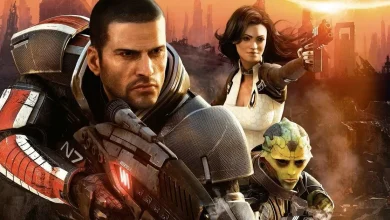
A reader expresses disappointment that Shepard, the protagonist of the Mass Effect series, is absent from the new game. The footage of the new title looked better than Mass Effect: Andromeda, but the lack of Shepard suggests a shift in narrative focus. While the series has built a strong emotional bond with fans over decades, the absence of the character may signal a departure from its core identity.
It is unclear whether the character will appear at all. A cameo is possible, but no official confirmation exists. This absence raises concerns about continuity and fan expectations. Franchise fans often form deep emotional attachments to characters, and their absence can lead to disappointment or even backlash. The decision to omit a central figure may reflect a shift in creative direction, but it also risks alienating a loyal audience.
Voices in Gaming and Industry Visibility
A reader notes that actors in AAA games often remain unknown outside gaming circles. David Hayter, known for Solid Snake, is not instantly recognizable. David Bateson, from Hitman, is similarly obscure. This phenomenon reflects a broader trend in entertainment: actors and actresses are often cast in roles that do not translate into mainstream visibility.
Ray Liotta, known from Goodfellas, is an exception. His fame predates his role in Vice City. The actor’s success illustrates that game roles do not always translate into broader recognition. Similarly, the actor who played James Bond in 007 First Light is not widely recognized, suggesting that actors may not seek broader visibility and are content with niche roles.
These observations highlight a gap in the industry’s public perception. While gaming is a major cultural force, the actors behind it often remain invisible to the general public. This lack of visibility may reduce the cultural impact of games and limit their ability to influence broader media narratives.
Industry Outlook and Future Possibilities
A reader notes that creative figures like Miyamoto are not strongly opposing AI. They see it as a useful tool for minor tasks—such as generating assets or automating repetitive workflows. However, AI could enable a wave of low-quality games. These might be created by users with little skill and targeted at casual players. The result could be a flood of games with minimal creative input.
Without strong public resistance, AI may reshape game creation in ways that undermine artistic integrity. The industry may not yet have a clear response to this trend. While AI tools offer efficiency, they also risk reducing the need for human creativity, especially in early development stages. This could lead to a decline in originality and innovation in game design.
One reader says they would be disappointed if it actually came out. This reflects a broader sentiment: fans value the legacy of franchises more than new releases. The emotional connection to established series—such as Half-Life or Mass Effect —is stronger than the appeal of new, untested titles. This suggests that the industry may be moving toward a model where legacy and continuity matter more than innovation.
Other topics, like Marvel’s Blade, remain unconfirmed. A reader expresses hope that Arkane Studios will resolve its current challenges. No official updates have been released, but the concern remains. This highlights the uncertainty in the industry—many studios face financial or creative hurdles, and the public often lacks transparency about their progress.
The Games Inbox column highlights reader perspectives on gaming. These views represent a range of experiences—from technical concerns to emotional attachments to franchises. The diversity of opinions reflects the complexity of the gaming industry, where innovation, cost, and player expectations are constantly in flux.
While no single answer emerges, the discussion reveals shared concerns: rising costs, stagnating markets, and the tension between innovation and player expectations. These issues are not isolated to one region or genre but are systemic across the industry.
As the gaming landscape evolves, studios must navigate a balance between pushing technological boundaries and respecting the expectations of players and fans. Without addressing these underlying challenges, the industry may face a period of uncertainty or decline.
The column is updated daily, with special features on weekends. Readers can submit their own 500–600-word features via email or the Submit Stuff page. Selected pieces will be published in the next available weekend slot.
For more on gaming industry trends, see Games Inbox . For discussions on sci-fi franchises, explore Mass Effect .
GameCentral is committed to providing timely, reader-driven content. All submissions are reviewed and may be edited for clarity and length. The site is protected by reCAPTCHA and adheres to Google’s Privacy Policy and Terms of Service.
Sources & further reading
Featured image: original publisher image. Via original publisher. Image source