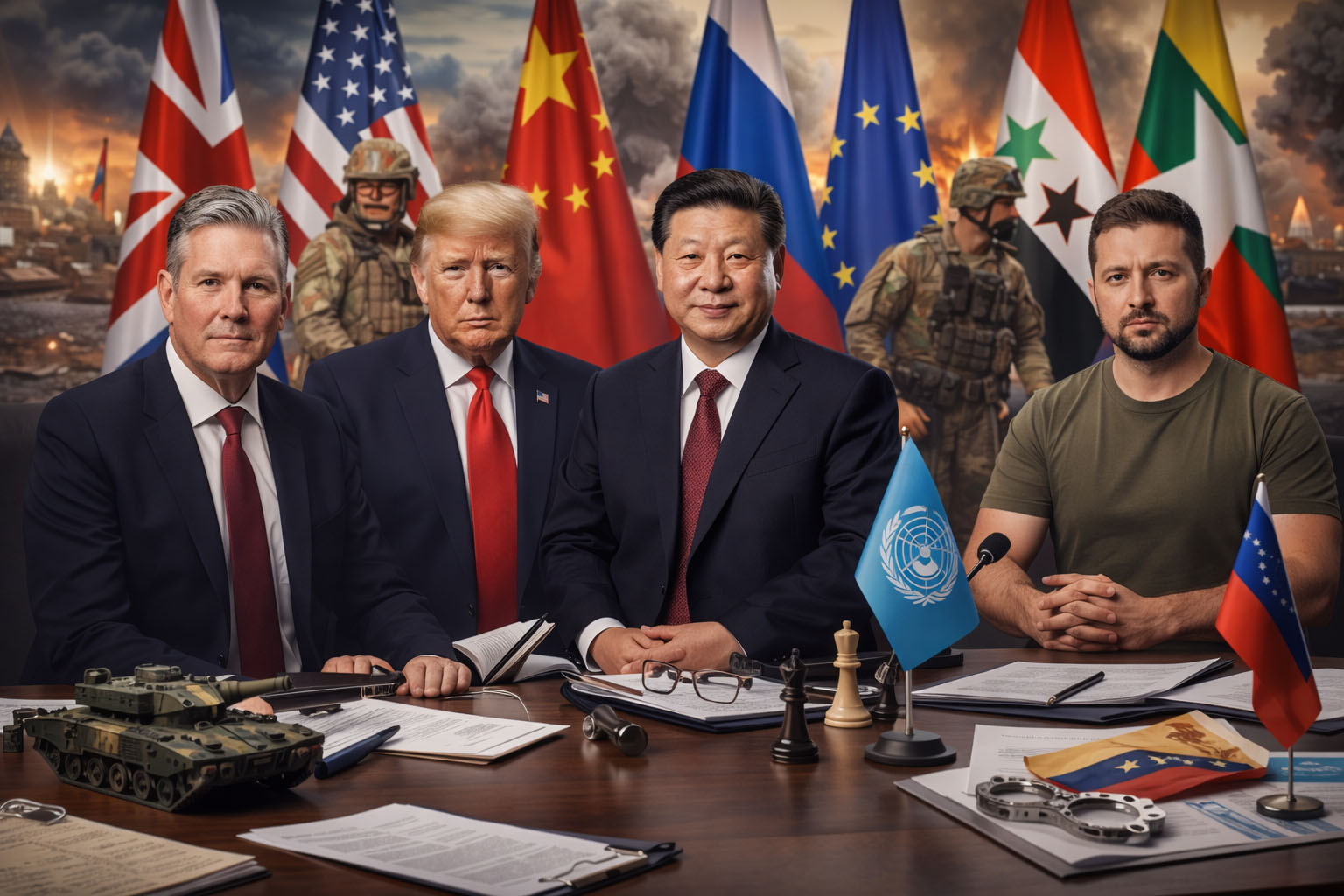
“Main political fact” can mean many things, so here’s the most useful, fact-based interpretation: the small set of political developments that are actively reshaping diplomacy, security, and markets this month. Below are the top events, with clear dates and why they matter.
1) A new US-led “Board of Peace” is being positioned as a global diplomatic vehicle
On 22 January 2026, President Donald Trump announced a new “Board of Peace,” initially focused on enforcing/expanding a Gaza ceasefire, with some leaders and diplomats warning it could compete with or dilute the UN’s role.
Why it matters: It signals a US push to redesign parts of the global diplomatic architecture—potentially shifting how ceasefires and negotiations are managed.
2) Russia–Ukraine–US peace talks in Abu Dhabi mark a high-stakes diplomatic moment
Talks involving Ukraine, Russia, and the United States were reported in Abu Dhabi in late January 2026, framed as occurring at a pivotal point in the war and negotiations.
Why it matters: Any credible track that includes all sides can move expectations on security guarantees, territorial disputes, and sanctions—especially if talks continue.
3) UK–China relations are being recalibrated at the top level
UK Prime Minister Keir Starmer met China’s President Xi Jinping in Beijing (29 January 2026), describing a desire for a “more sophisticated” relationship while also raising areas of disagreement.
Why it matters: The UK is trying to balance trade/technology opportunities with national security and human-rights concerns—an approach many European countries are also navigating.
4) Northeast Syria: Syrian government and Kurdish SDF extend a ceasefire amid war-risk
A ceasefire extension between the Syrian government and the Kurdish-led SDF was reported 24 January 2026, amid tension over territory, integration plans, and the risk of renewed fighting.
Why it matters: It affects regional stability, displacement risk, and counter-terror dynamics—especially as control arrangements shift.
5) Myanmar’s January 2026 election is widely described as illegitimate by critics
Myanmar’s military-run election process concluding in January 2026 was widely condemned by opponents and observers, with major opposition forces barred and conflict ongoing.
Why it matters: It’s a legitimacy contest with real consequences for sanctions, recognition, aid access, and the trajectory of civil conflict.
6) Davos 2026 highlighted a sharper “geopolitics-first” environment
The World Economic Forum in Davos ran 19–23 January 2026, with geopolitics and diplomatic initiatives prominently shaping the agenda.
Why it matters: When geopolitics dominates Davos, it typically reflects—and reinforces—how governments and investors price risk in energy, trade, supply chains, and security.
7) The early-2026 US posture is driving broad diplomatic and market reactions
Reuters reporting in early January described dramatic US actions and rhetoric affecting regional and global relationships (including Venezuela-related developments and Greenland-related tensions).
Why it matters: Big-power posture changes can quickly cascade into tariffs, alliances, recognition disputes, and shifts in conflict mediation.
The “one-line” main political fact (if you want it as a single takeaway)
January 2026 is being defined by intensified great-power diplomacy and institutional experimentation (new initiatives, new negotiating tracks) happening alongside active conflict management and contested elections.