
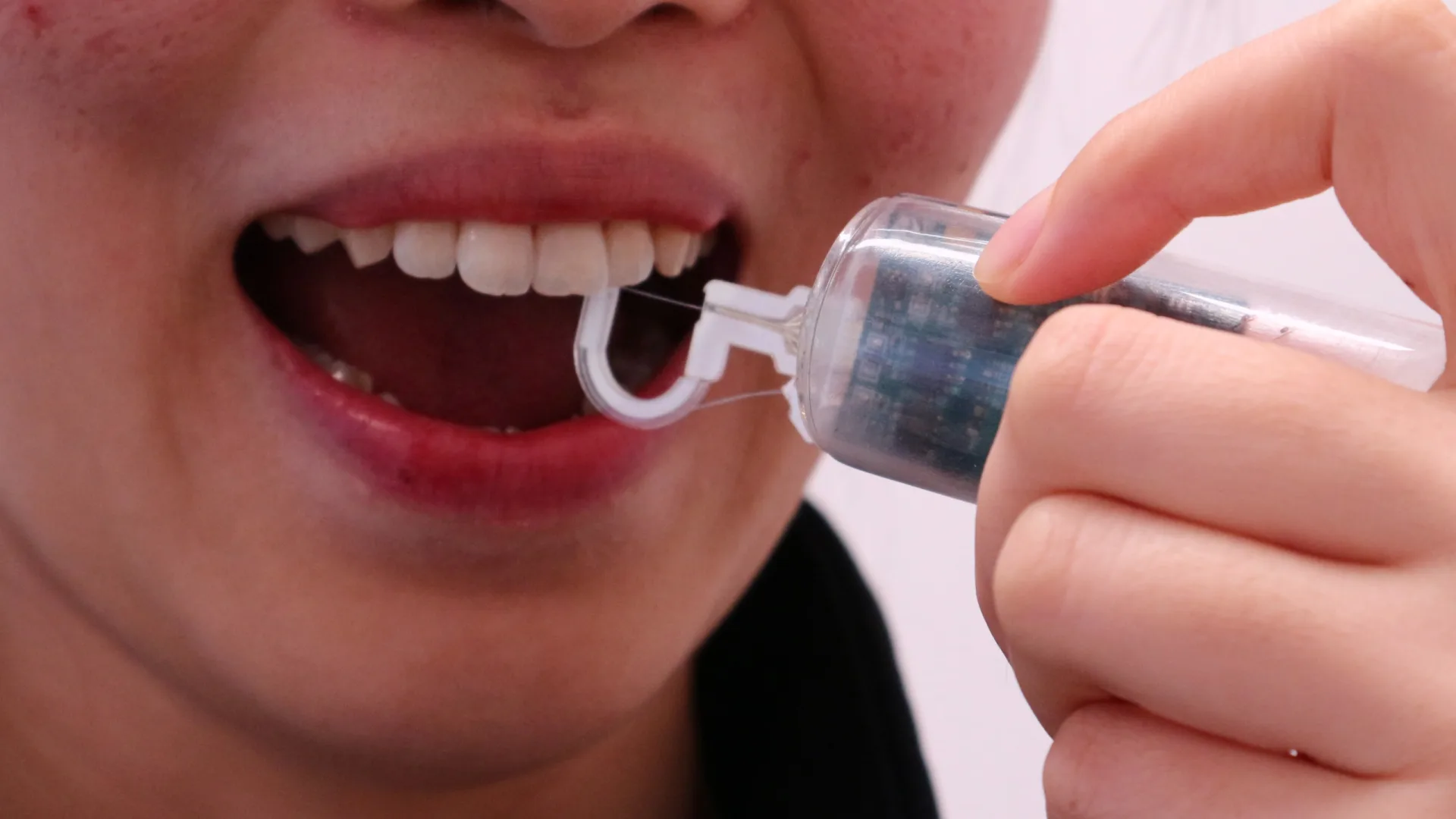
A new dental floss device captures fluid between teeth to detect metabolic markers. This tool, developed by a team led by biotechnologist Hnin Yin Yin Nyein at Hong Kong University of Science and Technology (HKUST), enables non-invasive health monitoring at home.
What Happened
Scientists at HKUST created a smart floss device that collects gingival crevicular fluid (GCF) during routine flossing. GCF flows in the grooves between teeth and gums. It has long been studied as a potential indicator of systemic health, but collecting it has been difficult due to its small volume and instability.
The device looks like a standard dental flosser. It uses a pulley system to gently lift a small amount of GCF during flossing. The fluid is then sent to a microfluidic chamber with biosensors that detect glucose, uric acid, pH, and hydrogen peroxide.
Results are sent wirelessly to a smartphone app. This allows users to track health metrics daily without visiting a clinic.
How It Works
Gingival crevicular fluid sits close to the gums. It exchanges metabolites and inflammatory markers with the bloodstream. This makes it a valuable window into both oral and overall health.
When someone flosses, the motion releases a small amount of GCF into the floss path. The device captures this fluid and channels it into a sealed chamber. Biosensors analyze its chemical composition in real time.
The sensors detect signals linked to known health conditions. For example, glucose levels in GCF closely match blood glucose levels, showing a direct metabolic connection.
Key Findings
- Glucose levels in flossing fluid matched blood glucose levels closely, suggesting reliable non-invasive monitoring.
- Uric acid levels in GCF strongly matched blood levels, offering a possible tool for diagnosing hyperuricemia.
- Hydrogen peroxide and pH readings can estimate gum pocket depth — a standard sign of periodontal disease severity.
The study, published in Science Advances, tested the device on small groups. Participants included those with diabetes, high uric acid, and poor oral health. Each group showed distinct fluid patterns, proving the device can identify different health states.
Why It Matters
Diabetes and gum disease often worsen each other. Poor oral health can reduce insulin sensitivity. High blood sugar fuels bacterial growth in the mouth. This creates a harmful cycle.
Current glucose monitoring requires blood tests and clinic visits. A daily, at-home tool could help patients manage these conditions better.
By turning a common habit — flossing — into a diagnostic action, this device makes health monitoring accessible to millions.
Limitations and Challenges
Saliva made up nearly half of the collected fluid. Alone, it does not show reliable glucose signals. This raises doubts about data accuracy.
Some samples showed blood contamination. It’s unclear whether these samples still contain meaningful metabolic data.
The team says more work is needed to reduce contamination and improve sensor precision.
What to Watch Next
Future tests will focus on improving the device to reduce contamination and boost sensor accuracy. Researchers hope to prove that regular GCF monitoring helps manage disease in real-world settings.
A large clinical trial is planned to see if consistent GCF monitoring improves outcomes for people with diabetes and gum disease.
The research has been published in Science Advances and is available at sciencealert.com.
The device is still in early development and has not been approved for medical use or commercial sale.
Sources & further reading
Featured image: Scientists Developed 'Smart Floss' That Uses Gunk Between Your Teeth to Track Metabolism. Via original publisher. Image source

