SPOILER ALERT: The story includes details about Episode 3 of HBO Max’s Stuart Fails To Save the Universe.
Another episode of Stuart Fails To Save the Universe, another surprise — and dark — OG return. In Episode 3, it was Melissa Rauch reprising her role as Bernadette Rostenkowski.
Like in Episode 2, where Penny, in an alternate universe, is with her former boyfriend Zack with no trace of her Big Bang husband Leonard, Bernadette does not have Howard’s last name and appears very much single.
She is the focal point of a scene that skewers the 2023 WGA strike with “inside jokes that will be amusing to only 4,000 people in the world,” said Zak Penn, co-creator of the spinoff alongside Big Bang creators Chuck Lorre and Bill Prady.
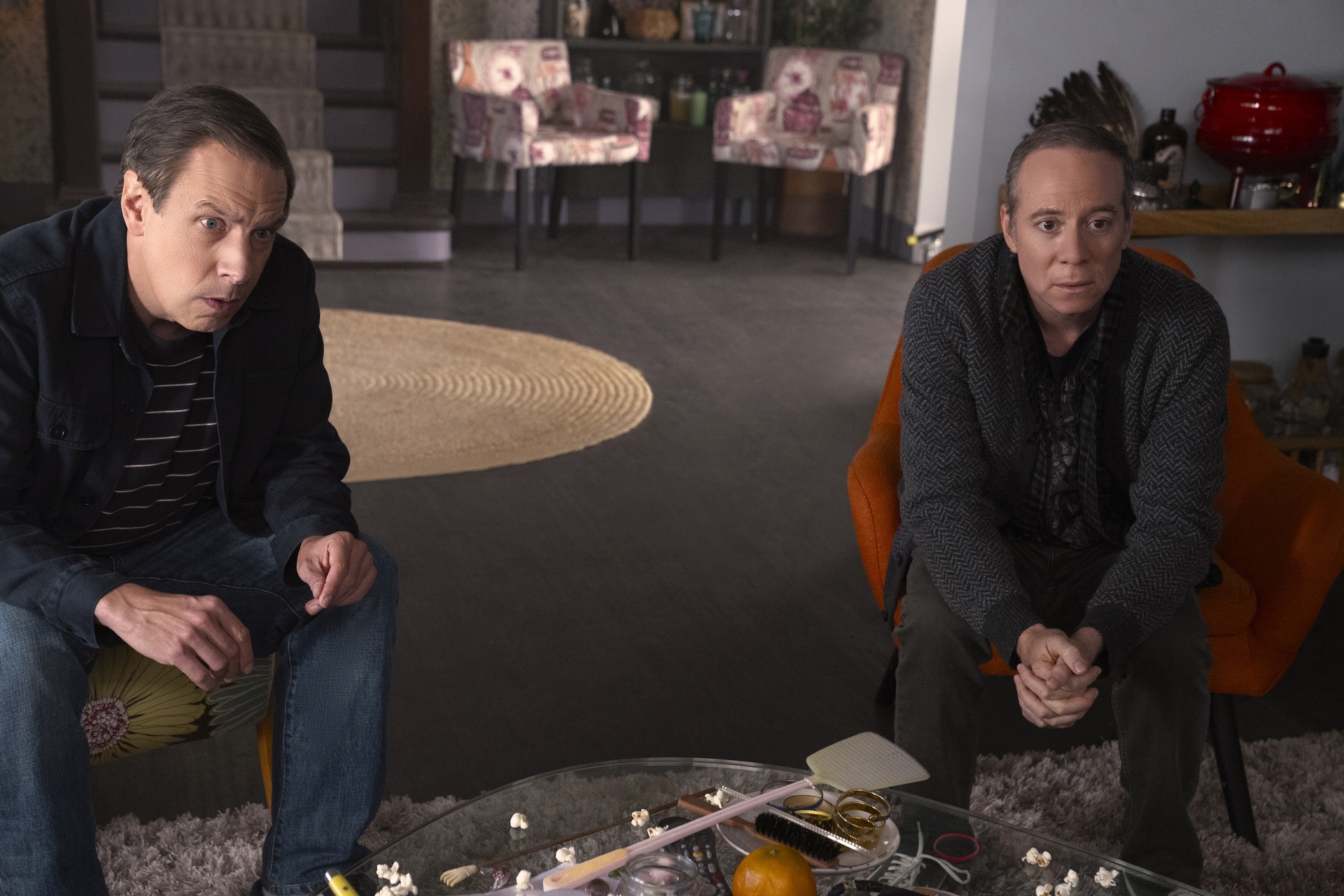
The Episode 3 world is ruled by magic, so, to fix their broken alternate reality-hopping machine, Stuart (Kevin Sussman) and Kripke (John Ross Bowie) seek out Bernadette, a renowned local sorcerer.
Turns out she is “all out of abracadabra.”
What happened?
“The Wizards Guild of America claimed I used my powers while we were on strike,” she explained.
“What were you on stwike for?,” Kripke asked in his signature speech pattern where “r”s and “l” are replaced by “w”s.
“Better dental, residuals for eternal spells. It’s ridiculous, we were out for six months, and basically everyone got a handful of magic beans,” Bernadette said. (You can watch the entire scene below.)
For the uninitiated, the Wizards Guild of America shares the same moniker, WGA, with the Writers Guild of America, which Stuart Fails to Save the Universe creators are all members of.
The 2023 WGA strike lasted five months with a minimum wage increase, viewership-based streaming residuals and AI protections among the gains in the new agreement with the studios.

Bernadette tells Stuart and Kripke that she was expelled from the guild for using her powers during the strike to bring her neighbor’s son’s adorable rescue dog Chocolate Chip back to life after he was hit by several cars.
“I don’t see how that’s bweaking a stwike,” Kripke said.
“Exactly,” Bernadette said, adding, “Let me tell you something about Wizards Guild of America. 90% of them don’t even work, and yet they get to vote.”
While the percentage is not that high, non-working writers are the majority, representing more than 50% of the full WGA membership that gets to vote to authorize a strike and then to ratify a deal. That has been an ongoing gripe for some established writers and a cause of divide within the union.
There was some difference of opinions among the Stuart Fails To Save the Universe creators too during a lively — and funny — interview with Deadline about the WGA strike jabs, which you can (and should) watch below.
WGA members caught performing writing services during the strike get expelled, which happened again in 2023.
Claiming that an appeal is not an option, Bernadette floats a reversal spell that would give her her powers back that requires “blood of an innocent,” which Stuart qualifies for and provides.
Later in the episode, Big Bang‘s Wil Wheaton shows up to reveal to Stuart that Bernadette is in fact a demon and is killed by Bert (Posehn) in a magic power duel. The episode ends with Bernadette, in a full-on demon form, terrorizing Pasadena and hunting for Stuart & Co.
Lorre, Prady and Penn all participated in the 2023 strike and were on the picket lines. Penn has been the most active and public in his pro-WGA stance, having previously served on the WGA West Board of Directors and the union’s Negotiating Committee.

DEADLINE: This seemed to me like I could hear Chuck’s voice, all the stuff about Wizards Guild of America. Chuck, you write that speech? And is this what you really think about this writers strike?
LORRE: (laughing).
PRADY: Oh, this is the Wizards Guild of America, an entirely different organization of wizards.
LORRE: Of wizards, yes. The wizards are striking for all the good reasons, and strike breaking is…
PRADY: It’s possible that section may include some inside jokes that will be amusing to only 4,000 people in the world.
PENN: Also, we have different opinions on this issue, I’d like to say. There’s a continuum of opinions about those issues, but the joke, it can’t be pro-WGA and still be funny. Although let me point out, the WGA rep is right because she is a demon.
PRADY: That’s right, Zak is right. The Wizards Guild of America is entirely correct in this episode.
LORRE: She broke the strike by bringing Chocolate Chip back to life.
PRADY: That’s a lie, that whole chocolate chip story is a lie.
PENN: Yeah, she’s a demon.
PRADY: She’s a demon.
LORRE: Well, yes, but she was also using her powers, and she was supposed to not use her powers during the strike, right?
PRADY: Well, we have a different understanding of the episode. I think that entire story is made up.
LORRE: Oh, I don’t.
PRADY: She makes up that story to get them to give her the blood. I think she made up the whole thing.
PENN: You’re getting a little taste of the writers room.
With her Demonic transformation, Rauch added a whole new shade of dark to Big Bang alums’ returns for the spinoff, following Kaley Cuoco’s ruthless Penny in Episode 2 and Kunal Nayyar’s deeply depressed Raj in Episode 1.
The series’ creators spoke about Big Bang OGs relishing going dark in the spinoff.
“Beyond,” Prady said.
Added Lorre, “Beyond. It was fun to do something different, that was part of the promise, come and play with us, and we’ll make sure that you’re playing a version of your character you never got to play before, an entirely different approach to the character, and that was fun for the actors.”