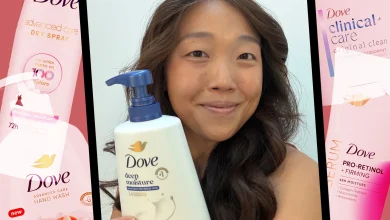
Double-cleansing your body has become a popular trend on social media, inspired by skincare routines from K-beauty. But does it actually improve hygiene or skin health?
What Is Body Double-Cleansing?
Body double-cleansing means washing your skin twice during a single shower. It follows the same logic as facial double-cleansing: an oil-based cleanser first, followed by a water-based one.
Proponents say it removes makeup, sunscreen, and body oils more effectively. For people who wear water-resistant sunscreen or use rich body creams, the appeal is understandable. These individuals may have accumulated significant layers of sebum, oils, or chemical protection throughout the day, which can clog pores or interfere with natural skin function.
Dr. Chris Tomassian, a board-certified dermatologist based in Southern California, explains that the concept originated in facial skincare, where oil-based cleansers are used to dissolve waterproof makeup and heavy sunscreen, followed by a water-based cleanser to remove residual impurities. The theory is that the two-step process ensures a more thorough clean. When adapted to the body, this logic is often applied without considering the physiological differences between facial and bodily skin.
Dr. Ariel Ostad, also based in New York City, notes that people approach body double-cleansing in different ways. Some begin with an oil-based cleanser—like a shower oil or a gentle cleansing balm—and follow with a regular body wash. Others simply use the same product twice, washing their body in two separate rounds. While both methods may feel more thorough, the actual difference in performance is minimal.
What Do Dermatologists Say?
Three board-certified dermatologists were consulted. Their responses show a clear consensus: for most people, one wash is sufficient.
Dr. Angelo Landriscina, a dermatologist in New York City, is particularly skeptical of the body double-cleansing trend. He calls the oil-then-water method ‘ridiculous’ for the body. His reasoning is rooted in chemistry: body cleansers are formulated with surfactants—chemicals specifically designed to break down oils and impurities in water. These surfactants are effective at removing a wide range of substances, including sunscreen, body lotions, and environmental pollutants, without needing a second step.
Dr. Tomassian agrees: ‘A well-formulated body cleanser is already designed to remove daily buildup.’ He emphasizes that the skin on the body is not as oily or as prone to product accumulation as facial skin, and that the body’s natural sebum production is more consistent and less likely to form a thick, greasy layer that requires an oil-based cleanser to dissolve.
Is There Any Real Benefit?
There is no proven benefit to washing your body twice if you’re not using body makeup or water-resistant sunscreen.

For acne-prone skin, the focus should be on ingredients like salicylic acid or benzoyl peroxide—not on repeated washing. Dr. Tomassian recommends products like PanOxyl, which has won awards for treating body acne. These ingredients work directly on clogged pores and inflammation, whereas double-cleansing does not address the root cause of breakouts.
Over-cleansing can damage your skin. Removing natural oils strips away the skin barrier. This can lead to dryness, irritation, or even eczema flare-ups—especially in colder months when skin is already more prone to dehydration. Dr. Tomassian warns that repeated washing, particularly with harsh soaps or exfoliating scrubs, may disrupt the lipid layer that protects the skin from environmental stressors and moisture loss.
How to Practice It (If You Choose To)
If you decide to try double-cleansing, do so gently. Use a mild oil-based cleanser, such as Bioderma Atoderm Shower Oil or La Roche-Posay Lipikar AP+ Gentle Foaming Cleansing Oil. These products are designed for sensitive skin and are less likely to cause irritation.
Follow with a mild body wash, like Dove Sensitive Skin Body Wash—favored by Dr. Tomassian. Avoid exfoliating scrubs or harsh soaps, as these can cause micro-tears in the skin and worsen conditions like eczema or psoriasis.
- Avoid exfoliating scrubs or harsh soaps.
- Use only a small amount of product.
- Do not scrub aggressively.
Dr. Ostad warns against treating the second wash as a chance to aggressively scrub. That can worsen skin issues, especially for those with sensitive or compromised skin.
What’s a Better Alternative?
If your skin doesn’t tolerate double-cleansing, focus on moisturizing instead.
Dr. Tomassian recommends applying a good body moisturizer while your skin is still slightly damp. This supports the skin barrier more effectively than a second wash. Moisturizing after showering helps lock in hydration and reinforces the skin’s natural protective layer, which is far more beneficial than any additional cleansing step.
Dr. Landriscina adds that many social media trends—like using multiple cleansers—exist primarily for content. People gain more views by showing off elaborate routines, not because they’re effective. He says: ‘If you feel you’re not clean enough with one wash, you probably need a better body cleanser—not a second one.’
Limitations and Concerns
There is no evidence that double-cleansing improves body hygiene. The practice may only feel more luxurious, not more effective.

It may be harmful for people with sensitive skin or existing conditions like eczema. The risk of over-cleansing is real and well-documented. Dermatologists consistently emphasize that skin health should be guided by science, not social media trends.
Some users may feel better after double-cleansing, but that is likely due to psychological satisfaction, not actual skin improvement. The perception of cleanliness is often stronger than the actual physiological difference in skin condition.
There is no scientific support for the claim that oil-based cleansers remove sunscreen or body oils more effectively than water-based ones. In fact, most modern body washes contain surfactants that are already optimized to dissolve a broad spectrum of oils and residues.
What to Watch For
Look for signs of skin irritation, dryness, or flaking after double-cleansing. These may indicate over-cleansing.
Pay attention to how your skin reacts. If it feels tight or itchy, stop the practice.
Always consider your skin type and any existing conditions before adding new steps to your routine.
For most people, a single, gentle wash is sufficient. Adding a second cleanse offers no proven benefit and may cause harm.
When in doubt, consult a dermatologist. Skin health should be guided by science, not social media trends.
Source: Allure
Sources & further reading
Featured image: original publisher image. Via original publisher. Image source